


Blue shark - Prionace glauca
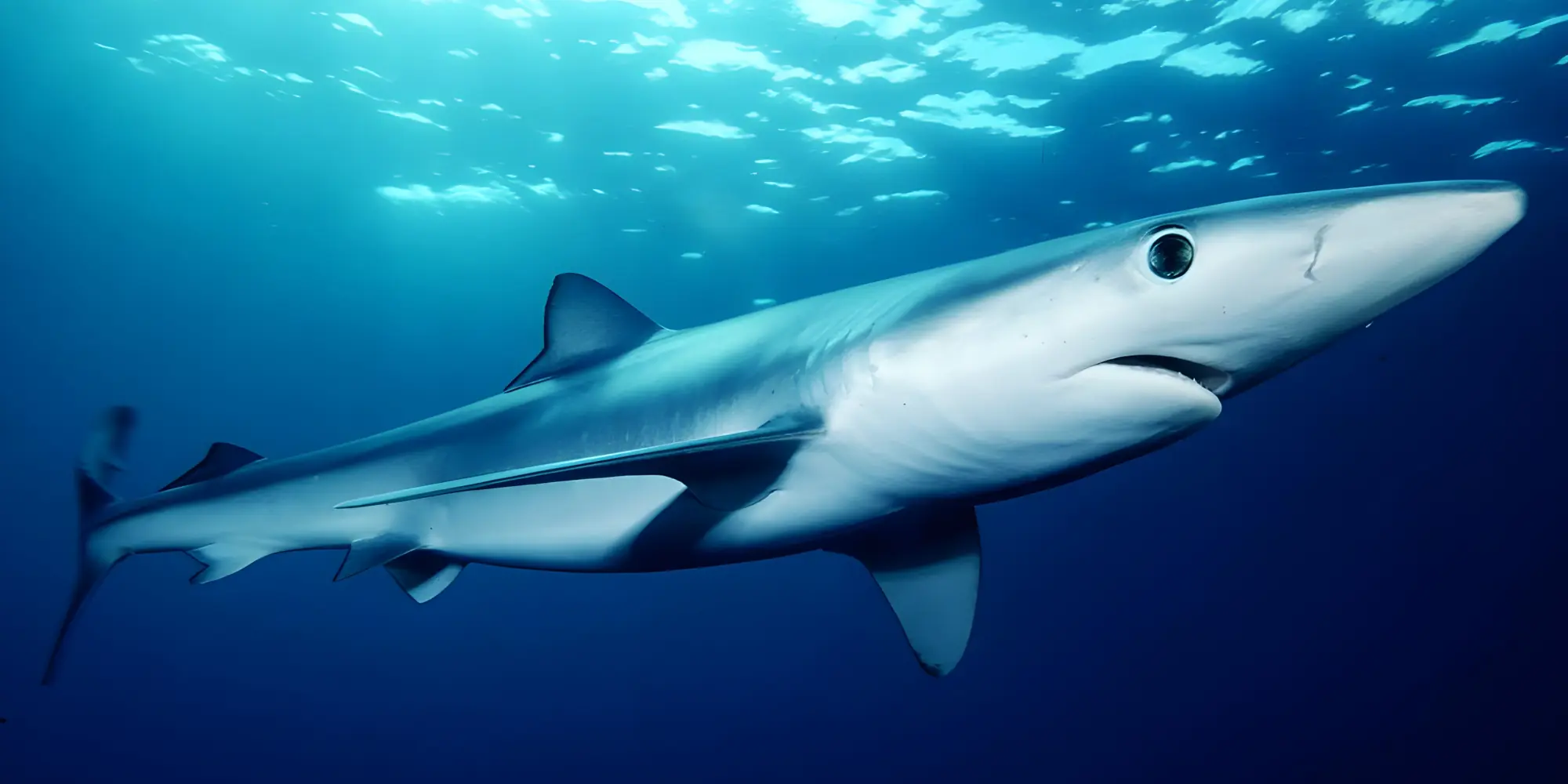
Body Structure, Characteristics & Anatomy
The blue shark (scientifically Prionace glauca) is one of the most well-known and elegant shark species in the world’s oceans. With its streamlined body and characteristic bluish colouration, it is not only visually striking but also a fascinating example of perfect adaptation to life in the open sea.
General Characteristics of the Blue Shark
Appearance and Coloration
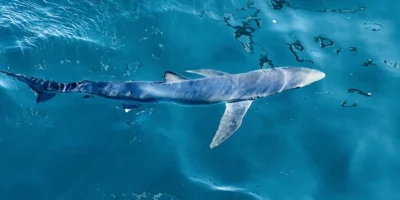
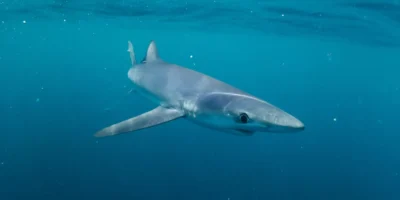
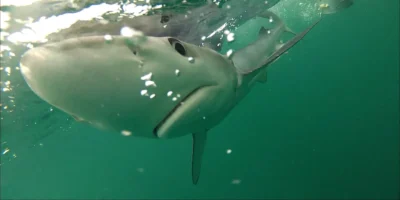
The blue shark owes its name to its intense, metallic shimmering colouration: the upper side is a bright bluish to steel blue, while the underside is light grey to almost white. This colouration serves as camouflage in the open ocean – from above, it blends in with the darker depths, and from below, with the bright light of the water’s surface.
Body Structure
Blue sharks are elongated and extremely slender, which gives them high manoeuvrability and speed in the water. They reach an average length of 2 to 3 metres, with females tending to be larger than males. Their body shape is perfectly adapted to pelagic life – that is, life in the open sea, far from the seabed.
Anatomical Features
Head and Snout
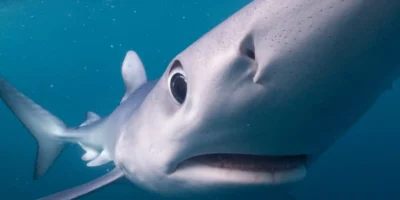
The blue shark’s head is elongated and pointed, with large, round eyes that are excellently adapted to the light conditions in deeper water layers. The snout is relatively long, which aids in hunting fast prey such as squid, mackerel, or sardines.
Teeth
Typical of the blue shark is the tooth pattern with sharp, triangular teeth that are slightly curved backwards. This shape allows it to effectively grasp and hold prey. The teeth are arranged in several rows and are quickly replaced if lost – a typical feature of all sharks.
The selected folder has no items.
Fins
The blue shark possesses:
- A distinctly long, sickle-shaped pectoral fin
- A relatively small first dorsal fin, positioned further back than in many other shark species
- A second, smaller dorsal fin near the tail
- An asymmetrical caudal fin (heterocercal), where the upper lobe is significantly longer – a typical feature of fast swimmers
Differences Between Males and Females
Size and Weight
A noticeable difference between the sexes is in body size: female blue sharks are, on average, larger and heavier than their male counterparts. While males rarely grow beyond 2.5 metres, females often reach lengths of over 3 metres.
Skin Structure
Females have thicker skin than males – an evolutionary trait that protects them from injuries during mating. Male blue sharks bite into the flanks of females during copulation, which can lead to deep bite wounds. The thicker skin thus serves as a natural protective mechanism.
Reproductive Organs
Another distinguishing feature is the so-called claspers – paired copulatory organs found on the inner sides of the pelvic fins in males. Females do not possess these structures. This distinction allows for clear sex determination during sightings or capture. Females have paired uteri; males have claspers for internal fertilisation.
Adaptation to Habitat
Blue sharks are highly specialised hunters, distinguished by a variety of anatomical adaptations. Their slender body reduces water resistance, their well-developed musculature allows for rapid sprints, and their senses – particularly smell and the lateral line – enable the detection of prey over great distances.
Distribution & Habitat
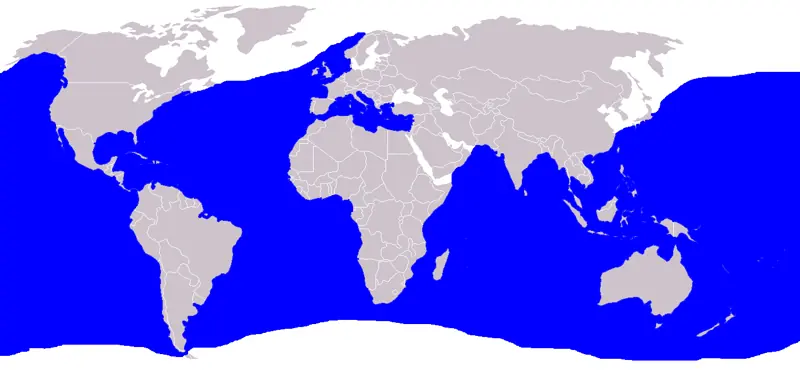
The blue shark (Prionace glauca) is a pelagic large shark with a circumglobal distribution in temperate and tropical marine regions. It is found from approximately 70° north to 55° south and inhabits all major oceans. Known occurrences include the North and South Atlantic (Newfoundland to Argentina; Norway to South Africa, including the Mediterranean), as well as the Indo-Pacific (East Africa to Japan and Australia; in the Pacific to Chile). The blue shark avoids polar regions.
Global Distribution
An Inhabitant of Temperate and Tropical Waters
The blue shark is found in nearly all the world’s oceans. It prefers temperate to tropical waters and avoids only the polar zones. It is particularly common in the Atlantic, Pacific, and Indian Ocean. It is also a regular, though increasingly rare, visitor to the Mediterranean.
Occurrence in the Atlantic
In the Atlantic Ocean, its range extends from Norway to South Africa and from Canada to Argentina. The North Atlantic is particularly significant, as the blue shark is of interest here both for scientific studies and commercial fishing.
Pacific and Indian Ocean
In the Pacific, the blue shark is regularly sighted off the coasts of Japan, Australia, California, and Chile. Its habitat in the Indian Ocean also spans vast areas, such as off the east coast of Africa and around the islands of the Indian Ocean.
Blue Shark Habitat
Open Ocean Dweller with a Large Range
The blue shark prefers the open sea, known as the pelagic zone. It typically moves at depths of 100 to 350 metres but occasionally dives to depths of up to 1,000 metres. It is one of the most active open-ocean sharks and covers vast distances, sometimes thousands of kilometres.
Temperature and Environment
It prefers water temperatures between 12 and 25 degrees Celsius. In these ranges, the blue shark finds ideal conditions for foraging and reproduction. Cold regions are avoided, which explains its absence in Arctic waters.
Migration Behaviour
The blue shark is a pronounced migrator. Each year, it undertakes seasonal migrations to seek cooler or warmer waters or to reach breeding grounds. This mobility makes it particularly vulnerable to international fishing policies and environmental changes.
Ecological Importance and Conservation Status
As an apex predator, the blue shark plays a crucial role in the marine ecosystem. It helps maintain the balance of smaller fish and cephalopod populations. However, it is threatened by overfishing and bycatch, which have already led to drastic population declines in some regions.
Diet & Enemies
The blue shark is an active predator with a diverse diet that can vary depending on location. Generally, its main diet consists of small bony fish such as herring, sardines, and mackerel, as well as molluscs like squid, cuttlefish, and pelagic octopuses.
Prey of the Blue Shark
Studies show that blue sharks prefer different prey in various regions. For example, in the waters off Brazil, it was found that blue sharks in the southern area feed on, among other things, baleen whales, bony fish such as Ruvettus pretiosus and Arioma bondi, as well as various molluscs like Histioteuthis spp., Cranchiidae, and Ocythoe tuberculata. In the northeastern area of Brazil, their diet includes bony fish such as Alepisaurus ferox and Gempylus serpens, as well as molluscs like Histioteuthis spp. and Tremoctopus violaceus. Additionally, birds, including Puffinus gravis, were found in the stomachs of blue sharks from both regions.
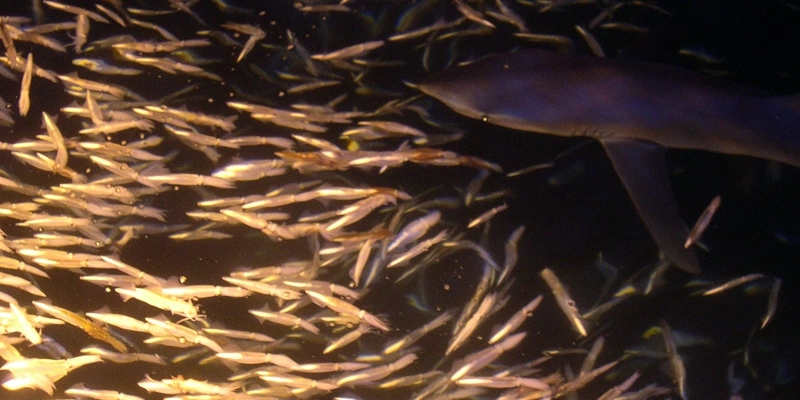 Blue shark hunts squid at night
Blue sharks are also known to eat larger prey, including other sharks and carrion from mammals such as whale and dolphin meat and blubber. In some cases, they have been observed eating seabirds and even cod from trawl nets. They feed around the clock, with increased activity at night.
Blue sharks often work together to herd schools of fish, making it easier for them to catch their prey. Their triangular teeth and high swimming speed are ideal for catching fast-moving prey like squid and fish. This cooperative hunting strategy highlights their social intelligence and adaptability.
| Region | Main Prey | Additional Prey |
|---|---|---|
| Southern Brazil | Baleen whales, Ruvettus pretiosus, Arioma bondi, Histioteuthis spp., Cranchiidae, Ocythoe tuberculata | Seabirds (Puffinus gravis), crustaceans |
| Northeastern Brazil | Alepisaurus ferox, Gempylus serpens, Histioteuthis spp., Tremoctopus violaceus | Seabirds (Puffinus gravis) |
Predators and Threats
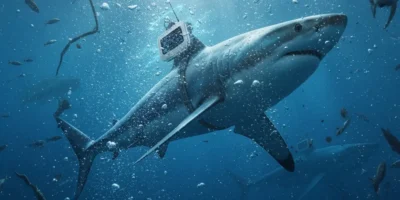
Despite their role as apex predators in many ecosystems, blue sharks themselves have natural predators. Larger sharks such as the great white shark (Carcharodon carcharias), the tiger shark (Galeocerdo cuvier), and the shortfin mako (Isurus oxyrinchus) hunt young and smaller blue sharks.
Killer whales (Orcinus orca) are also known to hunt blue sharks. Additionally, some marine mammals such as California sea lions (Zalophus californianus), northern elephant seals (Mirounga angustirostris), and South African fur seals (Arctocephalus pusillus) have been observed eating blue sharks.
Blue sharks can also host various parasites, including tapeworms like Pelichnibothrium speciosum, which they acquire by eating intermediate hosts such as opah (Lampris guttatus) and longnose lancetfish (Alepisaurus ferox). Research suggests that predators often attack blue sharks from behind, targeting the tail fin, which makes their escape more difficult.
| Predator | Description |
|---|---|
| Great White Shark (Carcharodon carcharias) | Larger shark that hunts smaller blue sharks |
| Tiger Shark (Galeocerdo cuvier) | Opportunistic predator that attacks young blue sharks |
| Shortfin Mako (Isurus oxyrinchus) | Fast shark that hunts blue sharks |
| Killer Whale (Orcinus orca) | Known for attacking blue sharks |
| Marine Mammals | California sea lions, northern elephant seals, South African fur seals |
| Parasites | Tapeworms such as Pelichnibothrium speciosum |
Reproduction
Like many requiem sharks, the blue shark gives birth to live young (viviparous) and nourishes its embryos in the womb via a yolk-sac placenta. The reproductive rate of this pelagic shark is relatively high: litters often consist of several dozen juveniles. Reproduction is cyclical; after reaching sexual maturity (males at around 4–5 years, females at around 5–7 years), a female can typically give birth annually or, in some cases, only every two years.
Mating Behaviour
Blue shark mating is characterised by vigorous clasping. Males insert their claspers into the female and often hold on to her body with their teeth. Typically, the male bites into the female’s dorsal or pectoral fins to gain a grip. As a result, adult females have significantly thicker skin in these areas than males—a protective mechanism against injuries from bite marks from previous matings. Mating itself has rarely been observed directly, but the thick, scarred skin areas on females and the live-born juveniles confirm the described mating process.
Gestation and Pregnancy Duration
After fertilisation, the embryos develop in the womb for about nine to twelve months. The gestation period (pregnancy duration) is thus around a year, so birth typically occurs in spring or summer. During this time, the juvenile sharks are nourished via a yolk-sac placenta. After about a year of gestation, the female will give birth to fully developed juveniles.
Litter Size and Juveniles
The litter size of the blue shark is highly variable. Litters typically consist of several dozen juveniles: a female blue shark gives birth to an average of 15 to 30 young, though in extreme cases, over a hundred offspring have been documented in a single litter. Smaller females give birth to fewer young, while larger and more experienced females can carry significantly more embryos. At birth, the juveniles are already relatively large: they measure about 35 to 50 centimetres and resemble miniature adult sharks. This means they are largely independent from birth and can hunt and react immediately.
Birthing Sites and Nurseries
Blue sharks do not give birth in shallow coastal waters but in the open ocean. Their so-called nurseries (birthing and rearing areas) are often located in nutrient-rich transition zones of the ocean. Studies show that juvenile blue sharks spend their first years of life in larger offshore areas, far from coasts. For example, a large nursery area was identified in the North Atlantic near the Azores, where young sharks remain for about two years. In these offshore nurseries, the juveniles can develop undisturbed. In fact, both female and male blue sharks regularly return to such areas to mate and give birth. Waters off western Europe and northwest Africa are also considered important birthing regions for blue sharks. In German waters, however, births are generally not observed, as the sharks are usually only passing through on migration.
Interaction with Humans
Encounters Between Blue Sharks and Humans
Under normal conditions, encounters between humans and blue sharks usually occur in the open sea. Blue sharks predominantly inhabit pelagic waters and rarely occur in coastal habitats. When divers, snorkelers, or anglers encounter a blue shark, it is generally harmless: the shark is considered curious and not aggressive, typically approaching slowly out of interest. In general, a blue shark quickly recognises that humans are not typical prey, so incidents rarely escalate.
While Diving and Snorkelling
When diving in the open sea – for example, around the Azores – blue sharks may circle dive teams. After initial hesitation, the animals often approach cautiously and inspect the divers with their keen sensory organs. During a typical dive, five to fifteen blue sharks are often observed, moving slowly between the divers and the boat. Spearfishers may also encounter blue sharks: in clear diving areas, bait fish – or the catch brought along while diving – can attract the sharks. Overall, human-shark interactions in these situations usually proceed calmly, as blue sharks rarely perceive humans as prey. A slight residual risk remains that a shark might tug or test out of curiosity at prey being carried. However, this is generally not dangerous.
While Fishing and Deep-Sea Fishing
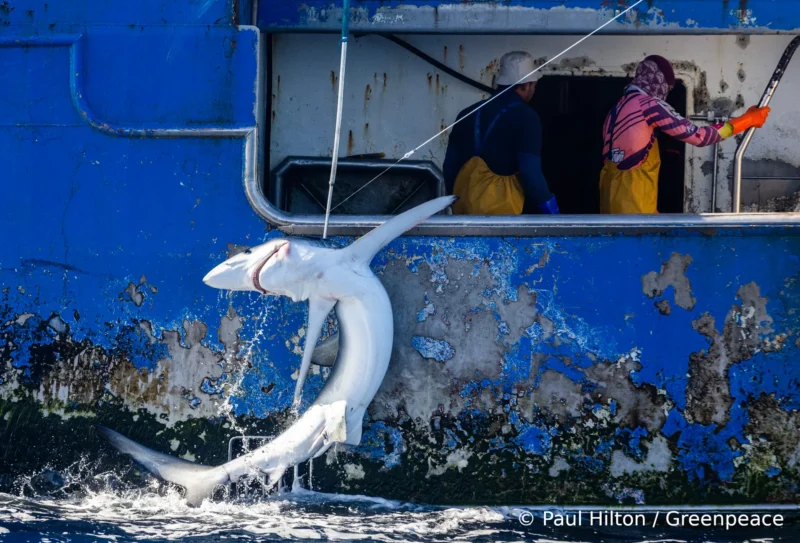
Blue sharks are also occasionally encountered while fishing on the open sea. For sport and recreational anglers, the blue shark is a prized game fish due to its energetic resistance when hooked or on a longline. In commercial fisheries, however, blue sharks are often seen as a nuisance bycatch: they steal bait from hooks or become entangled in nets and longlines. In both cases, the sharks approach primarily where fishing bait or caught fish are drifting in the water. Globally, annual blue shark catches amount to around 20 million animals – mainly as unintended bycatch in longline and trawl fisheries.
Blue Shark Attacks on Humans
Despite the impressive size of the blue shark, the risk of an attack on humans is extremely low. According to data from the International Shark Attack File (ISAF), only 13 unprovoked blue shark bites have been documented worldwide, some of which occurred during plane or ship accidents. Vulnerable situations primarily involved shipwreck survivors and open-water divers in the vast ocean. Since blue sharks rarely come near the coast, attacks on swimmers or coastal divers are practically unknown and ecologically exaggerated in many portrayals. Overall, the danger while diving or swimming remains minimal; blue sharks may, at most, bite out of curiosity at an object or inedible prey, which usually results in no serious injury to humans.
Importance of the Blue Shark to Fisheries
Catch Quantities and Bycatch
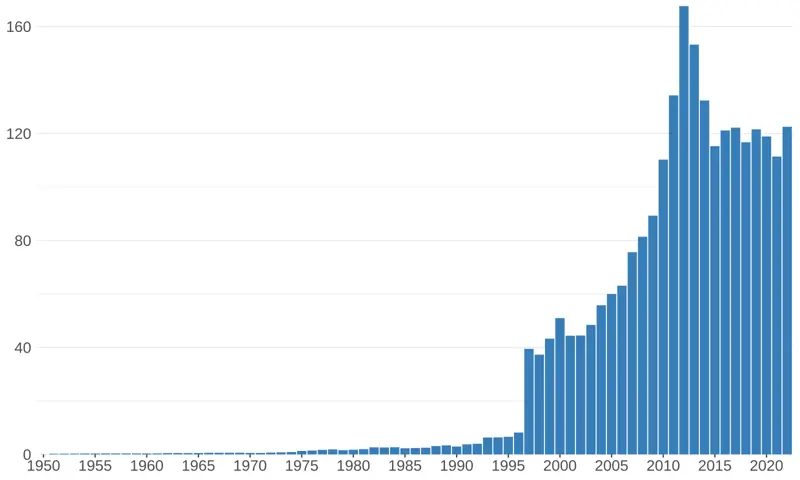
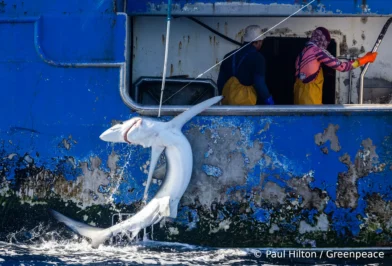
The blue shark is the most heavily fished shark species worldwide. Approximately 20 million blue sharks are caught annually. Since the 1990s, global catch volumes have risen rapidly, peaking in 2013 at around 137,973 tonnes. Since then, catch volumes have declined significantly, which is seen as an indication of the species’ decreasing abundance. Particularly in the Atlantic, blue sharks account for 85–90% of all commercial shark catches. These enormous catch numbers are largely due to high-seas fishing: blue sharks become bycatch in longlines and nets by nibbling on bait fish or attacking caught fish. It is estimated that between 10 and 20 million blue sharks die annually in fishing gear this way.
Utilisation and Marketing
Due to its high uric acid content, blue shark meat has a pronounced flavour and is rarely marketed directly worldwide. It is only used as food in some regions, such as parts of Southeast Asia and Japan. In contrast, shark fins are in high demand: they are sold on the global market primarily for the preparation of shark fin soup. Blue shark skin is also utilised, for example, as leather. In many countries, whole-processed blue shark products enter the market, and in the EU, with its finning bans, only sharks from which fins have not been removed may be traded. Nevertheless, Asian markets have long benefited from the high blue shark catch. Due to the ongoing high removal rates, the blue shark is now listed as Near Threatened on the Red List.
Threat & Protection Status
The blue shark is one of the most widely distributed shark species in the world’s oceans, yet its population is increasingly under threat. Despite its wide distribution, intense fishing pressure, bycatch, and demand for shark fins are taking a heavy toll on this pelagic predator.
Main Causes of Endangerment
The threat to the blue shark primarily stems from human exploitation. The species is extensively targeted by fisheries or killed as bycatch in longline and trawl fisheries. A particularly problematic practice is so-called finning, where sharks have their fins removed before the rest of the body is thrown back into the sea. Since blue sharks are relatively common in many regions of the world’s oceans, they are among the most heavily exploited shark species. The high catch rate persists because their meat, fins, and skin are economically valuable.
Population Trends
Although precise global population figures are difficult to determine, scientific studies indicate a long-term decline in blue shark populations. A significant decline has been observed, particularly in the Atlantic and the Mediterranean. In some regions, a decline of up to 70 percent within a few decades is suspected. The main reasons for this are the low reproduction rate and the high removal rate by fisheries. Juveniles take several years to reach sexual maturity, which significantly slows the recovery of populations.
International Protection Measures
Several international agreements and initiatives are now attempting to better protect the blue shark. It has been included in the Convention on the Conservation of Migratory Species of Wild Animals (CMS) and is subject to catch restrictions in several fishing zones. The EU has also taken measures, including catch quotas and a ban on finning. However, existing regulations are often insufficient or not effectively enforced. Many blue sharks continue to die as unwanted bycatch or enter the market through unofficial channels. The high economic value of the fins makes the consistent implementation of protection measures difficult.
IUCN Assessment and Current Protection Status
The International Union for Conservation of Nature (IUCN) lists the blue shark as “Near Threatened” on its Red List. This classification means that while the species is not currently at immediate risk of extinction, it could move into a higher threat category in the near future if current trends continue. The blue shark already meets several criteria indicating an unfavourable conservation status. The IUCN’s classification is based on comprehensive data collection on catch numbers, reproduction rates, distribution, and population structure.
Profile
- First described:
- Max. size:
- Depth:
- Max. age:
- Max. weight:
- Water type:
- IUCN Status:
Taxonomy
- Kingdom:
- Phylum:
- Subphylum:
- Infraphylum:
- Parvphylum:
- Class:
- Subclass:
- Superorder:
- Order:
- Family:
- Genus:
Dive Centres















News

Blue shark filmed in open water off Almuñécar
Ecuador sets annual shark bycatch quotas for the first time
Shark sensors cut forecast errors by up to 40 percent
Study maps 5,596 records of 33 shark species in Greece
South Korea: 61 shark finds in the East Sea—more than triple 2025
UK: Warmer seas are changing shark occurrences
Ireland: Captured blue shark seriously injures angler
Azores: Study finds conflict between shark tourism and fishing
Mercury in Shark Meat: Study Warns of Brazil’s ‘cação’
Nearly £1 million for England’s sharks: Exeter launches conservation project
EU exported fewer shark fins in 2025, but trade remains a million-euro market
Blue sharks in the eastern Pacific: microfibers and mercury

Blue shark in Weymouth Harbour: rare sighting in Dorset
Blue sharks in the Adriatic: study measures survival after release
More Than Remoras: Why a Shark Is Also Habitat for Other Fish
Blue sharks off Tunisia: why a coastal sighting is not a beach alarm
A glimmer of hope in the Mediterranean: Almería and Alicante as safe havens for endangered sharks
Sharks as hurricane hunters: How researchers turn predators into data providers
Portugal: Fisherman bitten by blue shark 170 km off Vila do Conde – helicopter rescues injured man
Spain: Blue shark injures swimmer in Oliva – beaches temporarily closed
How Blue Sharks Distribute Plastic Pollution Across the World’s Oceans
Sensational discovery: The blue shark can change its colour like a chameleon
Spectacular Encounter: Greek Fishermen Meet Blue Shark off Corfu

Endangered Sharks in the Pacific: Greenpeace Warns of Industrial Overfishing










Newsletter
Shark Alert in Your Inbox