


In Brazil, the dispute over shark and ray meat sold as ‘cação’ has entered a new phase. A court decision was meant to end the use of blanket descriptions without species and origin information in federal purchases. After the deadline expired, however, Sea Shepherd Brasil accused the agencies involved of failing to implement central parts of the order.
Brazil’s Federal Justice system reported on 9 April 2026 on a ruling by the 11th Federal Court in Curitiba. Under the decision, the federal government may no longer purchase shark or ray meat under the generic name ‘cação’ when the exact species and origin are missing. The order arose from a civil action brought by Sea Shepherd Brasil.
What the court required of the federal agencies
The order was not limited to a new field in procurement forms. The federal government, Ibama, Anvisa, ICMBio and the Ministry of Agriculture, Mapa, were required to submit a joint action plan within 90 days. It was to cover species identification, traceability of origin, and appropriate testing for heavy metals and other chemical contaminants.
According to the court, the case examined around 800 federal procurements made between 2021 and 2024, worth 4.75 million Brazilian reais. Generic or incorrect descriptions were reportedly used in 69 per cent of the recorded transactions. The court notice cited a fine of 50,000 reais for each instance of non-compliance.
The scope matters: the decision applies directly to federal procurement. It does not automatically create a general new labelling requirement for every fish shop or supermarket, or for purchases by states and municipalities. That is precisely why the required inter-agency plan is so important: an individual procurement rule was supposed to become an enforceable system.
Sea Shepherd alleges non-compliance
On 1 July 2026, João Lara Mesquita reported for Mar Sem Fim that the deadline had expired without the federal government and the responsible agencies fully complying with the court’s requirements. The organisation had therefore returned to court and requested the application of the stipulated enforcement measures. This allegation comes from the environmental organisation that brought the case; the report does not document a final judicial finding of non-compliance.
At the same time, one concrete implementation step is documented: the official federal procurement portal announced on 7 April that, from that date, federal agencies could no longer purchase shark or ray meat without precise species and origin information. The notice was updated on 3 July. It does not, however, show whether the comprehensive plan involving all five bodies, including traceability, inspections and assigned responsibilities, was submitted on time.
The situation is therefore more nuanced than the headline ‘government defies ruling’ might suggest: a central procurement rule was published, while Sea Shepherd disputes the complete and timely implementation of the wider court requirements. The decisive evidence will be the case record and the court’s response to the organisation’s application.
Why the generic name ‘cação’ is the core problem
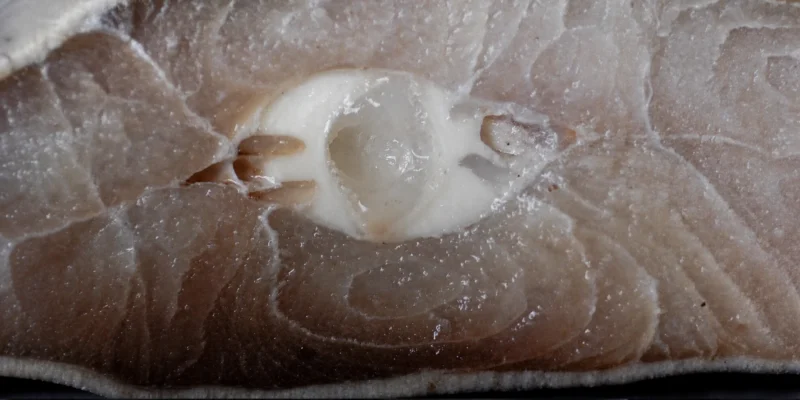
In Brazilian commerce, ‘cação’ can refer to meat from different shark and ray species. Once the animals have been filleted, most external features that could identify the species are gone. Without a scientific name, origin information and a traceable supply chain, procurement officials can therefore hardly determine whether a product came from a threatened or protected species.
We described the scale of public procurement in 2025 in ‘Shark meat on the menu’. The later article ‘Cação is shark’ places those tenders in the wider context of Brazil’s shark meat market: the neutral-sounding generic name linguistically separates the product from the animal and hides demand, conservation risks and international supply chains from many consumers.
Labelling is also a health issue
The required species and origin information is not solely a conservation measure. Sharks and other large marine predators can accumulate mercury and other contaminants through the food chain. This is especially relevant when their meat is served in schools, hospitals, prisons or other institutions to people who did not choose the product themselves.
Our summary of the latest mercury study shows how concrete this risk can be. In the tested sample of imported meat sold as ‘cação’, 95 per cent of samples exceeded the international limit used by the study and 77 per cent exceeded the Brazilian limit. Clear labelling therefore does not replace contaminant testing, but it makes targeted inspections and recalls possible.
How implementation should be measured
The effect of the court decision can be tested against concrete questions: do new tenders include scientific species names and reliable origin information? Can supply routes be traced back to the catch or import? Is there a coordinated heavy-metal testing programme, and are violations actually penalised? Only this evidence will show whether the formal procurement rule produces effective consumer and shark protection.
The case also exposes a structural weakness. Government representatives confirmed during the proceedings that Brazil has lacked a continuous national fisheries statistics programme for around three decades. Without reliable data, unambiguous names and enforcement, even a sound court order is difficult to implement. The next important development is therefore not another announcement, but a verifiable action plan.