


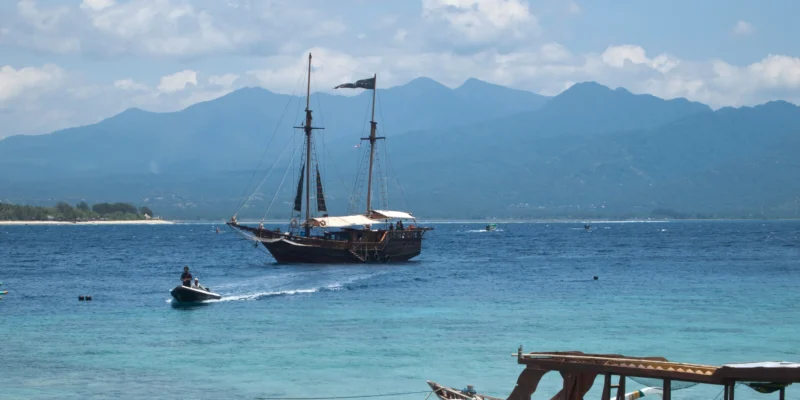
Boats that would otherwise head out to catch sharks take visitors to sea: on the Indonesian island of Lombok, Project Hiu combines tourism with alternative income for fishers. Condé Nast Traveler featured the project on 22 September in its “Bright Ideas in Travel 2026” selection, citing around 80 participating fishers and 15 boats.
Working with fishers
Australian filmmaker Madison Stewart is behind the project. On the project website, she describes how documenting the shark trade developed into cooperation with local people. Her approach recognises that fishing supports families. An alternative therefore needs to be economically viable too.
Project Hiu rents boats and employs local crews for tourist trips. Fishers contribute their experience at sea. The initiative’s name reflects its purpose: “hiu” means shark in Indonesian.
Contracts temporarily replace fishing
The project explains how this transition is organised in a separate article about its contract model. Captains and boats are employed in tourism for one month at a time. During that period, they commit not to fish. Assignments depend, among other things, on visitor availability and other work opportunities.
Before signing contracts, the team says it discusses economic conditions with captains and village representatives. This includes fishing income, fuel and boat costs, and supporting families. The project also funds the conversion of selected boats for tourism.
Reliable income is what matters
The model therefore does not automatically mean that everyone involved permanently leaves fishing. It creates paid periods during which contracted boats are not used to catch fish. How reliably this can become a longer-term alternative also depends on whether such employment is regularly available.
The figures quoted by the magazine describe participation in the project. On their own, they demonstrate neither a specific number of sharks saved nor a recovery of populations. The practical approach nevertheless remains clear: income should be generated where fishing has previously provided a livelihood.