A new study in Brazilian Journal of Biology documents for the first time six pregnant sharks from three species in the Ilha Grande–Sepetiba coastal complex in Rio de Janeiro State. The finds range from 2006 to 2024 and cover different stages of embryonic development. This increases the evidence that the two bays are more than just a transit area.
The summary of Agência Bori published on August 14th speaks of a shark nursery. The technical paper puts it more cautiously: It describes Ilha Grande–Sepetiba as a possible reproductive hotspot and as a potential habitat associated with a nursery. In order to provide definitive confirmation, there is a lack of systematic evidence of newborns and their repeated use of clearly defined shallow water zones.
Six pregnant females from three species
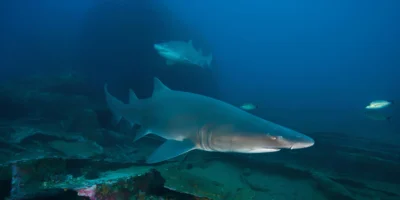
The oldest records concern two sand tiger sharks ( Carcharias taurus ). Both were recorded on April 25, 2006 in the buffer zone of the Ecological Station Tamoios in Ilha Grande Bay. One female carried two well-developed embryos around 77 centimeters long, the other carried four significantly smaller embryos measuring around 19 to 21 centimeters.
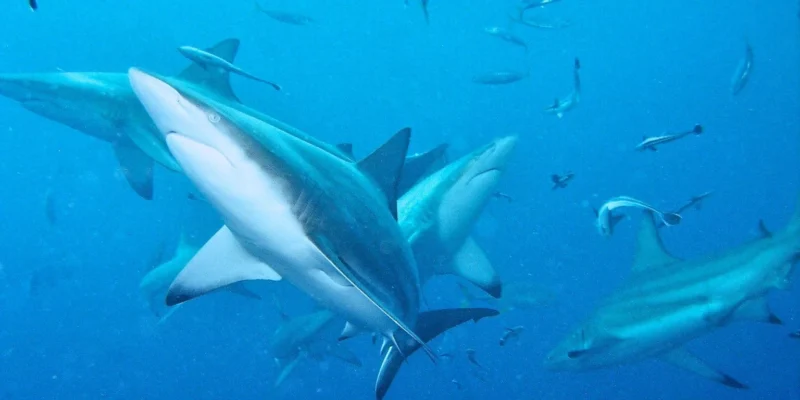
Two pregnant large blacktip sharks, also called spinner sharks (Carcharhinus brevipinna), followed in Sepetiba Bay in August 2023. The animals were documented within the marine protected area Boto-Cinza. Each female carried six or seven embryos at an advanced stage of development; all were longer than 40 centimeters.
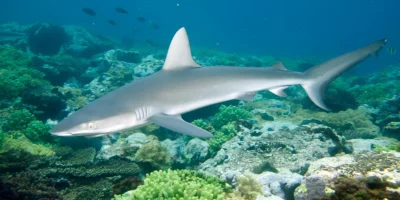
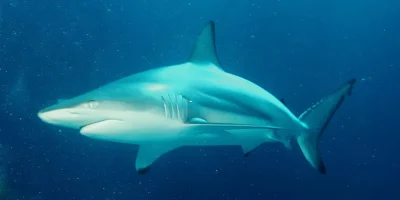
The two most recent cases were Small blacktip sharks ( Carcharhinus limbatus ) in Ilha Grande Bay. A 2.14 meter long female was found dead at Piraquara in June 2020, carrying five well-developed embryos. A 2.30 meter long female previously marked with a satellite transmitter was examined in June 2024; The researchers found four small embryos with large yolk reserves and thus an early stage of development.
What the data proves – and what is still open
The range from early to advanced embryonic stages is the key clue for the researchers. It shows that several endangered shark species use the region during different stages of pregnancy. Repeated finds of pregnant lesser blacktip sharks in similar seasons also support the assumption of site-specific use.
However, neither the size of a local population nor the frequency of pregnant females can be derived from six animals. Data collection was opportunistic and did not involve the same effort over all years. It combines bycatch from small-scale fishing, stranding finds and scientific monitoring. This makes the individual cases biologically valuable, but limits statistical comparisons.
The term nursery also has a narrower meaning in shark research than in everyday language. Future studies must show whether newborns and young animals use the area regularly, over longer periods of time and more frequently than comparable coastal sections. Telemetry, drone flights and standardized recordings are intended to close this gap.
A mosaic of shelters and stresses
Ilha Grande and Sepetiba form an approximately 3,100 square kilometer transition area to the Southwest Atlantic on the coast of Brazil. Mangroves, sheltered bays, islands, rocky shores and shallow sandy areas provide refuge for pregnant females and food for potential young as well as protection from larger predators.
At the same time, the area is heavily used. Fisheries, ports, oil terminals, industry, urbanization and the nuclear power plants at Angra dos Reis affect the same coastal space. Protected areas only cover parts of the complex. Two of the three documented species were also recorded in connection with fish catches – an immediate indication that formal area protection alone does not protect animals from bycatch everywhere.
Piraquara de Fora is already internationally recognized
Some of the new evidence focuses on Piraquara de Fora. The bay was recognized as Important Shark and Ray Area in 2025. According to the assessment of the IUCN SSC Shark Specialist Group, small blacktip sharks occur there regularly and seasonally. Groups of five to 113 animals were observed during drone flights between 2020 and 2024, especially between April and mid-September.
The ISRA classification confirms the bay’s ecological importance, but it does not create a legally binding protected area. The function of the shark aggregation is still considered unresolved. Even so, pregnant females, seasonal returns and the new evidence involving several species make Piraquara a priority for further research and spatial conservation planning.
We have already reported on the field work, the changes in the local fishing community and cautious ideas for ecotourism in the contribution to the protection project in Piraquara de Fora. The new study adds to this story a previously missing comparative reproductive perspective across three shark species and two bays.
Why protecting pregnant sharks is particularly effective
Large coastal sharks grow slowly, reach sexual maturity late and give birth to comparatively few young. The loss of a single pregnant female therefore not only means the death of an adult animal, but also the loss of an entire litter. Sites that are used in multiple stages of reproduction can be disproportionately important for the recovery of regional populations.
The study does not yet define the boundaries of a new protected area or prove the existence of a single, clearly delimited nursery. It does, however, provide a solid basis for more targeted monitoring, reduced bycatch and protective measures during the seasons and in the coastal areas where pregnant females occur most often. That is the practical value of these six rare records.