


Spinner shark - Carcharhinus brevipinna
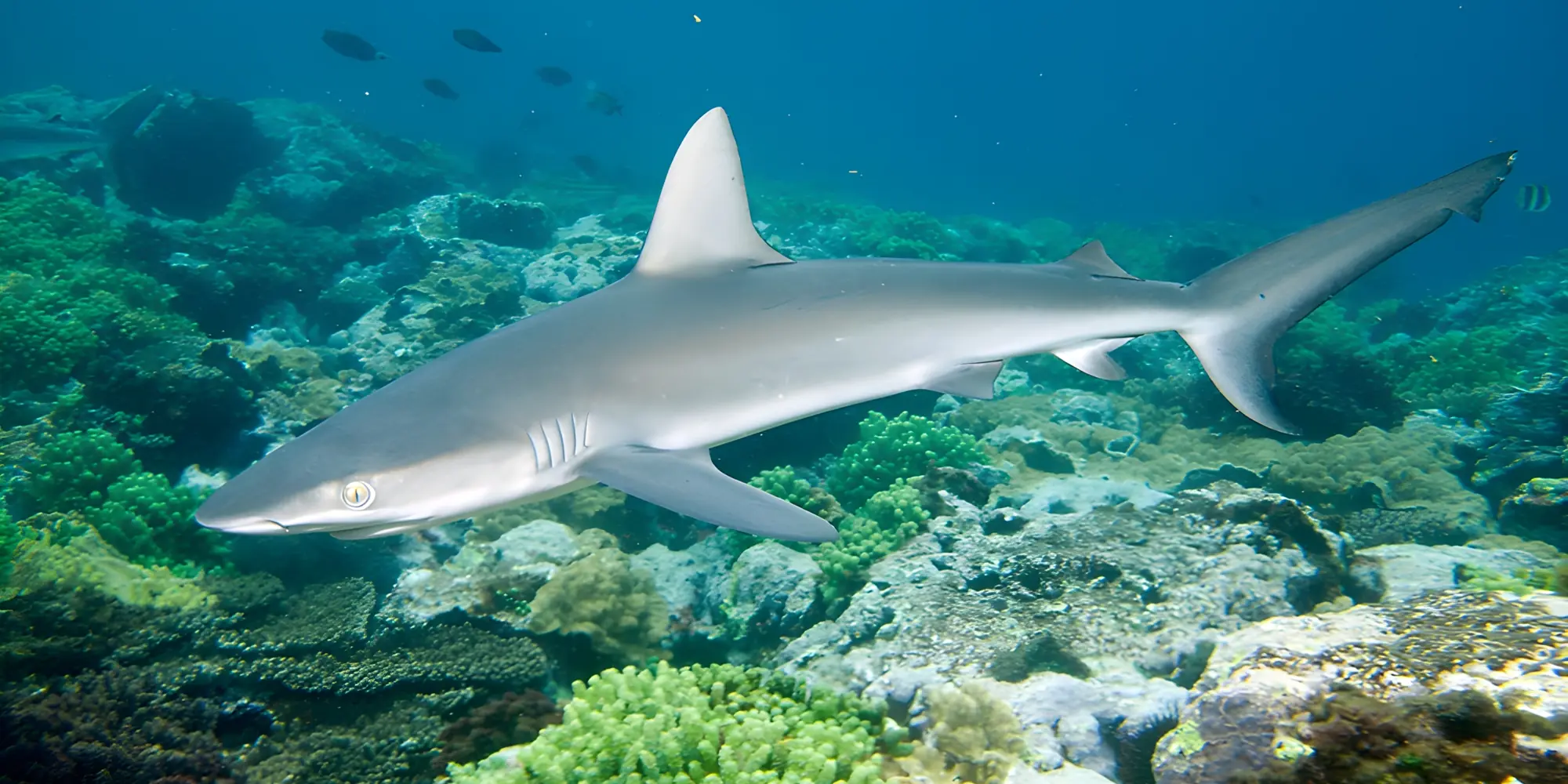
Body structure, features & anatomy
Identification
The spinner shark Carcharhinus brevipinna is a slender, fast requiem shark with a grey to bronze back and pale underside. Florida Museum lists the long pointed snout, the absence of an interdorsal ridge and the dark fin tips of adults as key field marks.
The anal fin is especially useful: in adult spinner sharks it is usually black-tipped. That helps separate the species from the often-confused blacktip shark Carcharhinus limbatus.
The first dorsal fin begins behind the free rear tips of the pectoral fins, the pectoral fins are narrow and pointed, and the body is elongated. Large animals can exceed two metres; FishBase lists maximum values a little above three metres.
Distribution & habitat
Coasts, shelves and migrations
The spinner shark lives in warm-temperate and tropical seas, mainly over coastal shelf areas. FishBase lists the species for the Atlantic, Mediterranean and Indo-West Pacific, from coastal water to about 100 metres depth.

Typical habitats include open coasts, island and continental shelves, bays, estuaries and turbid areas with abundant baitfish. Juveniles use shallower protected coastal areas, while larger animals are more often seen along shelf edges, channels and baitfish schools.
In parts of the western Atlantic the species migrates seasonally along the coast. Sightings can therefore be strongly regional and seasonal, especially where small schooling fishes move in spring or summer.
Life history, diet & reproduction
Hunting and reproduction
Spinner sharks are fast predators of the upper and middle water column. They feed mainly on schooling fishes such as sardines, herrings, mullets and mackerels, but also take smaller sharks, rays, squid and other cephalopods.
The Florida Fish and Wildlife Conservation Commission describes the behaviour behind the English name: spinner sharks rush upward into fish schools, rotate around their own axis and sometimes break the surface in a leap. This is an efficient way to hit dense prey schools.
The species is placental viviparous. Carlson & Baremore (2002) showed that growth and maturity in the Gulf of Mexico and western North Atlantic need regional comparison; like other coastal sharks, spinner sharks do not mature immediately.
Threats & protection status
Why populations come under pressure
The spinner shark is listed globally as Vulnerable by the IUCN Red List. The main pressure is fishing: the species is taken deliberately and also appears as bycatch in longlines, gillnets and other coastal fisheries.
Its coastal distribution, nursery use and frequent confusion with similar Carcharhinus species all matter. When catches are reported only as a shark group, regional overuse of spinner sharks can remain hidden.
Protection therefore depends on species-level identification, catch limits, bycatch reduction and nursery protection. Good catch data are especially important for fast coastal sharks that can seem common while slowly declining.
Spinner shark & humans
Encounters and safety
Spinner sharks are normally not aggressive toward people. They hunt mostly fishes and cephalopods, often in moving coastal water, and usually avoid direct contact.
Bite reports can be confused with blacktip shark incidents because both species use similar coastal habitats and look alike. Practical safety is simple: do not feed, touch or corner sharks, and keep distance from hooked or speared fish.
For divers, Carcharhinus brevipinna is more a shark of open coasts, island channels and shelf edges than a predictable resident reef shark. Encounters can be impressive because the animals are fast, slender and very active around baitfish.
Profile
- First described:
- Max. size:
- Depth:
- Max. age:
- Max. weight:
- Water type:
- IUCN Status:
Taxonomy
- Kingdom:
- Phylum:
- Subphylum:
- Infraphylum:
- Parvphylum:
- Class:
- Subclass:
- Superorder:
- Order:
- Family:
- Genus:



News

Newsletter
Shark Alert in Your Inbox