


Grey reef shark - Carcharhinus amblyrhynchos
Body structure, features & anatomy
Identification
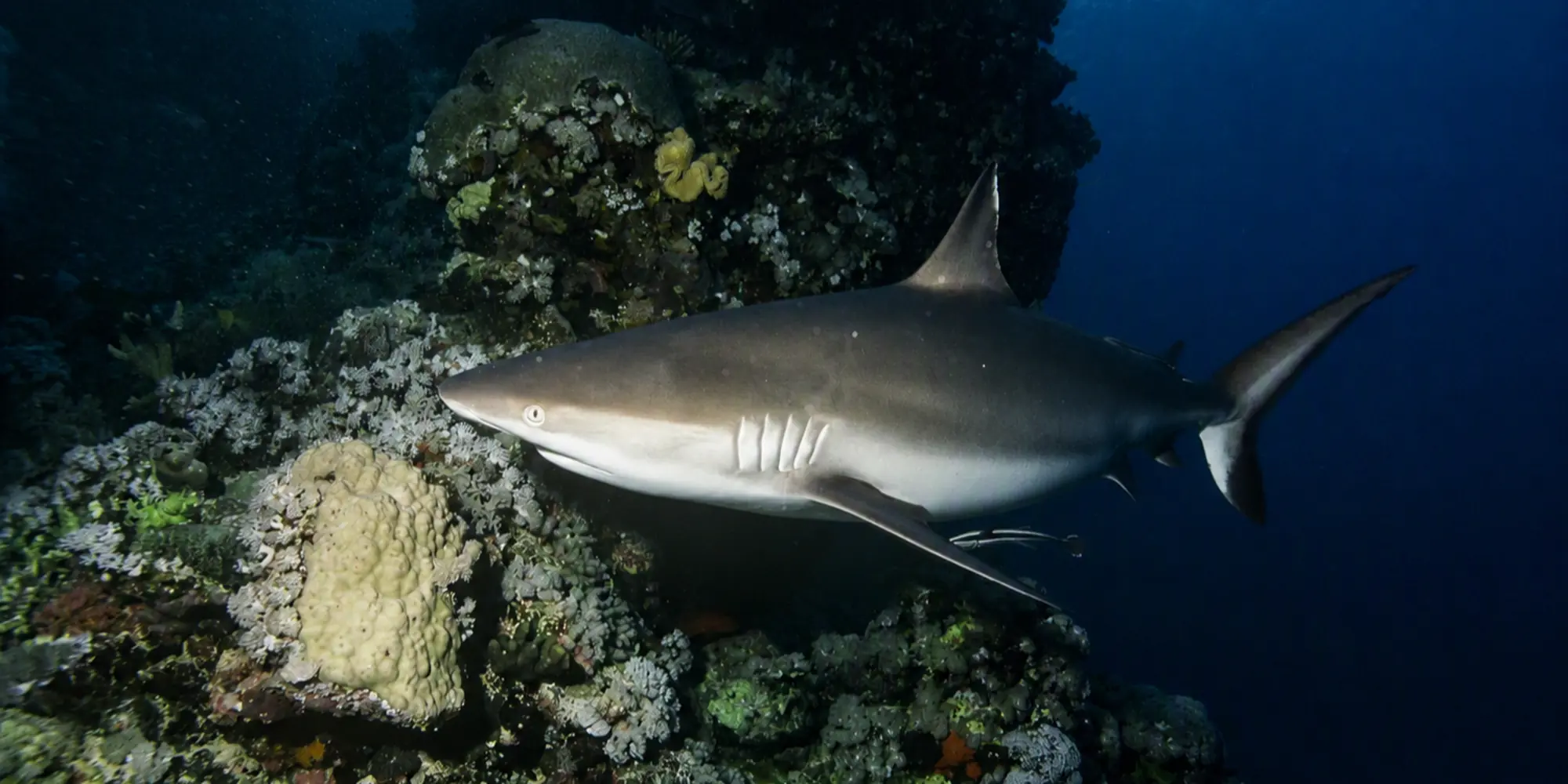
The grey reef shark Carcharhinus amblyrhynchos is a medium-sized requiem shark with a strong, streamlined body, a broad rounded snout and long, sickle-shaped pectoral fins.
It is grey to bronze-grey above and pale below. The clearest field mark is the broad dark trailing edge of the tail fin; several other fins can also show dark tips or margins. In some populations the first dorsal fin may have a pale edge.
Taxonomically, the species belongs to the family Carcharhinidae. The Florida Museum profile matches what divers see underwater: a classic reef-shark shape, little patterning and a distinct dark tail margin.
Distribution & habitat
Reef edges and passes
The grey reef shark lives across the tropical Indo-Pacific. Its range extends from the western Indian Ocean and Red Sea through island and coral-reef systems to the central Pacific Ocean.

Typical habitats are outer reefs, atoll passes, drop-offs and current-swept lagoon edges. FishBase lists the species as marine, reef-associated and oceanodromous; it is usually recorded to about 280 metres, although deeper records exist.
For divers, the most relevant places are channels with current, reef edges and clear-water passes. Grey reef sharks often patrol fixed lines there and may form loose daytime groups.
Life history, diet & reproduction
Diet and reproduction
Grey reef sharks are active reef predators. They feed mainly on reef fishes, but also take squid, octopuses and crustaceans. By day they can appear controlled and site-attached; at night and in stronger current their activity increases.
The species is placental viviparous. Litters are small; FishBase gives 1 to 6 pups and a gestation of about twelve months.
Research in PLOS ONE shows that growth and life-history traits can vary strongly across regions. That matters for conservation: a reef with regular sightings can still recover slowly after losses.
Threats & protection status
Why local populations can collapse
Globally, the grey reef shark is listed as Endangered by IUCN Red List. Main pressures include fisheries, the fin trade, bycatch and the species’ close dependence on productive but accessible reef habitats.
It can look common at good dive sites, but that does not make it secure. Site fidelity and small litters mean local removals can thin out a population quickly.
Protection is most effective where reefs, passes and shark aggregation areas receive long-term relief from fishing pressure. Marine protected areas, catch limits and well-managed shark tourism can support each other here.
Grey reef shark & humans
Diving with grey reef sharks
For divers, the grey reef shark is one of the defining Indo-Pacific reef sharks. In places such as Fiji, French Polynesia, Palau, the Maldives and parts of Micronesia, it is a classic reef and pass encounter.
The species is not harmless, but it is readable. When it feels crowded it may lower its pectoral fins, arch its back and exaggerate its swimming. Shark Research Institute describes this body language as one of the species’ key signals.
Good encounters come from distance, calm positioning and respect for current, visibility and group dynamics. On baited dives, the local team’s rules matter; away from feeding, restraint is usually the best approach.
Profile
- First described:
- Max. size:
- Depth:
- Max. age:
- Max. weight:
- Water type:
- IUCN Status:
Taxonomy
- Kingdom:
- Phylum:
- Subphylum:
- Infraphylum:
- Parvphylum:
- Class:
- Subclass:
- Superorder:
- Order:
- Family:
- Genus:
Dive Centres






News

Trevallies use sharks as mobile scratching surfaces
More Than Remoras: Why a Shark Is Also Habitat for Other Fish
Fiji: Spearfisher Henry Gibbs survives severe shark bite
Court stops export of thresher sharks and silky shark in Costa Rica

Papua New Guinea establishes the largest marine protected area in its history




Newsletter
Shark Alert in Your Inbox