


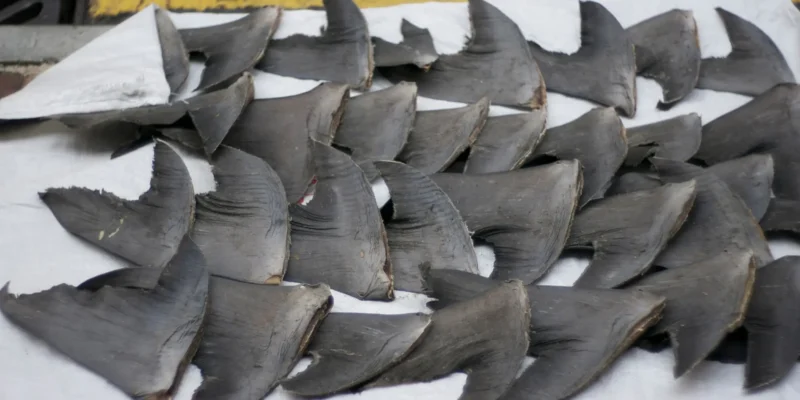
The port of Dakar is said to be a central hub for illegally obtained shark fins from the Atlantic longline fishery. This is the result published on July 16, 2026 Report “Cut & Run” of Environmental Justice Foundation (EJF). Be the focus Chinese and Taiwanese Tuna longline vessels that called at the Senegalese port between 2020 and 2025.
The results are based on statements from crew members, photos and videos from everyday life on board, AIS ship data and trading data. These are documented allegations and risk analyzes of the organization, not legal findings against each ship or company mentioned. This distinction is particularly important because EJF also derives possible supply chains from the data without proving the illegal origin of each individual Tuna delivery.
41 of 71 longliners arriving at Dakar were affected
EJF surveyed a total of 124 between 2020 and 2026 Indonesian and Filipino Fishermen who had worked on Chinese or Taiwanese longliners. 87 of them reported having experienced finning on their ships. For the analysis, 130 longliners active on the International Commission for the Conservation of Atlantic Tunas (ICCAT) were considered: 49 from the Chinese and 81 from the Taiwanese fleet.
According to the EJF evaluation, of these ships, 40 Chinese and 31 Taiwanese longliners called at Dakar at least once. Witness accounts link 41 of these 71 ships to finning: 28 Chinese and 13 Taiwanese. This corresponds to 70 percent of the Chinese and 42 percent of the Taiwanese Dakar runners examined. Based on the entire active fleet considered, the shares were 57 and 23 percent respectively.
From bycatch to targeted hunting
Finning means cutting off a shark’s fins and throwing the body overboard, some of them still alive. According to the statements, sharks were often caught as bycatch on tuna longlines. However, several fishermen also described targeted hunting: with harpoons, modified fishing gear, special bait and even shark meat, which in turn became the catch more sharks had been used. Dozens of animals are said to have been caught on some ships every day.
Footage provided by crew members appears Hammerhead sharks, bigeye thresher sharks (Alopias superciliosus) and oceanic whitetip sharks (Carcharhinus longimanus) to show. Extensive retention bans apply to these groups or species in the ICCAT area. EJF also points out that the species identification is only to be understood as an indication due to the sometimes poor recording quality. Juveniles and very small sharks can also be seen in pictures.
Nocturnal discharges and hidden fins
47 fishermen interviewed, who worked on 24 contaminated ships, said that shark fins were brought ashore directly in Dakar or after being transferred to collection ships there. 14 fishermen described discharges at night. Ten said that, to their knowledge, the authorities did not monitor the unloading of their ships; two others claimed that those responsible knew about the fins and did not intervene. One statement also contains a specific accusation of bribery.
The reports describe systematic cover-ups. Fins were hidden under bait or deep in cold storage, discarded before inspections or unloaded separately from the rest of the catch. Captains and officers collected phones and deleted photos or videos. Cameras on board had a deterrent effect in some cases, but were also switched off or bypassed, according to witness statements. This shows why video surveillance only helps if recordings are stored in a tamper-proof manner and evaluated independently.
Senegal has long been part of the global fin trade
According to the trade data evaluated in the report, Senegal exported around 1,360 tons of shark fins from 2015 to 2024, making it 16th of the 20 largest exporting countries by weight. China and Hong Kong each accounted for 24 percent of exports recorded. The port of Dakar is therefore not just a landing point, but a possible transition between the Atlantic fishery and highly concentrated Asian markets.
The problem doesn’t end with the fins. More than 1,800 tons of tuna and tuna-like products were shipped directly from Senegal in 2024 Japan exported. EJF also draws possible routes via processors Thailand and Singapore up to the USA, after South Korea and Italy after. These connections reveal a supply chain risk: legally sold tuna may come from ships on which finning is said to have taken place at the same time. However, they do not prove that each shipment mentioned was caught illegally.
Why the five percent rule leaves a gap
ICCAT prohibits finning, but currently allows fins and bodies to be landed separately. On board, the fins may not make up more than five percent of the weight of the shark bodies carried. This ratio rule makes controls difficult: fins can hardly be assigned to individual bodies and species, the weight ratios differ depending on the type and processing, and some of the bodies can be retained while other bodies disappear into the sea.
The more effective rule is “fins naturally attached”: Sharks may only be landed with their fins naturally attached to their bodies. This makes it easier for inspectors to check the type, number and condition of the animals. The one that has been in effect since 2026 ICCAT-Rule 25-11 on port state measures generally requires foreign ships to register at least 72 hours before arrival. If there is evidence of IUU fishing, port access or port services may be refused; Suspicious ships should be given priority during inspections.
EU warning and new reform steps in Senegal
The European Commission issued Senegal a “yellow card” in May 2024. Among other things, she criticized the control of Senegalese ships outside its own waters, the monitoring of foreign fishing vessels in the port of Dakar and irregularities in exports to the EU. The warning is not yet an import ban, but opens a formal procedure; If deficiencies persist, a “red card” with trade sanctions may follow.
However, the EJF report does not appear in a political deadlock. After Information from FAO from June 11, 2026 Senegal has adopted a new handbook of standard operating procedures for the implementation of the Port State Agreement as well as legal instruments on ship surveillance systems, transhipment and port State measures. The revision of the Fisheries Act also continued. This means that new instruments are available – the decisive factor will be whether they are used around the clock, on a risk-based basis and with sufficient staff.
In 2025, Senegal also supported a proposal at ICCAT to land sharks only with naturally attached fins, without exceptions. EJF sees this as a clear contrast between Senegal’s international position and the conditions in Dakar described by crew members. The latest reform step can only resolve this contradiction if controls actually detect illegal landings and sanctions follow.
What needs to change after EJF
EJF calls for Chinese and Taiwanese Tuna longline vessels in Dakar to be treated as high-risk vessels, for pre-registrations to be consistently checked and for shark fins to be specifically searched for during every inspection. Inspectors would have to be trained, equipped and also present at night. Cameras in port and on board should complement, not replace, independent monitoring.
In addition, the organization recommends a no exception rule for naturally attached fins, a complete one Observation of industrial fleets by humans or electronic systems and published data on port calls, inspections and denied entry. Importing states, traders and processors should trace tuna supply chains back to the fishing vessel and include risks from finning in their due diligence obligations.
New rules must be measured by their implementation
The EJF data does not provide a complete picture of every fishing operation in the Atlantic. However, they show a recurring pattern across numerous ships, years and independent statements. Dakar is therefore a crucial test point: if Senegal consistently implements the new procedures, the port can interrupt illegal supply chains. If pre-registrations, inspections and traceability remain incomplete, fins and high-quality Tuna products can continue to reach global markets.