


Oceanic whitetip shark - Carcharhinus longimanus
Body structure, characteristics & anatomy
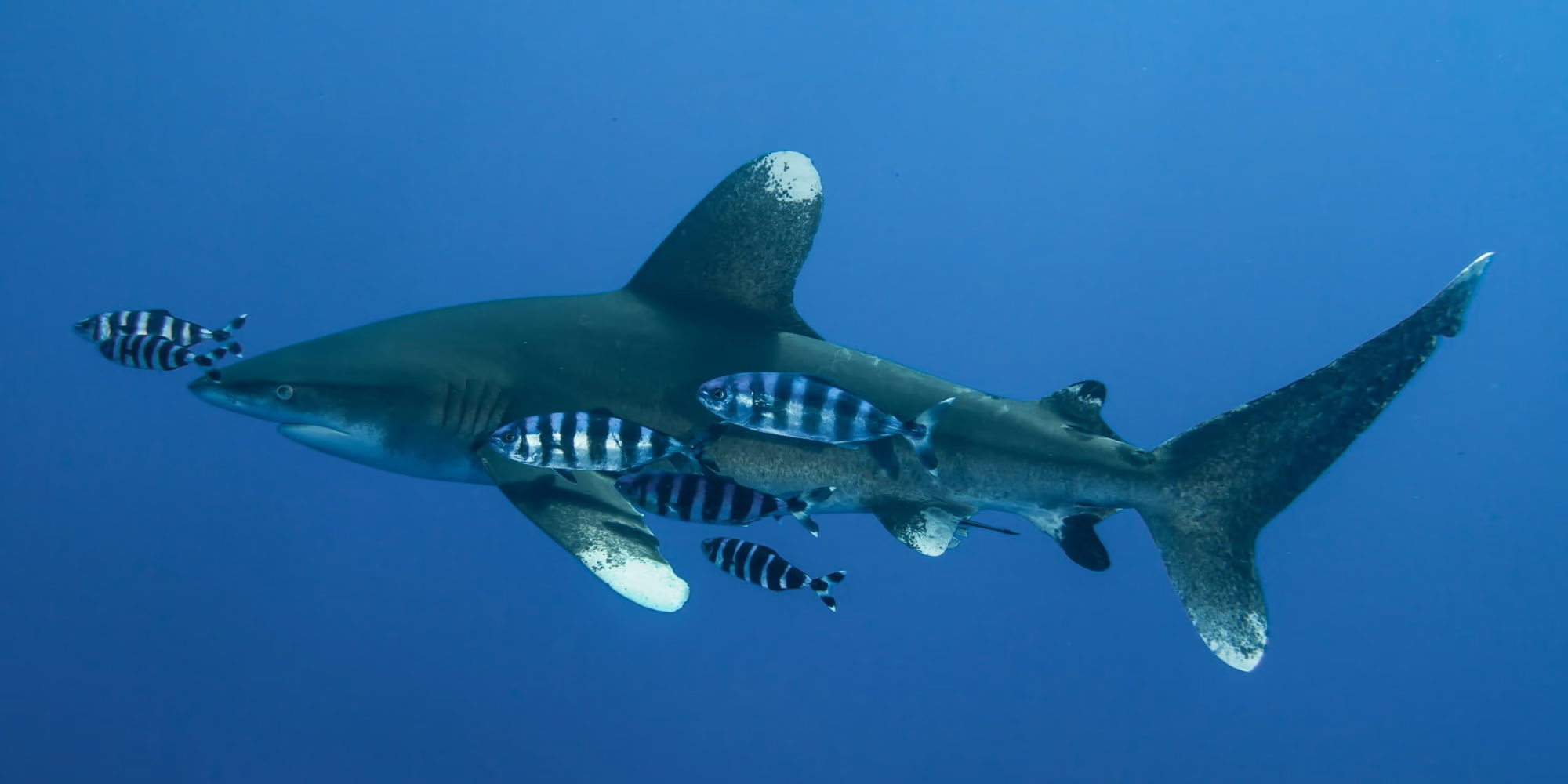
The oceanic whitetip shark, scientifically known as Carcharhinus longimanus, is one of the most striking inhabitants of the open ocean. With its characteristic long pectoral fins and the eponymous white tips, it is easily recognisable. But behind the distinctive appearance lies a fascinating organism with numerous anatomical peculiarities. In this article, we take a detailed look at the body structure and the differences between the sexes of this shark species.
Body structure and size
The body of the oceanic whitetip shark is streamlined and powerfully built – perfectly adapted to life in the open sea. Adult animals typically reach a length of between 2.5 and 3.5 metres. Some specimens can even grow up to four metres long. The weight varies depending on size and sex, ranging from 50 to 170 kilograms.
The body appears relatively bulky compared to other shark species. Particularly striking are the very long, rounded pectoral fins, which give it a unique silhouette profile. The dorsal and caudal fins also appear disproportionately large in relation to the rest of the body.
Fins and nomenclature
The oceanic whitetip shark is named for the striking white tips on its pectoral, dorsal, caudal, and pelvic fins. These white markings stand out clearly against the otherwise grey-brown to bronze-coloured body. They likely serve as a means of communication among conspecifics and may help to confuse or irritate prey during hunting.
The pectoral fins are not only long but also broad and sickle-shaped. Their function goes far beyond mere stabilisation – they actively assist in turning manoeuvres and enable energy-efficient gliding through the water.
Head and sensory organs
The head of the oceanic whitetip shark is broad and slightly flattened. The snout is rounded, with small, closely spaced nostrils. The large, round eyes are also striking, which can adapt to the changing light conditions in the high seas.
Like all sharks, this species possesses a highly developed sensory arsenal. The so-called ampullae of Lorenzini – specialised receptors in the head region – enable the detection of electrical fields, such as those generated by the muscle movements of potential prey. The sense of smell is also extremely fine, allowing the shark to detect blood trails over several kilometres.
Skin structure and colouration
The skin of the oceanic whitetip shark is covered with tiny, tooth-like scales – the so-called placoid scales. These give the skin a rough texture and reduce water resistance, allowing the animal to swim faster and more efficiently.
The base colouration varies between grey, bronze, and olive green, with the underside always being lighter. This so-called countershading effect helps the shark to camouflage itself better in the water, whether viewed from above or below.
Differences between males and females
Although male and female oceanic whitetip sharks appear very similar externally, there are some physical characteristics that allow for differentiation. Male sharks possess so-called claspers – paired reproductive organs on the pelvic fins. These are clearly visible and serve to transfer sperm during mating.
Females, on the other hand, generally have a slightly greater body length, especially when fully grown. Studies show that female oceanic whitetip sharks are often more robustly built and have thicker skin – a possible protective mechanism against bite injuries from males during mating.
Distribution & habitat
The oceanic whitetip shark is one of the most well-known inhabitants of the open ocean. Its striking white fin tips and graceful swimming style make it interesting not only to marine biologists but also to divers and nature enthusiasts. But where exactly does this shark species live, and which factors influence its habitat? In this article, we take a close look at the geographical distribution and the ecological requirements of Carcharhinus longimanus.
Global distribution in tropical and subtropical waters
The oceanic whitetip shark is found almost worldwide in all tropical and subtropical marine regions. Its preferred habitat extends around the equator and ranges approximately from 30 degrees north to 30 degrees south latitude. It occurs in the Atlantic as well as the Indian and Pacific Oceans.
Typical locations include the Caribbean, the Red Sea, the coasts of East Africa, the waters around Indonesia, and the central Pacific. The species is also regularly observed in the Gulf of Mexico and along the western Atlantic coast of the Americas.
A typical inhabitant of the high seas
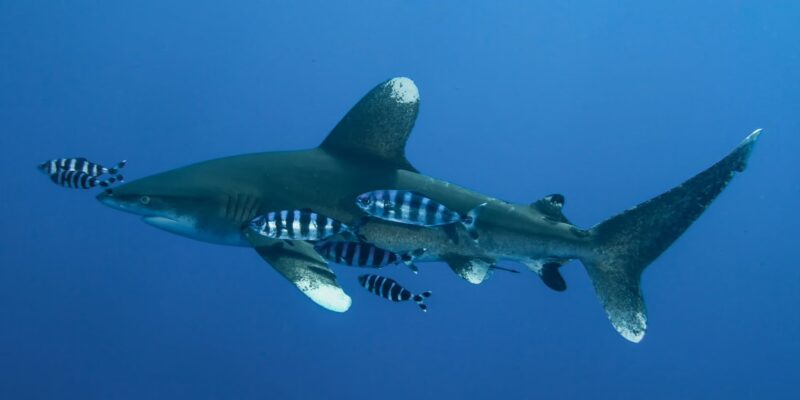
Unlike many other shark species, the oceanic whitetip shark does not prefer shallow coastal waters but lives mainly in the open ocean. This so-called pelagic lifestyle means that it is usually found far from land or coral reefs. It is often sighted at depths of up to 150 metres, although it prefers the upper water layers between 0 and 70 metres.
The shark is particularly common near the surface in regions with pronounced temperature differences between the water and air layers. There, it benefits from the abundant prey such as squid, flying fish, and other schooling fish.
Temperature and oxygen requirements
As a warmth-loving species, the oceanic whitetip shark prefers water temperatures between 20 and 28 degrees Celsius. It is rarely found in colder waters. Its activity is closely linked to the ambient temperature, as its metabolism, being an ectothermic animal, is highly temperature-dependent.
The oxygen content of the water also plays an important role in its habitat. In oxygen-poor zones, such as those found in certain deep-sea areas, the species is rarely encountered. Instead, it prefers well-mixed water layers with sufficient oxygen content.
Migratory behaviour and orientation
The oceanic whitetip shark is considered more stationary than many other pelagic sharks. Although it does cover greater distances in search of food, long-term seasonal migrations, as seen in other species, have hardly been documented. Many individuals seem to remain in certain ocean regions for extended periods.
For orientation, the shark uses a combination of different senses. Magnetic field perception, temperature gradients, currents, and chemical signals in the water help it navigate over vast distances. Despite the apparent vastness of its habitat, it knows the structure and dynamics of its environment remarkably well.
Influence of environmental changes
Like many pelagic species, the oceanic whitetip shark is sensitive to changes in the marine ecosystem. Rising water temperatures, overfishing, and increasing pollution of the oceans are increasingly affecting its habitat. In some regions, declines in sightings have been observed in recent decades, which can be attributed to changing environmental conditions and human influences.
In particular, commercial high-seas fishing, in which the shark often ends up as bycatch in fishing nets, has significantly reduced its populations in many areas. The loss of large, contiguous habitats and the disruption of its movement patterns can have serious long-term effects on the species.
Adaptation artist of the open seas
The oceanic whitetip shark is a fascinating example of adaptation to life in the open sea. Its distribution range extends across large parts of the world’s oceans, yet its ecological niche is clearly defined. The combination of tropical temperatures, oxygen-rich water layers, and open space makes the ocean its ideal home. However, this very habitat is increasingly under threat. To preserve this impressive shark species in the long term, a better understanding of its way of life and ecological needs is essential.
Lifestyle, diet & reproduction
The oceanic whitetip shark is considered one of the most charismatic inhabitants of the open seas. With its distinctive appearance and calm yet determined swimming style, it not only captures the attention of researchers but also fascinates divers worldwide. In this article, we take a closer look at its lifestyle, hunting strategies, and reproduction of this extraordinary shark species.
Behaviour in the high seas
The oceanic whitetip shark prefers to live in the open ocean, far from coastal regions and coral reefs. There, it usually moves calmly through the upper water layers. Its behaviour is considered curious and, in certain situations, even aggressive, especially when food sources are nearby.
Although it is often described as a solitary animal, smaller groups are occasionally observed in the wild, particularly when there is plenty of food. This leads to a noticeable social dynamic, where dominance behaviour and competition for food play a role. In such moments, the otherwise leisurely shark can appear surprisingly agile and assertive.
Hunting behaviour and diet
The oceanic whitetip shark is an opportunistic hunter. This means it takes every opportunity to obtain food and adapts its hunting strategy flexibly to the prevailing conditions. It feeds mainly on bony fish, squid, flying fish, and crustaceans. Occasionally, it also eats carrion or preys on smaller sharks and rays.
Its long pectoral fins enable it to glide efficiently through the water, allowing it to cover large distances with little energy expenditure. When hunting, it uses its excellent senses: in addition to its sense of smell and the ability to detect electrical fields, its eyesight is also important for spotting prey.
In areas with a high density of prey – such as around drifting schools of fish or whale fall sites – the shark can become very active and competitive. It then exhibits pronounced snapping behaviour, targeting moving objects with precision.
Reproduction: Viviparous strategy
Like many species of the genus Carcharhinus, the oceanic whitetip shark is viviparous. This means the embryos develop inside the mother’s body and are born fully developed. This reproductive strategy, known as viviparity, is widespread among sharks.
The gestation period lasts about nine to twelve months. During this time, the embryos are nourished via a yolk sac placenta – a form of nourishment that functionally resembles the placenta in mammals. At the end of the gestation period, the female gives birth to usually between one and five young. These are already over half a metre long at birth and fully independent.
Reproduction is not seasonally bound but depends on the individual living conditions of the animals. Males possess so-called claspers – paired copulatory organs on the pelvic fins – with which they fertilise the female during mating. The behaviour during mating can be rough and often results in bite marks, which is why females have significantly thicker skin than males.
Growth and survival chances of the young
The young of the oceanic whitetip shark are well-developed at birth but are vulnerable to predators such as larger sharks or tuna. They grow relatively slowly and do not reach sexual maturity until about six to eight years of age. The average life expectancy is around 15 years, although it can exceed this under natural conditions.
Since the species reproduces slowly and gives birth to few offspring per litter, it is particularly vulnerable to population declines. The loss of each sexually mature animal has a direct impact on the stability of the population.
An adaptable hunter with sensitive reproduction
The oceanic whitetip shark is perfectly adapted to life in the open sea. With its flexible hunting strategy, social behaviour, and sophisticated reproduction, it is one of the most fascinating species of the pelagic ecosystem. At the same time, its slow reproductive rate makes it vulnerable to environmental changes and human influence. Learning more about this shark quickly reveals how important the protection of this unique species is for the balance of the ocean.
Humans & Oceanic Whitetip Sharks
In popular diving areas such as the Red Sea or parts of the Indo-Pacific, the oceanic whitetip shark is increasingly being sought out deliberately. It is considered relatively easy to observe, as it often patrols near the surface and rarely appears disturbed by divers. Unlike many shark species, it does not flee immediately but approaches calmly and curiously. This inquisitive nature makes it a highlight for many divers—yet it also carries a certain risk.
The shark is not an aggressive hunter that deliberately attacks humans, but it investigates anything that could be potential prey. This includes unfamiliar shapes in the water, shiny equipment, or isolated swimmers. It swims up slowly, often lingering nearby, and occasionally probes with cautious bites—a behaviour that can seem unsettling underwater but usually poses no immediate danger.
When Curiosity Becomes Danger: Documented Incidents
In the history of modern diving and seafaring, there have been a number of documented incidents involving the oceanic whitetip shark in critical situations. Particularly well-known is its behaviour towards shipwreck survivors. During the Second World War, survivors of torpedo attacks in the Pacific repeatedly reported shark attacks—many of which were attributed to the oceanic whitetip shark.
These scenarios have a simple explanation: shipwreck survivors often drift motionless at the water’s surface for hours or days—in precisely the habitat where this shark hunts. In the absence of other prey, it instinctively reacts to the unfamiliar presence. In such exceptional cases, aggressive behaviour can occur, triggered by hunger, stress, and territorial instincts.
More recently, isolated incidents involving snorkelers and divers have been reported. These are often linked to feedings, so-called ‘shark feeds,’ which acclimatise the animals to humans and alter their natural behaviour. If an oceanic whitetip shark is conditioned through repeated feeding, it may increasingly associate humans with food sources—a dangerous mechanism.
Typical Behaviour During Interactions with Humans
The oceanic whitetip shark exhibits a number of clearly recognisable behavioural patterns when encountering humans. It moves slowly and deliberately, circles widely, and often approaches multiple times. It probes with its fins and snout but generally remains calm. In rare cases, its behaviour can change abruptly—such as when a diver reacts in panic or swims frantically to the surface. Then, the animal may briefly shift into a more active, demanding pattern.
It is important to understand: the shark is not a ‘human hunter.’ Rather, it attempts to identify potential objects—and in doing so, edges towards the boundary between curiosity and predatory behaviour. Depending on experience, situation, and environment, this boundary may be crossed more or less quickly.
Respect and Caution—No Room for Panic
Experts advise remaining calm and controlled during encounters with the oceanic whitetip shark. Maintaining clear eye contact, avoiding sudden movements, and holding one’s position in the water help prevent misunderstandings. It is especially important never to dive alone and not to float at the surface when a shark is visible.
Deliberate feeding should be avoided. While it may produce spectacular images, it can negatively impact the shark’s natural behaviour in the long term. Dive operators and divers should instead focus on observation from a respectful distance—a practice that is safer and more sustainable for all involved.
Fascination with Responsibility
The oceanic whitetip shark is an impressive inhabitant of the open ocean, whose behaviour towards humans fluctuates between cautious curiosity and potential danger. Underwater encounters can be unforgettable—if they occur with the necessary respect and understanding. As a diver or observer, one should be aware that they are encountering the shark in its natural habitat. Those who approach this experience with care will witness the beauty of this species—without endangering it or themselves.
Endangerment & Population Trends
Few other shark species have experienced such a dramatic decline in recent decades as the oceanic whitetip shark. As recently as the mid-20th century, it was one of the most common pelagic sharks in tropical oceans. Today, Carcharhinus longimanus is classified by the International Union for Conservation of Nature (IUCN) as ‘Critically Endangered.’ But what causes lie behind this dramatic decline? What is the current state of its populations? And what measures could help halt this decline? This article examines the endangerment status and the development of this impressive shark species.
A Decline of Alarming Proportions
Scientific studies and observations suggest that oceanic whitetip shark populations have declined globally by up to 90 percent—in some regions by over 98 percent. The western Atlantic is particularly affected, where the species was once abundant. Today, it is considered rare there. The shark is also now only sporadically seen in the Pacific and Indian Oceans.
This decline is all the more alarming because the oceanic whitetip shark plays a crucial role in the marine food web. As an apex predator, it regulates the balance of ocean ecosystems. Its disappearance would have far-reaching consequences for biodiversity and ecological equilibrium in the open ocean.
Causes of Endangerment
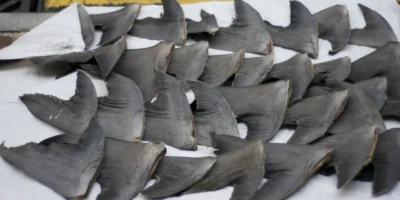
The primary cause of the drastic population decline is commercial fishing. The oceanic whitetip shark is deliberately caught in many regions of the world or killed as bycatch in tuna and swordfish fleets. Its large pectoral fins are particularly sought after in the international fin trade. In some markets, they fetch high prices, making the shark an attractive target for fishermen.
Additionally, the shark’s curious nature makes it easy to catch. It approaches boats and bait without much hesitation—a behaviour that makes it vulnerable to targeted fishing operations. Illegal fishing methods and unregulated fishing zones also contribute to the decline.
Biological Weaknesses as a Risk Factor
Like many other shark species, the oceanic whitetip shark reproduces slowly. Females give birth to only a few young after a long gestation period of up to twelve months. This low reproductive rate makes it nearly impossible for the species to recover quickly from significant losses.
Moreover, the animals reach sexual maturity only after several years. A significant loss of sexually mature females therefore has an immediate and long-term impact on the regeneration of populations. This biological disadvantage, combined with human pressure, considerably increases the risk of extinction.
Conservation Measures and International Classification
Due to the dramatic decline, the oceanic whitetip shark was classified as ‘Critically Endangered’ by the IUCN in 2019. This is the highest threat category before extinction in the wild. The species has also been included in international wildlife protection agreements. For instance, it is listed in Appendix II of the Convention on International Trade in Endangered Species of Wild Fauna and Flora (CITES), which heavily regulates its international trade.
Some countries have already implemented national fishing bans or established protected areas. Certain fishing zones have regulations to reduce bycatch rates, such as the use of special hooks or the deployment of observers on fishing vessels. However, such measures often remain patchy or difficult to enforce—particularly in international waters.
Research and Public Outreach
Another important component in the protection of the oceanic whitetip shark is scientific research. Through satellite telemetry, genetic studies, and observational data, researchers are trying to better understand the behaviour and migratory patterns of this shark species. These findings are crucial for developing effective conservation measures and adapting existing regulations.
Public education also plays a vital role. Many people are unaware of how severely threatened this shark species is and how central its role is in the ecosystem. Films, documentaries, and educational initiatives can help raise awareness and increase societal pressure on policymakers and the fishing industry.
Time to Act
The oceanic whitetip shark is a symbol of the silent crisis in the world’s oceans. Its dramatic decline is not an isolated case but a sign of a deeper problem: the overexploitation of the open seas. If we want to preserve this fascinating open-ocean predator for future generations, binding international protection regulations, sustainable fishing policies, and greater public awareness are needed. It is not too late yet—but the window of opportunity is closing.
Profile
- First described:
- Max. size:
- Depth:
- Max. age:
- Max. weight:
- Water type:
- IUCN Status:
Taxonomy
- Kingdom:
- Phylum:
- Subphylum:
- Infraphylum:
- Parvphylum:
- Class:
- Subclass:
- Superorder:
- Order:
- Family:
- Genus:
Dive Centres



News

Pacific shark bycatch: Good release practices come too late for many
Sri Lanka plans end-to-end traceability for caught sharks
What Sri Lanka’s shark action plan aims to change by 2030
Shark attack off Marsa Alam: One dead, one injured
Conservation Push in the Western Indian Ocean: What Madagascar’s and Zanzibar’s New Shark Rules Mean
EJF report: Dakar as a hub for illegal shark fin trade



Newsletter
Shark Alert in Your Inbox