A striking claim is currently circulating about the floating offshore wind farm Hywind Tampen in the northern North Sea: DNA tests supposedly revealed several unexpected shark species only after the turbines had been built. The claim stems from a recent Ecoportal article. The underlying research report, however, tells a much more measured—and scientifically more interesting—story.
The NORCE technical report was published on 23 January 2025. It reanalysed water samples from around the eleven turbines using an eDNA method adapted specifically for sharks and rays. The researchers detected genetic traces of six cartilaginous-fish taxa, including the porbeagle, velvet belly lanternshark and blackmouth catshark, as well as a dogfish lineage of the genus Squalus that could not be reliably identified to species level.
Hywind Tampen floats above water up to 300 metres deep
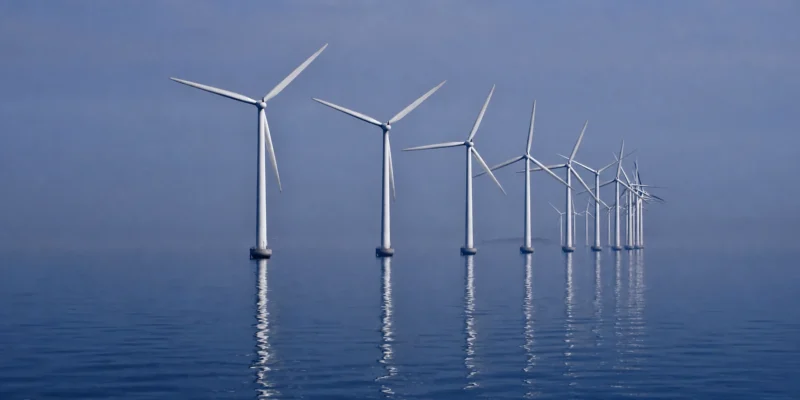
According to the project and environmental documents from Equinor, Hywind Tampen consists of eleven floating turbines with a combined output of 88 megawatts. The wind farm is located approximately 140 kilometers off the Norwegian coast between the oil and gas fields Snorre and Gullfaks. The water depth is around 260 to 300 meters. The system has been considered fully operational since August 2023 and is expected to cover approximately 35 percent of the electricity needs of the production platforms there.
The location is particularly interesting for research. Hywind Tampen stands on the western edge of the Norwegian Trough, where shallower shelf areas and significantly deeper water meet. Such depth gradients shape the distribution of bottom fish and cartilaginous fish. A comparison between locations must therefore take into account depth, current and season – not just the distance to a turbine.
Why the first DNA test missed sharks
Environmental DNA, eDNA for short, comes from skin cells, mucus, feces and other biological traces that animals leave behind in the water. Researchers filter water samples and amplify selected DNA sections using so-called primers. The sequences are then compared with reference databases. This makes it possible to identify a species without having to catch or film it.
The initially used universal fish primer MiFish-U captured the majority of bony fish, but did not provide any shark or ray signals. That didn’t mean cartilaginous fish didn’t live there. The method did not adequately amplify their aberrant mitochondrial DNA sequences. For the follow-up analysis, the researchers therefore combined MiFish-U with the MiFish-E primer tailored to sharks and rays.
Six cartilaginous-fish taxa in the water samples
In total, the new data set included 144 station samples from a depth of 20 meters and from near-bottom water. After bioinformatic cleaning, more than 22.5 million sequences remained. 43 fish taxa could be assigned at least up to the genus. Among the cartilaginous fish were:
- thorny skate (Amblyraja radiata)
- Smooth ray of the genus Dipturus
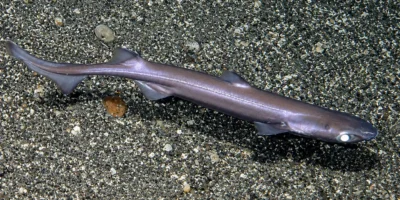
- Velvet belly lanternshark (Etmopterus spinax)
- Blackmouth catshark (Galeus melastomus)
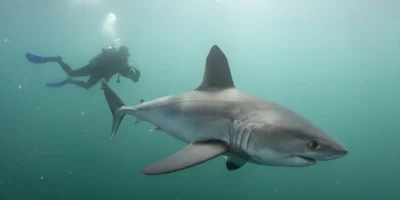
- Porbeagle (Lamna nasus)
- Spiny dogfish of the genus Squalus
Four of these groups—thorny skate, skates of the genus Dipturus, blackmouth catshark and dogfish—were already known from earlier net catches or ROV footage in the region. Only the velvet belly lanternshark and porbeagle were new compared with those reference data. The study therefore did not discover sharks for the first time in a supposedly empty area of sea. Above all, it showed how strongly an unsuitable DNA marker can distort a species list.
No basking shark in the research report
Ecoportal also mentions a basking shark (Cetorhinus maximus). This species appears neither in the results nor in the species list of the NORCE report, and the report’s text and tables contain no corresponding record. The cited primary source therefore provides no basis for reporting a basking shark at Hywind Tampen.
Precision is also needed when discussing dogfish. The eDNA sequence was identified only as Squalus sp. Regional catch data documented the spiny dogfish (Squalus acanthias), so the researchers combined the two records for their comparison of methods. The DNA analysis alone, however, does not conclusively identify the sequence as Squalus acanthias.
eDNA shows presence, but neither numbers nor behaviour
A genetic hit means that DNA from the species in question was present in the sample. It does not reveal how many animals swam there, how long they stayed or whether they specifically visited a turbine. Currents can also transport DNA over a certain distance. Statements about a spawning site, a migration route or a newly formed shark aggregation would therefore not be proven with this data.
Most shark and ray signals were rare in the dataset. An exception was the Porbeagle, whose sequences occurred more frequently. It is also not possible to calculate a population size from this: read counts depend, among other things, on how much DNA a species releases and how efficiently the primers used reproduce it. The report also warns against ambiguity in individual taxonomic assignments.
No measurable wind-farm effect so far
The re-analysis confirmed the main conclusion of the original eDNA study: the composition of the bottom fish communities was largely stable between the stations and times examined. A positive or negative influence of the construction and operation of the wind farm could not be proven in this data set.
The catch study by the Norwegian Marine Research Institute from the construction and early operational phases also came to a cautious classification. Cartilaginous fish were mainly caught in the deeper areas closer to the wind farm, but the number of samples there was small due to bad weather. Depth and location were closely linked, so the results cannot simply be interpreted as an attraction effect caused by the turbines.