


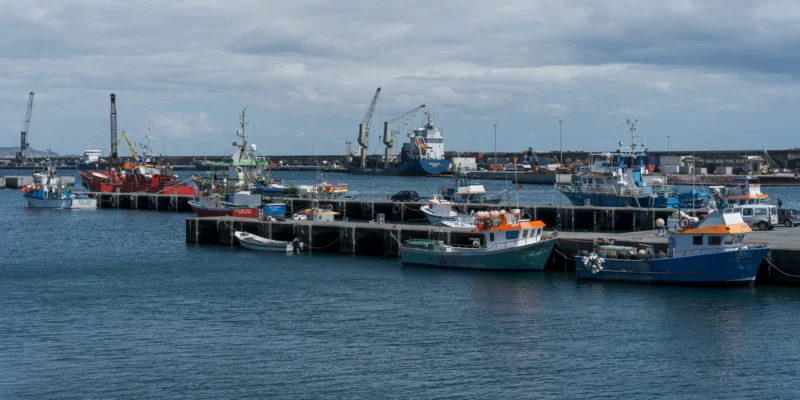
The University of the Azores is investigating ways to reduce the accidental capture of deep-sea sharks through the European LIFE CIBBRiNA project. As Diário dos Açores reported on 25 September, the planned work includes electric deterrents, sensor tags and spatial analyses. The focus is on local hook-and-line fisheries.
Tests on board and data from the depths
The report draws on a call published by the university in September. It describes trials aboard commercial fishing vessels using handlines and bottom longlines. Tags measuring acceleration in three dimensions, together with pressure and temperature sensors, are intended to help researchers study the animals’ behaviour and their interactions with fishing gear.
Alongside bycatch, the work addresses depredation: sharks may eat fish already caught on hooks. Maps of fishing effort and models of the vulnerability of different deep-sea shark species should also help identify promising technical, spatial or seasonal measures.
Developing solutions with the fishing sector
The LIFE project runs from 2023 to 2029 and brings together participants from 13 European countries. Fishers, researchers and authorities are to develop, test and improve methods together. Both the protection of threatened marine animals and practical feasibility in everyday fishing operations are central to this work.
Bycatch can be particularly damaging to species that mature late and produce few offspring. Such populations recover from losses only slowly. CIBBRiNA therefore also aims to improve monitoring and provide more reliable evidence for assessing these catches.
Effectiveness in the Azores remains unproven
The newspaper report does not yet provide robust reduction rates for the methods planned in the Azores. The outlined work therefore does not demonstrate that electric deterrents or other measures actually reduce bycatch there.
A previously featured study of shark tourism and fisheries explores another aspect of the region’s competing interests. It focuses mainly on blue sharks and shortfin makos. The current approach, by contrast, targets deep-sea sharks in hook-and-line fisheries.