


Spiny dogfish - Squalus acanthias
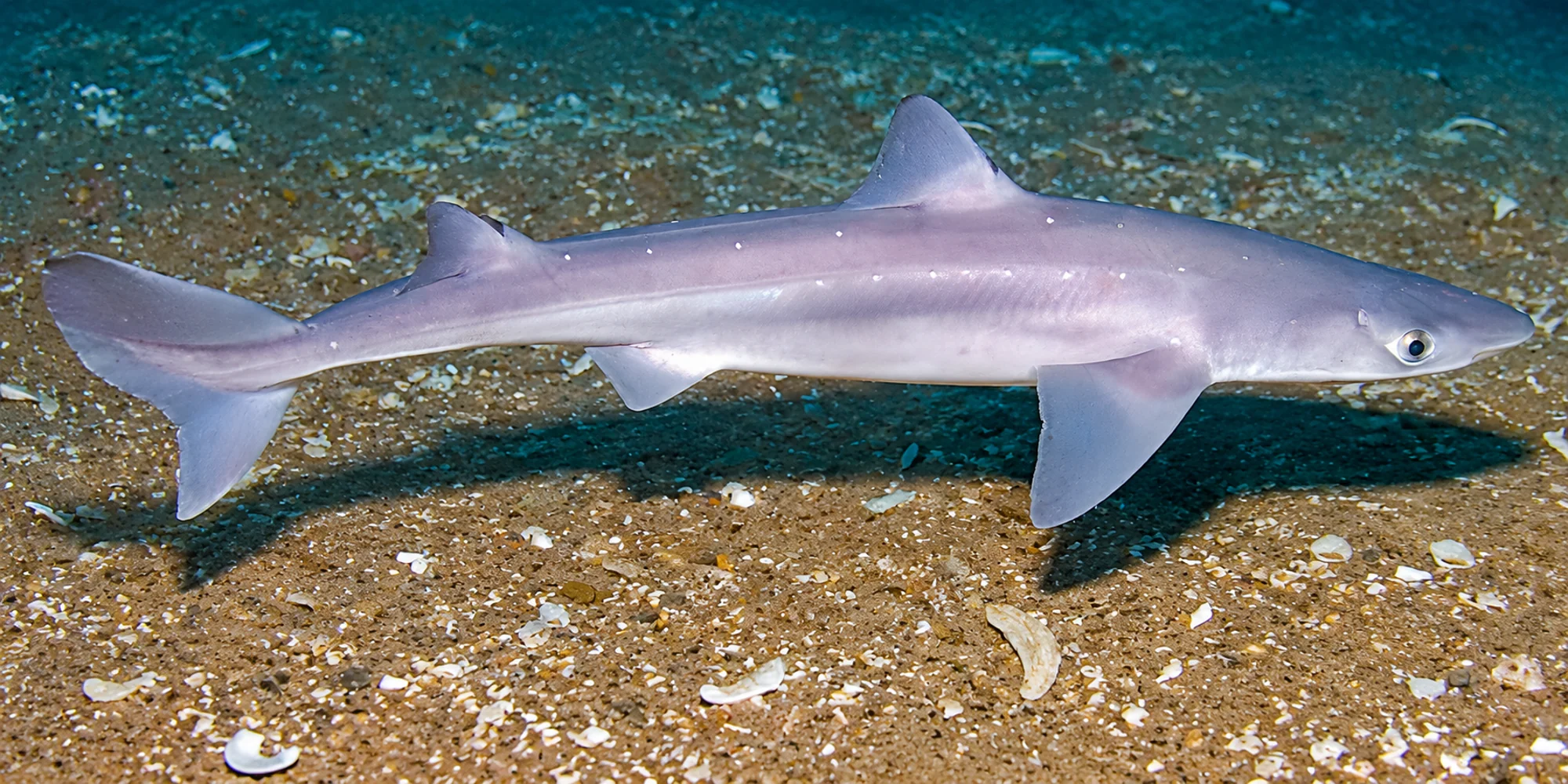
Body structure, features & anatomy
Identification
The spiny dogfish Squalus acanthias is a slim dogfish with a pointed snout, large eyes, two dorsal fins and no anal fin. WoRMS places the species in the family Squalidae; the two ungrooved spines in front of the dorsal fins are its clearest feature and can cause painful contact injuries.
The upper body is grey to brown, the underside is pale, and pale spots run along the flanks. Females usually grow larger than males; fisheries references commonly give a maximum length around 1.6 m, while many individuals encountered are much smaller.
Distribution & habitat
Endemic to North Maluku
Squalus acanthias occurs in boreal and temperate seas across much of the world, but under current taxonomy not in the North Pacific, where those populations are treated as Squalus suckleyi. FishBase describes it as a marine, brackish-tolerant, migratory shark of shelves and upper slopes.
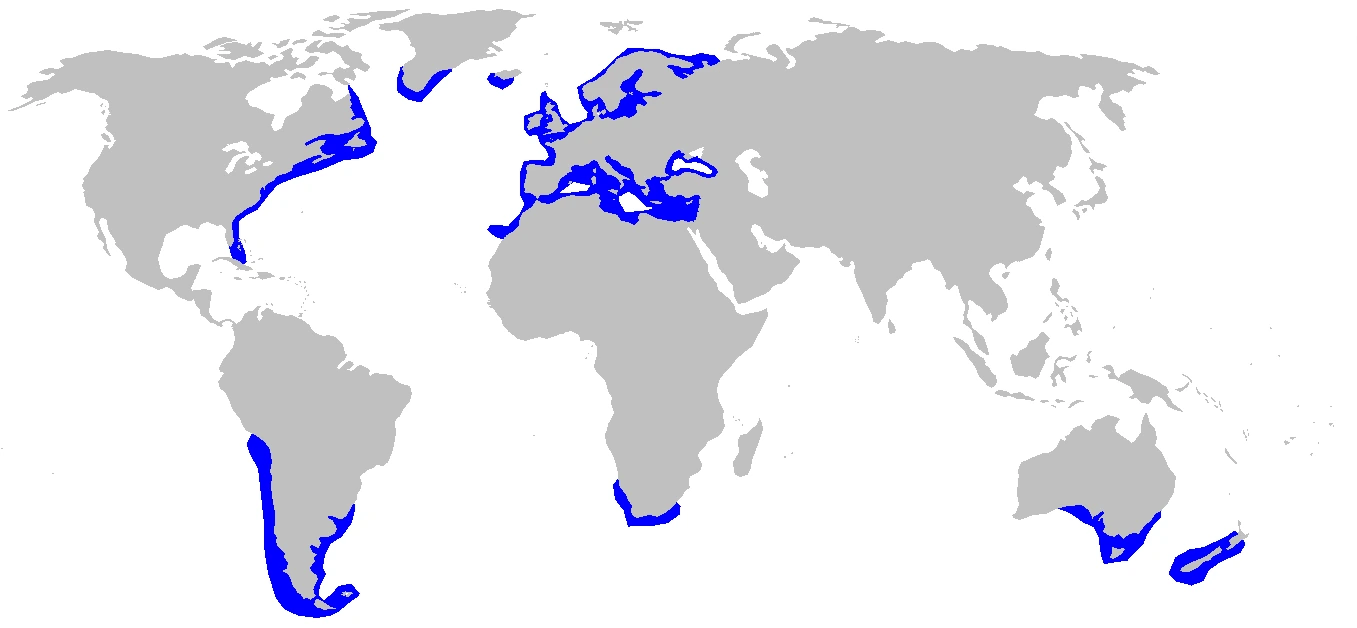
Spiny dogfish are often close to the seabed, but they can also use mid-water and the surface. The full depth envelope reaches from very shallow water to almost 2,000 m, while most encounters and catches are far more typical of shelf waters and cool, productive coasts.
Life history, diet & reproduction
Nocturnal reef walker
NOAA Fisheries describes spiny dogfish as slow-growing sharks that mature late, live for a long time and can move in large schools. Smaller animals feed mainly on crustaceans and other invertebrates, while larger ones also take jellyfish, squid and schooling fish.
Reproduction is unusually slow even for sharks. The young develop inside the mother, gestation is roughly 18 to 24 months, and litters are comparatively small. That life history makes populations vulnerable when fisheries remove many large females.
Threats & protection status
Small range, high responsibility
The IUCN Red List lists the spiny dogfish globally as Vulnerable. Target fisheries, bycatch and slow recovery after declines are the core problems, especially where large late-maturing females are taken.
Regional stock status can differ strongly: some regulated fisheries report rebuilt or stable stocks, while other areas still reflect historical declines. Useful measures include catch limits, protection of large females, bycatch reduction and cautious regional management.
Spiny dogfish & humans
Encounters and conduct
For divers and snorkelers, the spiny dogfish is not a classic warm-water shark-dive species but a shark of cooler temperate seas. Shark Research Institute notes the sharp dorsal spines and very slow life history; for encounters, the practical rule is simple: do not touch, chase or crowd the animal.
Sightings are most likely on cold-water dives, in coastal bays, over sand or gravel, around wrecks and in fish-rich shelf areas. Calm movement and distance are best, especially when several animals pass together in a school.
Profile
- First described:
- Max. size:
- Depth:
- Max. age:
- Max. weight:
- Water type:
- IUCN Status:
Taxonomy
- Kingdom:
- Phylum:
- Subphylum:
- Infraphylum:
- Parvphylum:
- Class:
- Subclass:
- Superorder:
- Order:
- Family:
- Genus:
News

Newsletter
Shark Alert in Your Inbox