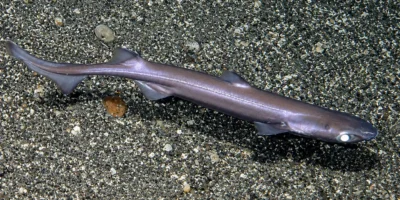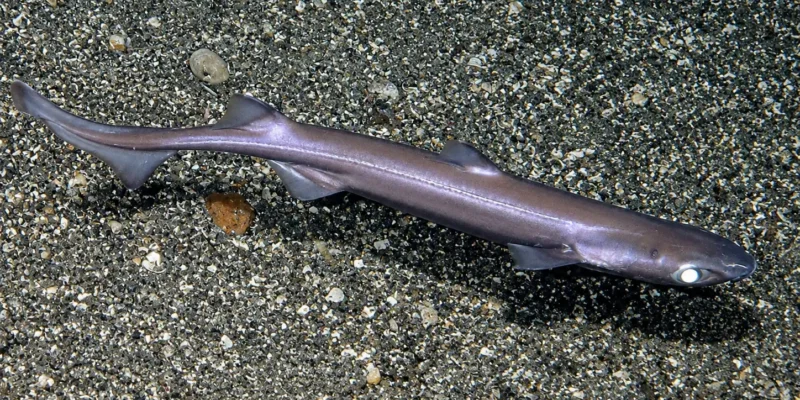
A study in Fisheries Research provides the most comprehensive data to date Velvet belly lanternshark in the southern Adriatic. Between January 2023 and December 2025, the research team documented 319 animals from commercial bottom trawl and longline catches off Vlorë. The catches came from a depth of 450 to 650 meters.
Among the sharks were 58 newborns and three pregnant females. Together with the age distribution, this suggests that the upper continental slope off the Albanian coast serves as a nursery. The study describes strong indications of this, but does not yet have a conclusively defined or legally protected growth area.
A population that was long considered rare
The Little Black Dogfish (Etmopterus spinax) was known from the Adriatic, but appeared in regional surveys only in a few records that were widely separated in time. This gave the impression that the species only occurs sporadically there. The new monitoring challenges this assumption.
However, the 319 animals do not constitute a population count. They were not recorded through a comprehensive scientific survey, but through commercial fishing. High catch numbers can indicate a local concentration, but also depend on the fishing location, depth, season, equipment and effort of the vessels involved.
Subadult animals predominated in the sample. The stated sex ratio was 0.85 to 1. This means that the data set shows not just occasional visitors, but several life phases – from newborns to adolescent animals to pregnant females.
Why 58 newborns speak for a nursery
A shark nursery is more than just a place where young animals appear. What is important is repeated use, a noticeable concentration of young animals compared to neighboring areas and a longer-term significance for the early life stages. Catches over three years fill important parts of this picture.
The combination of newborns and pregnant females is particularly significant. It suggests that reproduction and early development could occur in close proximity to each other. The researchers also link the pattern to an age-dependent depth distribution on the upper continental slope.
It remains unclear how large the area used is, whether the same depth zones are used to a similar extent every year and how the frequency develops outside the fished areas. This would require standardized surveys, seasonal repetitions and, if possible, non-lethal observation methods.
Trawl or longline: a crucial difference
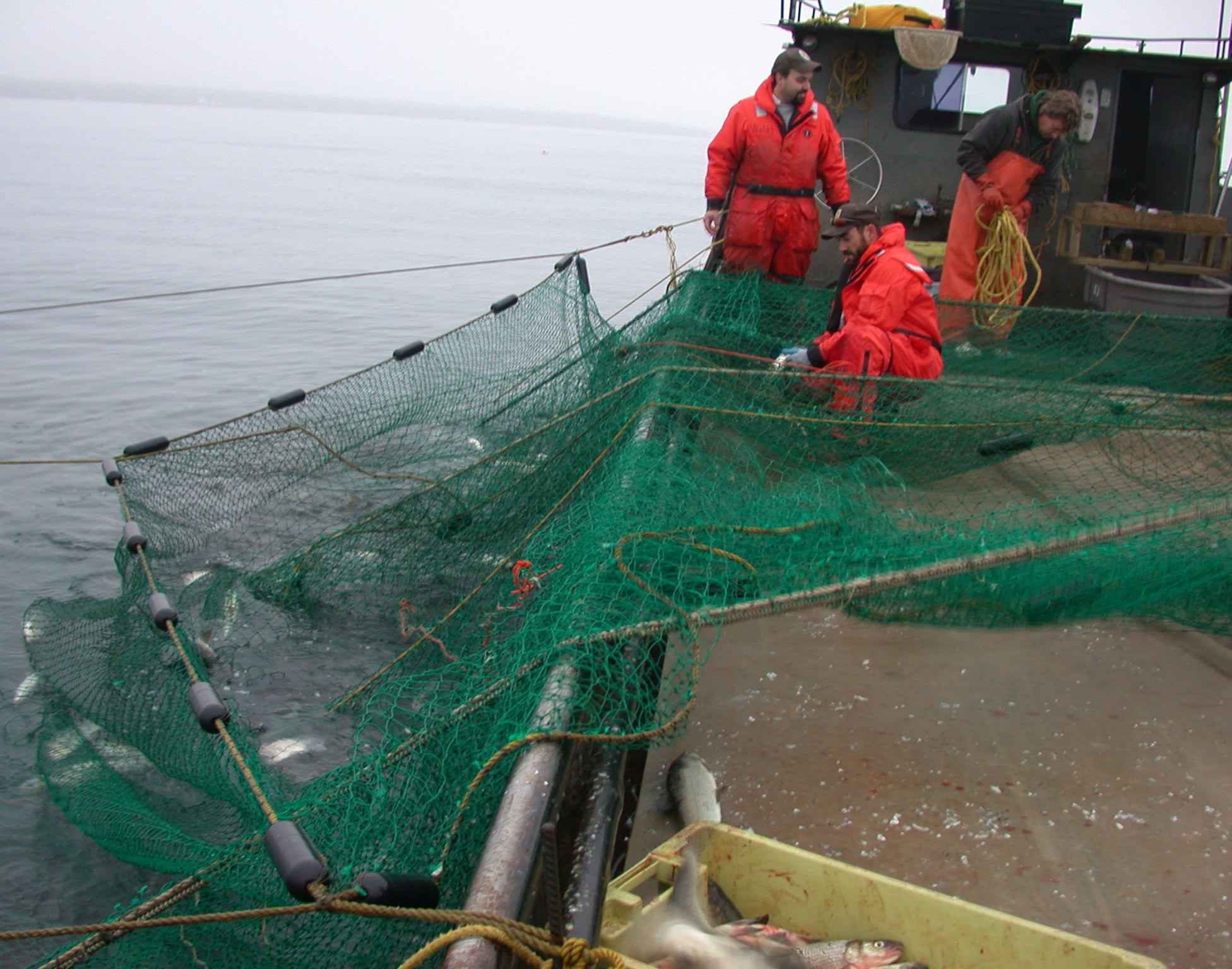
The clearest protective finding concerns the fishing gear. According to the study, mortality during retrieval for sharks caught with bottom trawls was 100 percent. The animals caught on longlines, however, were brought on board alive. The fishing method therefore directly influences whether a lantern shark that is caught accidentally can still be released.
The phrase “mortality during retrieval” is important. It describes whether an animal was dead or alive when it arrived at the ship. It does not measure the overall mortality of the population or automatically survival after release. Especially for longline catches, follow-up observation would have to show how many animals can survive the stress in the long term.
Pathological and histological examinations showed that the animals were in good condition before capture. This argues against the idea that the high trawling mortality rate can primarily be explained by sharks that are already sick or weakened. Mechanical stress, fishing duration, pressure and temperature changes thus become central starting points for fisheries management.
Six new genetic variants
The researchers also examined a section of mitochondrial DNA, the so-called COI marker. They found moderate haplotype diversity and six previously unrecorded haplotypes. The Adriatic population therefore appears to be connected to the rest of the Mediterranean, but at the same time partially differentiated from Atlantic lineages.
This is a first indication of regional structure, not a complete genetic inventory analysis. A single mitochondrial marker represents only part of the history of ancestry. Larger samples from different parts of the Adriatic and additional nuclear DNA markers would need to show how strong the exchange actually is.
A glowing shark from the deep sea
velvet belly lanternshark belong to the family of Lantern sharks. Their light organs on the underside of their bodies produce bioluminescence, which can camouflage the silhouette against the weak light from above. Adult animals usually reach around 45 to 60 centimeters in length and live primarily on the outer shelf and continental slope.
The species occurs in the east Atlantic Ocean and in Mediterranean Sea before. It is classified as endangered worldwide, while the regional assessment for the Mediterranean is more favorable. The difference shows why local data is important: a global status says little about whether a small regional subpopulation is particularly isolated or at risk from a particular fishery.
From the discovery site to effective protection

Before Albania a possible reproductive area meets an expanding deep-sea fishery. Protective measures would therefore not only have to mark a point on the map. The decisive factors are depth range, season, fishing gear and the question in which months newborns or pregnant females are particularly common.
On the opposite side of the southern Adriatic lies the officially designated ISRA Santa Maria di Leuca. That’s where it counts Etmopterus spinax already among the species for which the area has been recognized as an important reproductive habitat. The new Albanian study does not prove that both areas form a single nursery. However, it strengthens the image of an ecologically important deep-sea corridor in the southern Adriatic and at the transition to the Ionian Sea.
Important Shark and Ray Areas are scientific indications for spatial planning, not automatic protected areas. The data prior to Vlorë can help to more precisely delineate existing and proposed areas, evaluate fishing methods and establish monitoring before increasing fishing pressure permanently weakens a previously overlooked population.
What the study actually changes
The most important finding is not just the number 319. For the first time, demographics, reproductive status, catch mortality and genetic diversity of the same species are being evaluated together for the southern Adriatic. This turns a supposedly rare deep-sea shark into a regionally structured population with a possible key habitat.
For a final proof of the nursery, further years and comparable examination areas are needed. However, the existing warning signals are sufficient for precautionary measures: many early life stages in a narrow depth space, low reproductive performance and complete mortality in the observed trawl catches. Especially with slow-growing deep-sea sharks, waiting can mean loss before a population has even been fully described.