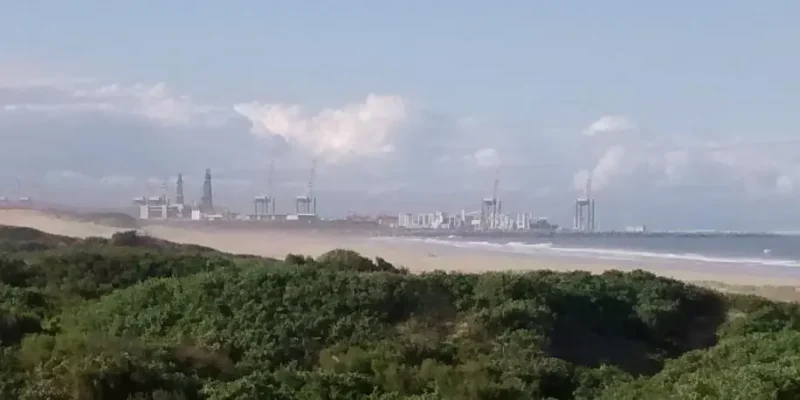
A container harbour is not the first place most people associate with shark conservation. Concrete, breakwaters, fences and ship traffic usually stand for coastal development, not nature. That is why the Port of Ngqura near Gqeberha in South Africa is such an interesting case: an industrial site may also be functioning as an accidental refuge for sharks and rays.
A recent Save Our Seas Foundation feature describes Ngqura as an unexpectedly rich coastal habitat. Video surveys and long-term tagging work have recorded high fish densities, many sharks and rays, and several threatened species inside the harbour system.
The point is not that harbour construction is harmless. Ngqura was created through heavy coastal engineering. The surprise is that the resulting breakwaters, calm water, hard surfaces and restricted access now seem to provide conditions that many animals use.
A No-Take Effect by Accident
In many marine protected areas, enforcement is the decisive weakness. Ngqura’s protection is different: it comes partly from harbour security. Access is controlled, the area is monitored, and fishing is largely excluded except for research and monitoring.
That can produce a real no-take effect. While fishing, bycatch and coastal pressure operate outside the harbour, the basin inside the breakwaters appears to offer a relatively stable refuge for fish, sharks and rays.
Ragged-Tooth Sharks, Smoothhounds and Juveniles
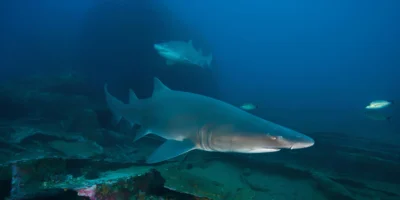
Ragged-tooth sharks are among the most visible examples. They are slow-growing, late-maturing animals, so any sheltered area used by large individuals is ecologically significant rather than merely curious.
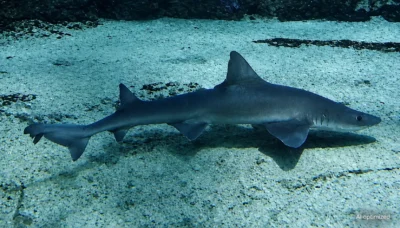
An earlier SOSF article on the potential of ports for shark conservation also describes summer aggregations of smoothhound sharks. Several mature females were pregnant, suggesting that Ngqura may serve not only as a refuge but also as a reproductive or nursery habitat for some species.
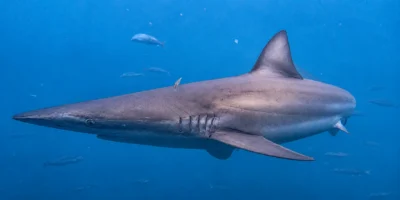
Another SOSF update on Port Ngqura as a surprising sanctuary mentions juvenile dusky sharks, bronze whalers, rays and other species recorded inside the artificial coastal space. For an industrial harbour, that mix is remarkable.
What It Shows for Harbour Planning
Ngqura does not prove that every harbour becomes a wildlife haven. Many artificial coasts are poor habitats, favour invasive species or replace valuable natural shallows. The useful lesson is more specific: structure, sheltered water, habitat complexity and strict limits on extraction can matter.
That is relevant for nature-positive harbour planning. Where coastal infrastructure is built or renewed, planners can think beyond ship logistics: rougher surfaces instead of smooth walls, resting areas, water quality, limited disturbance and real protection from fishing can make artificial spaces less hostile.
The Limits of an Accidental Refuge
Ngqura remains an industrial harbour. Ship traffic, noise, pollution risk, dredging, invasive species and future expansion can all change the system. And the refuge ends at the breakwaters; mobile sharks and rays still face fishing and bycatch once they leave.
That is why the phrase accidental sanctuary fits so well. The harbour may offer a pause from outside pressure, but it is not a substitute for broad marine protection. It is a case worth studying because it shows what can work, and where the limits remain.
For shark conservation, Ngqura widens the conversation. Protection does not only happen on tropical reefs or in famous marine parks. Sometimes it begins in an unlikely place, and the task is to understand why it works well enough to improve future coastal design.