This article appeared on August 5, 2026 and was updated on August 29, 2026.
Four fertilized eggs have begun an extraordinary journey: from Shedd Aquarium in Chicago to the Indonesian archipelago Raja Ampat. As a current report from Phys.org describes, the aquarium is participating for the first time as an egg-supplying breeding institution in the StAR Project for the reintroduction of endangered zebra sharks.
The shipment is an important step, but not yet a release into the wild. First, the embryos have to develop and hatch. This is followed by controlled breeding, acclimatization to natural conditions and several tests. Only suitable young animals should later be marked and released in protected waters.
Four eggs from Wild Reef in Chicago
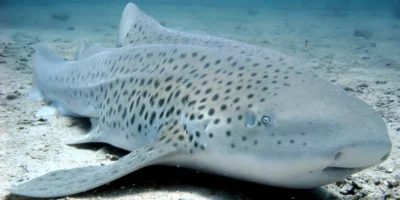
The eggs come from zebra sharks (Stegostoma tigrinum) in the wild reef area of Shedd Aquarium. The animal care team examined them for health, development ability and genetic suitability before transport. The so-called candling was also used: a light source makes the embryo visible within the leather-like egg capsule.
For the Shedd Aquarium it is the first delivery of zebra shark eggs to Raja Ampat. As a founding partner of ReShark, the facility previously contributed expertise in breeding, hatching and rearing. The crucial contribution of public aquariums lies not only in the number of eggs available. Documented ancestry, genetic diversity and controlled health care are important.
From egg to sea pen to release
In Raja Ampat, the local StAR Indonesia team takes over further support. The eggs go to a specialized breeding station at Raja Ampat Research and Conservation Center. There the aquarists, affectionately referred to in the project as “Shark Nannies”, monitor development, water quality and hatching.
After hatching, the young animals initially grow up under controlled conditions. They then move into a sea enclosure. This intermediate step is intended to allow them to acclimate to the natural environment and develop important foraging skills before they are completely on their own.
A release will only occur if size, health and behavior meet the established criteria. The sharks are tagged and then further observed. The monitoring records, among other things, movements, survival and adaptation to sea life. This means that the release into the wild is not the end, but rather the beginning of the crucial scientific phase.
Why Raja Ampat still needs support despite protection
Zebra sharks were once common in Raja Ampat. Overfishing, the trade in shark fins and the degradation of habitats have caused the population to plummet. Today the region has a network of marine protected areas and a shark and ray sanctuary. These backups reduce current threats, but cannot automatically quickly rebuild an already extremely small inventory.
The StAR Project from ReShark therefore relies on targeted inventory support. Genetically suitable eggs from accredited breeding programs are brought to local breeding stations. The young animals should grow up in their historical range and later contribute to a self-sustaining population there.
According to the report provided by Shedd Aquarium, StAR Indonesia has so far released 75 zebra sharks into the waters of Raja Ampat. This number shows that the method no longer only exists on paper. However, whether this results in a stable, self-reproducing wild population in the long term must be observed over many years.
Four eggs do not automatically mean four new sharks in the wild
Despite all hope, the outcome of the current program remains open. Not every fertilized egg develops to hatch, not every young animal reaches the necessary size and not every animal meets the criteria for release. Even after release, natural mortality, food availability and unknown risks still have an impact.
This is precisely why careful selection is so important. If animals are relocated without suitable genetic origins or without adequate health controls, a well-intentioned measure can create new problems. The StAR Project combines breeding planning, veterinary medicine, local breeding, protected areas and long-term monitoring into a single process.
Aquariums as a genetic reserve—with clear limits
The approach shows a possible new role for public aquariums. Successfully managed breeding populations can provide genetically suitable eggs without removing additional adults from weakened wild populations. Expert knowledge about reproduction, embryonic development and young animal care can therefore be used directly for species protection.
Aquarium breeding, however, does not replace effective fishing regulations nor intact reefs and controlled protected areas. Without a safe habitat, sharks released into the wild would face the same dangers again. Stock support can therefore only work if the causes of the original decline remain limited at the same time.
A promising model, but not yet a final result
The four eggs from Chicago represent an unusual bridge between aquarium keeping and outdoor nature conservation. If they hatch, the breeding is successful and the animals meet the release criteria, they could become new zebra sharks for Raja Ampat. However, each of these steps presents its own hurdle.
The actual success is therefore not measured by a single delivery. What matters is whether the released animals survive, stay in the region, become sexually mature and ultimately reproduce themselves. Only then would the journey from the aquarium egg have led to a permanently strengthened wild population.
Update from August 29, 2026
The most recent report on the StAR program now lists 82 zebra sharks released into the wild in Raja Ampat. This is a cumulative project number and not a single release of 82 animals. Since the original article already documented 75 releases into the wild, seven more sharks have been added since then.
ReShark also reports that 15 healthy zebra sharks were spotted in Raja Ampat. This number of sightings cannot be equated with a survival rate for all 82 animals, but shows that tagged and released animals are detected in the project area. The four zebra shark eggs from Chicago still belong to a separate, ongoing breeding route and cannot be counted among the animals that have already been released into the wild.