Update, 18 August 2026: This article has been expanded with the story of Blue’s rescue from an illegal export in 2018.
Blue was being exported illegally to the Netherlands
New details from the Two Oceans Aquarium Foundation explain how Blue came to the aquarium. On 3 May 2018, South African authorities found four sand tiger sharks during a routine inspection at Cape Town International Airport. The sharks had been captured at Port Alfred in the Eastern Cape and were destined for the Netherlands, but the permits required for their transport and export were missing.
The export was therefore illegal under South African law. The legal detail matters: Carcharias taurus was not yet listed by CITES in 2018. The offence concerned South Africa’s marine-protection and permitting rules, including the Marine Living Resources Act framework and the Marine TOPS Regulations.
The very young sharks Delta and Echo were released after a short recovery. Blue and Charlie remained at the aquarium as evidence in a case that was never concluded. ZooFlits drew renewed attention to the Netherlands destination in August 2026. Blue returned to the ocean as a sexually mature female in March 2026; Charlie remains in the care of the Two Oceans Aquarium.
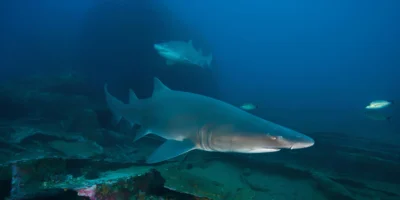
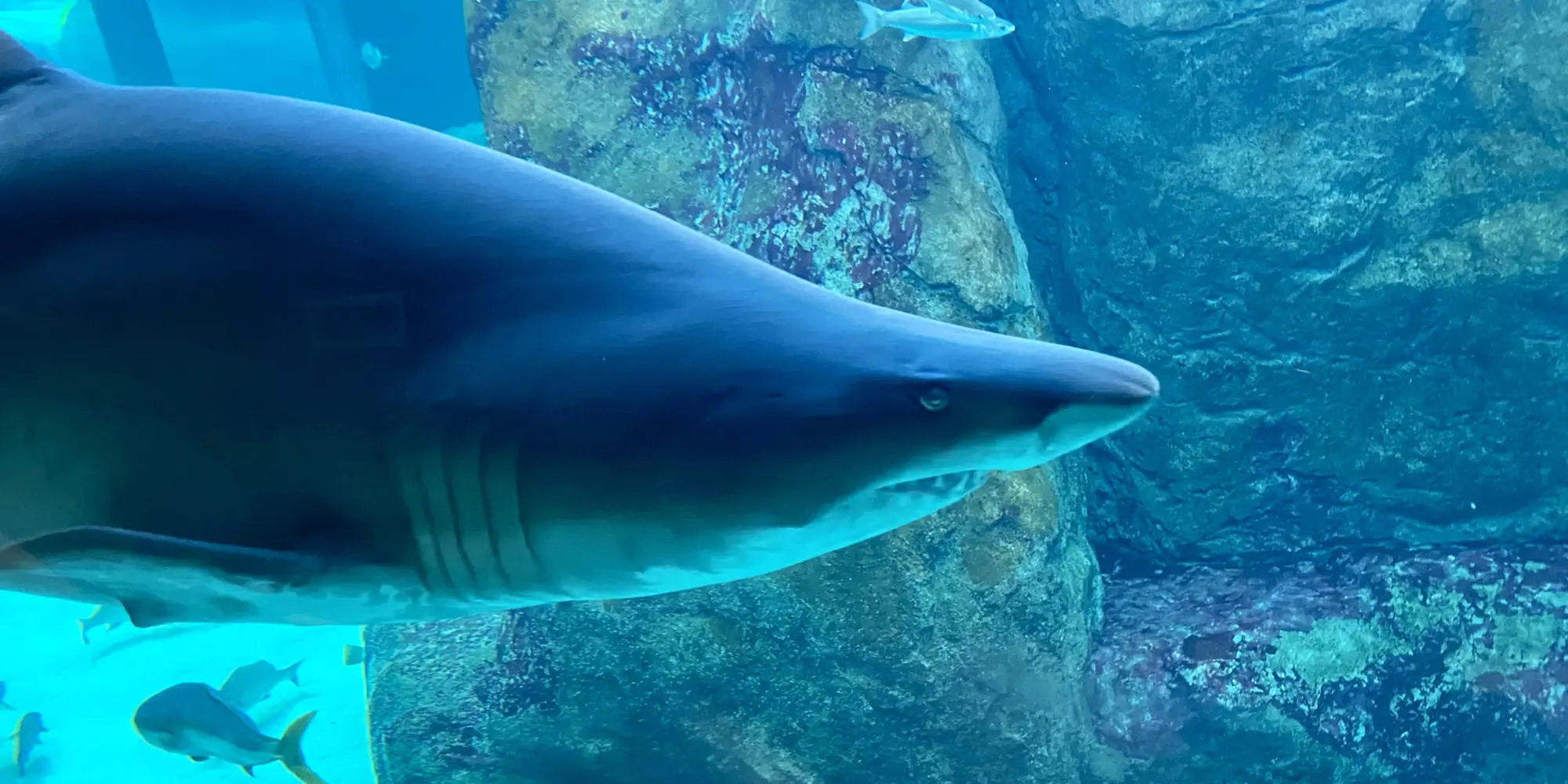
After eight years at the Two Oceans Aquarium in South Africa, the female sand tiger shark named ‘Blue’ has successfully returned to the ocean. The release took place on 19 March in Struisbaai.
Blue arrived at the aquarium in 2018 weighing 26 kilograms and measuring under two metres. At her release she weighed 201 kilograms and was almost three metres long. During her stay, Blue served as a ‘marine ambassador’ at the Save Our Seas Foundation Shark Exhibit. Her presence helped to educate visitors and change the public perception of sharks.

Successful conservation programme and scientific monitoring
The release is part of a comprehensive conservation programme. Dr. Ilse Jenkinson, the aquarium’s veterinarian, commented:
“Capture and release are a central component of the aquarium’s conservation programme for sand tiger sharks. The message these sharks convey is not to fear them, but to feel awe and wonder for these complex animals.”
Before her return to the wild, Blue was fitted with an acoustic transmitter and a visible spaghetti tag. These are used to track her migration and habitat use. The return of a sexually mature female to the wild is considered an important contribution to the survival of the sand tiger shark population.
Kevin Spiby, curator of the aquarium, described it as “a privilege to return them to the wide blue.” Sand tiger sharks (Carcharias taurus) are common in South Africa’s coastal waters. They are known for their impressive teeth and play an important role in the marine ecosystem, but are threatened by overfishing and habitat loss.