


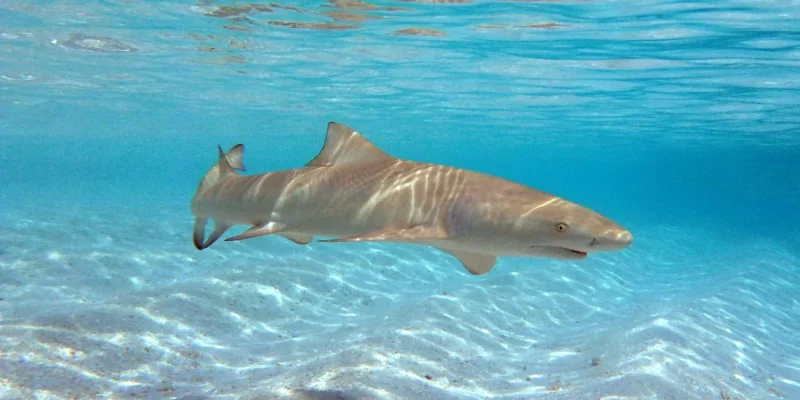
Shallow coastal waters around Dongsha are a consistently used nursery for the sicklefin lemon shark. A study in Animal Biotelemetry combines capture data, recaptures and acoustic tag detections to document this.
Young sharks dominate the shallow areas surveyed
Of the 740 sharks recorded in the 2020–2022 surveys, around 90 percent were juveniles. The mark–recapture model estimated an annual average of about 277 juveniles. In the telemetry analysis, their detections were concentrated along the eastern coast and at the lagoon entrance; larger animals were recorded across a wider area.
Construction and changing detections
During construction periods, detections at the lagoon entrance declined while those at other stations increased. This does not prove displacement caused by noise: sound measurements and telemetry overlapped only to a limited extent, and changes in detection conditions could also explain the pattern. The study supports protecting the nursery but does not allow firm conclusions about the contribution of construction noise to the observed changes.