


Sicklefin lemon shark - Negaprion acutidens
Body structure, features & anatomy
Identification
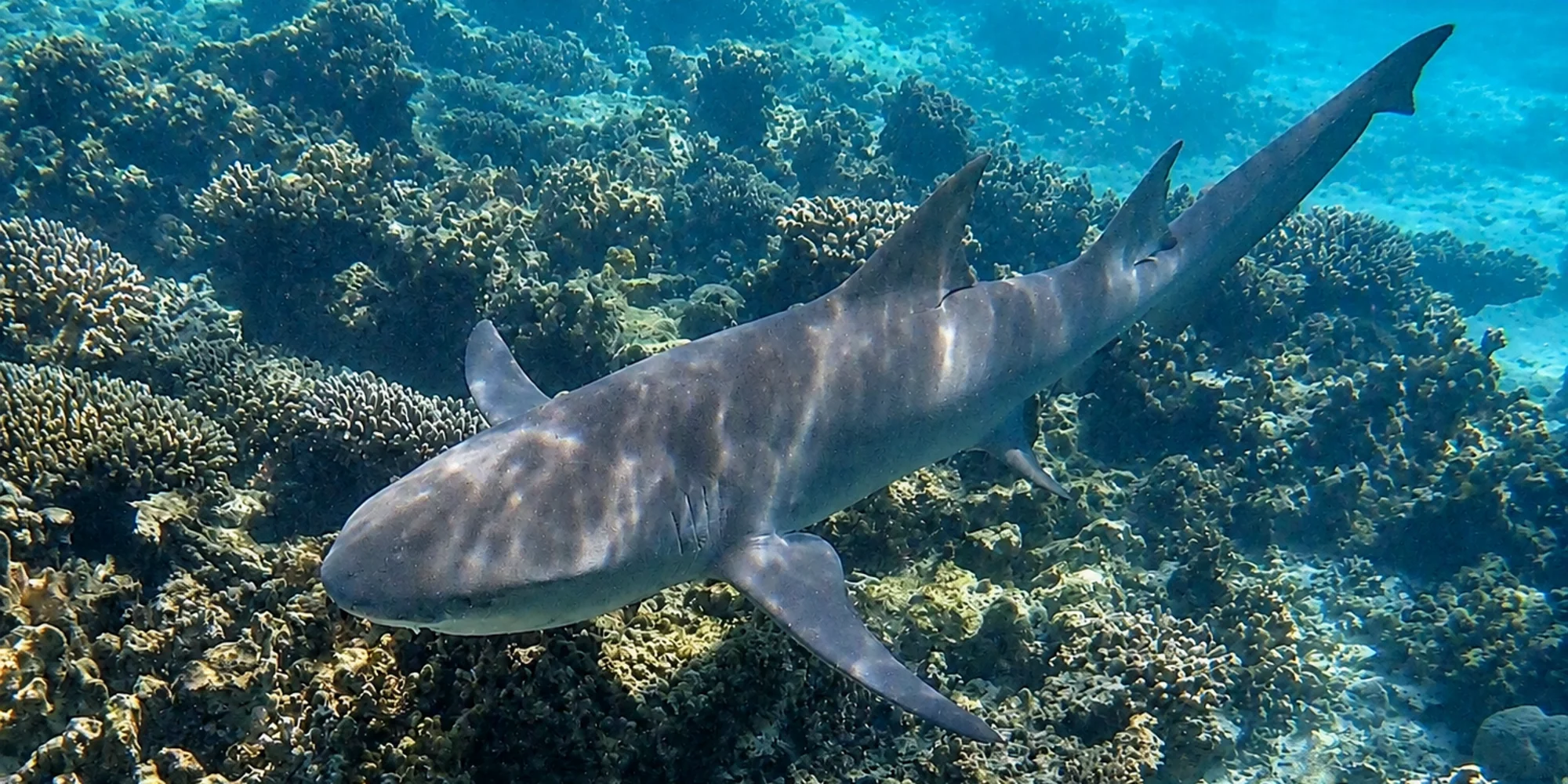
The sicklefin lemon shark Negaprion acutidens is a large, heavy-bodied requiem shark with a broad blunt head, a yellowish grey-brown body and two dorsal fins of almost similar size. Florida Museum describes the species as close in appearance to the Atlantic lemon shark, but with a tropical Indo-Pacific range.
The species name points to the curved, sickle-like shape of the fins. The first dorsal fin is set far back, the second dorsal fin is relatively large, and the pectoral fins are broad and swept. Adults can reach several metres in length, while juveniles already show the sturdy lemon-shark build.
Distribution & habitat
Tropical Indo-Pacific
Negaprion acutidens lives in the tropical Indo-Pacific. FishBase places it from eastern and southern Africa across the Indian Ocean and Southeast Asia to northern Australia and the central Pacific; on Haitauchen this connects especially with South Africa, Madagascar, Philippines, Vietnam and Australia.
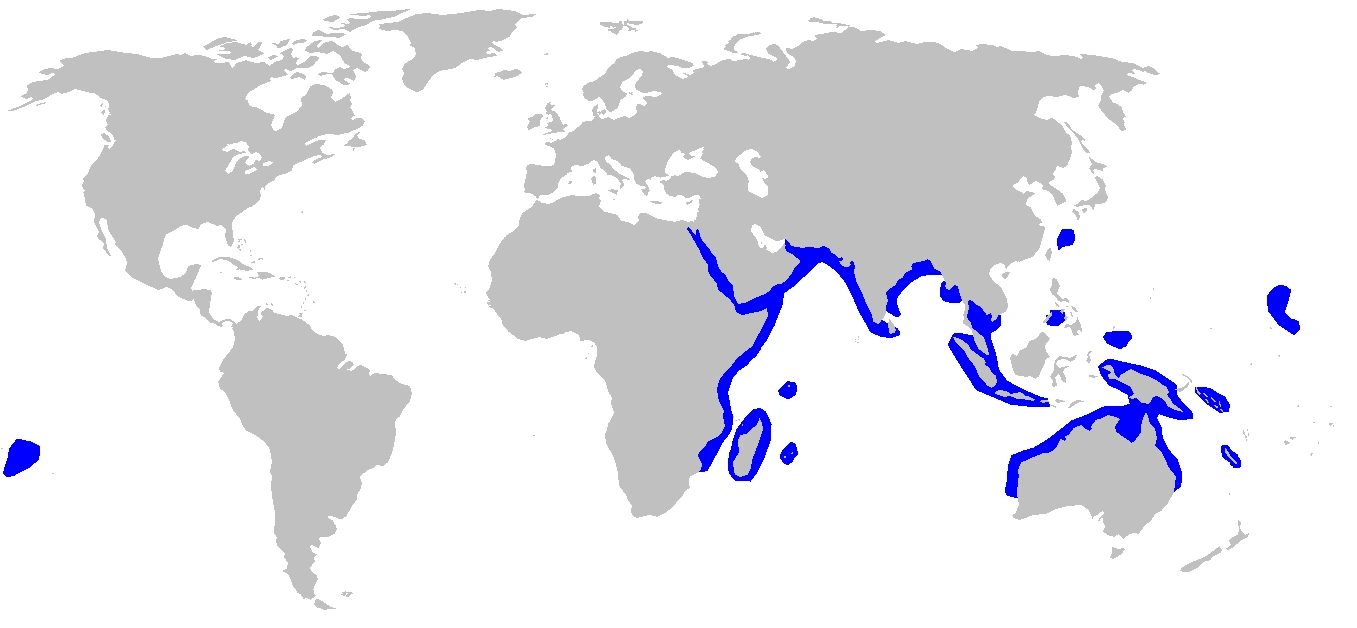
Its typical habitat is coastal: shallow lagoons, reef flats, reef channels, sand flats, seagrass edges and mangrove-influenced bays in the Indian Ocean and Pacific. Young animals use very shallow protected water, while adults can move along outer reef slopes and deeper coastal habitats.
Life history, diet & reproduction
Calm coastal predator
Sicklefin lemon sharks are slow-moving coastal predators that often patrol close to the bottom. Their diet includes bony fishes, rays, crustaceans and other bottom-associated prey; the broad head and strong body are well suited to searching lagoons and reef margins.
Scientific Reports discusses lemon sharks as models for coastal shark behaviour and social structure. For Negaprion acutidens, the cautious takeaway is similar: shallow nursery habitat matters, young sharks may stay in limited coastal areas for long periods, and local disturbance can therefore affect more than a single encounter site.
Threats & protection status
A coastal risk profile
The IUCN Red List lists Negaprion acutidens globally as Endangered. The main pressures are coastal fishing, bycatch, targeted shark catches and habitat loss in shallow lagoons, mangroves and reef-associated nursery areas.
The species’ coastal habits make protection practical but urgent. Better bycatch handling, limits on coastal shark fishing, protection of nursery areas and intact mangroves can help because the same shallow habitats used by young sharks are also heavily used by people.
Sicklefin lemon shark & humans
Diving encounters
For divers, the sicklefin lemon shark is an impressive but generally calm Indo-Pacific coastal shark. Encounters are most plausible around reef passes, lagoon edges and shark-diving sites where large coastal sharks are already part of the local fauna.
A user-supplied iNaturalist observation from Ningaloo shows why the species is easy to recognize underwater: a broad head, powerful body and high, swept fins. Good practice is simple: stay calm, keep distance, avoid blocking the animal’s path and never touch or chase it.
Profile
- First described:
- Max. size:
- Depth:
- Max. age:
- Max. weight:
- Water type:
- IUCN Status:
Taxonomy
- Kingdom:
- Phylum:
- Subphylum:
- Infraphylum:
- Parvphylum:
- Class:
- Subclass:
- Superorder:
- Order:
- Family:
- Genus:
Dive Centres

Newsletter
Shark Alert in Your Inbox