The Council of Ministers of Chile has approved a decree updating the CITES appendices implemented nationally. According to Chile’s Ministry of the Environment, the change introduces stricter controls for several internationally traded shark and ray species. The most significant measure moves the whale shark and mobulid rays to Appendix I of the convention.
InduAmbiente reported on the decision on 17 August 2026. Its best-known terrestrial example is the Chilean wine palm. For marine conservation, however, four groups are central: whale sharks, mobulid rays, the tope shark Galeorhinus galeus, and two Chilean smoothhound species of the genus Mustelus.
Whale shark and mobulid rays move to CITES Appendix I
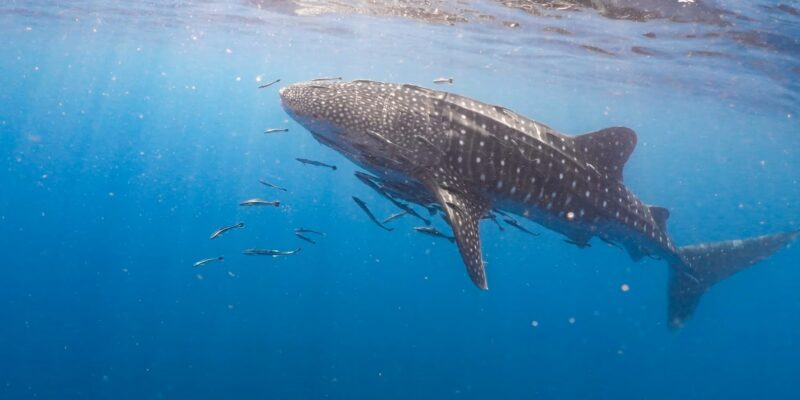
The Whale shark (Rhincodon typus) and the entire family Mobulidae were already listed in Appendix II. Their transfer to Appendix I now places them under the strictest CITES trade regime. International commercial trade in wild-caught animals, body parts and derived products is generally prohibited.
Cross-border transfers remain only possible under exceptional, predominantly non-commercial conditions. This requires permits from the exporting and importing country. Scientific authorities must also confirm that the transaction does not further endanger the survival of the species.
The family Mobulidae includes manta and devil rays. Their gill plates in particular are traded internationally. Regulating the entire family makes enforcement easier because dried or processed parts cannot always be identified reliably at species level.
You are currently viewing a placeholder content from Facebook. To access the actual content, click the button below. Please note that doing so will share data with third-party providers.
More InformationTope shark and two Mustelus species enter Appendix II
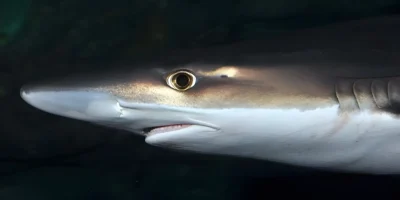
The Tope shark and two Chilean species of the genus Mustelus will be covered by Appendix II. This is not a complete trade ban, but exports require a CITES permit from the exporting country. The Chilean notice does not identify the two Mustelus species individually.
Before approval, the responsible scientific authority must come to the conclusion that the export will not harm the continued existence of the species in the wild. In addition, the administrative authority must check whether the animals or products were obtained legally. The catch, origin and trade route must therefore be documented in a comprehensible manner.
These controls are particularly demanding for dogfish and smooth sharks. Meat, gutted bodies and dried fins lose many identifying characteristics. In Spanish-speaking fisheries, various species are also marketed under collective terms such as “cazón” or “tollo”. A permit requirement is only effective if customs and fisheries authorities can trace the products back to the species or regulated group.
CITES regulates trade, not fishing itself
The new listings are sometimes described too simply as protection bans. CITES operates at international borders: it determines the conditions under which animals, meat, fins, gill plates and other products may be exported, imported or re-exported.
The decision therefore neither automatically creates a fishing ban in the waters off Chile nor a new protected area in the Pacific Ocean. National fishing rules continue to determine whether and how a species can be caught. However, CITES can severely limit the economic incentive and sales channel if a catch is intended for the international market.
This dividing line is particularly important for Appendix I species: a strict international trade ban does not prevent all local removal. Conversely, a national fishing ban can go much further than the CITES rules. Effective protection only arises when trade control, fishing law, monitoring and species identification work together.
The Chilean wine palm is central to the wider package
The Council of Ministers decision does not only affect marine animals. Chile itself had requested that the endemic Chilean honey palm Jubaea chilensis be included in Appendix I. International trade is thus largely limited to non-commercial exceptional cases. The species is considered endangered in Chile and is under pressure from habitat loss and the use of its seeds and other products.
The tarantula Grammostola rosea is also newly listed in Appendix II. The package illustrates the wide range of trade chains covered by CITES, from live animals for the pet trade and plant parts to food, fishery products and luxury goods. According to the Environment Ministry, the convention regulates more than 41,000 species worldwide, about 350 of which occur in Chile.
Implementation will determine the outcome
Formal inclusion in a CITES appendix is only the first step. Chile must organize permit procedures, scientific non-detriment findings, customs controls and the traceability of fishery products so that misdeclared or mixed shipments can be detected.
The two available statements specify no new catch quotas, enforcement budgets or deadlines for additional measures at sea. The conservation benefit will therefore depend on permits being based on robust stock data, illegal supply chains being uncovered and the stricter rules reaching ports, markets and customs offices in practice.
Appendix I largely closes the international commercial market for whale sharks and mobulid rays. For tope and smoothhound sharks, Appendix II instead creates a control obligation whose quality will determine its impact. Chile’s update is therefore an important legal step, but it is not a substitute for consistent fisheries management and protection of the species’ habitats.