


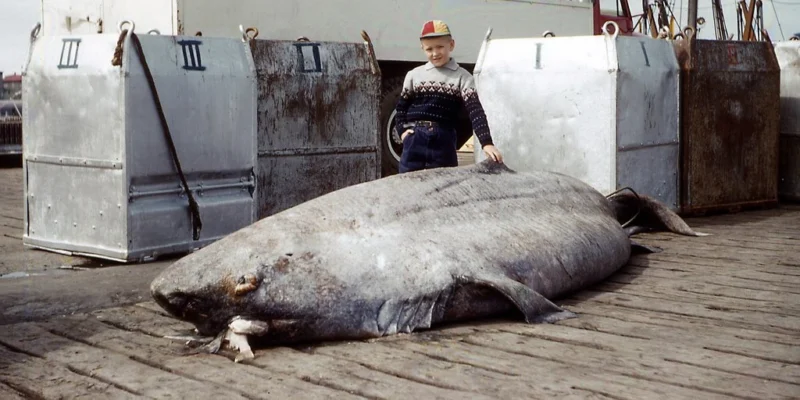
In Avannaata, a municipality in northwestern Greenland, a bounty was intended to reduce the number of Greenland sharks (Somniosus microcephalus). But the scheme was not implemented. As Sermitsiaq reported on April 5, 2026, the municipality lacked the legal authority to introduce it. The cancellation therefore dates back several months.
300 kroner for a shark heart
The original scheme offered 300 Danish kroner for each shark heart handed in, with a target of 1,000 animals. The meeting documents from February 13 record how the proposed payment rose from 100 to 300 kroner during deliberations. The municipal council decided to fund the measure through its pest control account.
The proposal followed complaints about problems affecting fisheries. The council paper refers to earlier bounty schemes and states the aim of reducing the burden on fishers. A political target, however, establishes neither the size of the local shark population nor that 1,000 animals have already been killed.
The municipality could not implement the scheme
According to Sermitsiaq, the subsequent cancellation is documented in the minutes of the March 27 council meeting. A member of staff at the Ministry of Fisheries, Hunting, Agriculture and Self-Sufficiency had asked about the legal basis. The municipal administration then explained that the council could not authorize a targeted hunt of the species, so its decision would not be implemented.
This finding concerns that particular municipal bounty scheme. It does not establish a general ban on catching Greenland sharks or confirm a new hunting operation.
Problems for fisheries remain
The conservation organization Oceans North Kalaallit Nunaat acknowledges the difficulties faced by fishers: sharks can become entangled in longlines, nets and trawls. Removing them takes time and can damage gear and the catch. Nevertheless, its March 19 statement warned against trying to solve these problems with a bounty.
In the organization’s assessment, dead animals and fish waste could attract more sharks. Greenland sharks also travel long distances, so animals removed from an area could be replaced by others moving in. Lasting relief would therefore not be assured.
Long-term solutions rather than further losses
The species grows slowly and reaches reproductive maturity very late. Our article on Greenland shark sexual maturity explains why the often-cited figure of around 150 years is an estimate. With this life history, additional losses cannot be replaced quickly.
Oceans North calls for more reliable information on bycatch and lost fishing gear, along with trials of modified equipment. Recovering ghost nets and avoiding waste disposal at fishing grounds are also among its proposals. These measures should be developed with fishers. The organization presents them as routes towards better management, rather than conclusively proven solutions to every conflict.
