


Tawny nurse shark - Nebrius ferrugineus
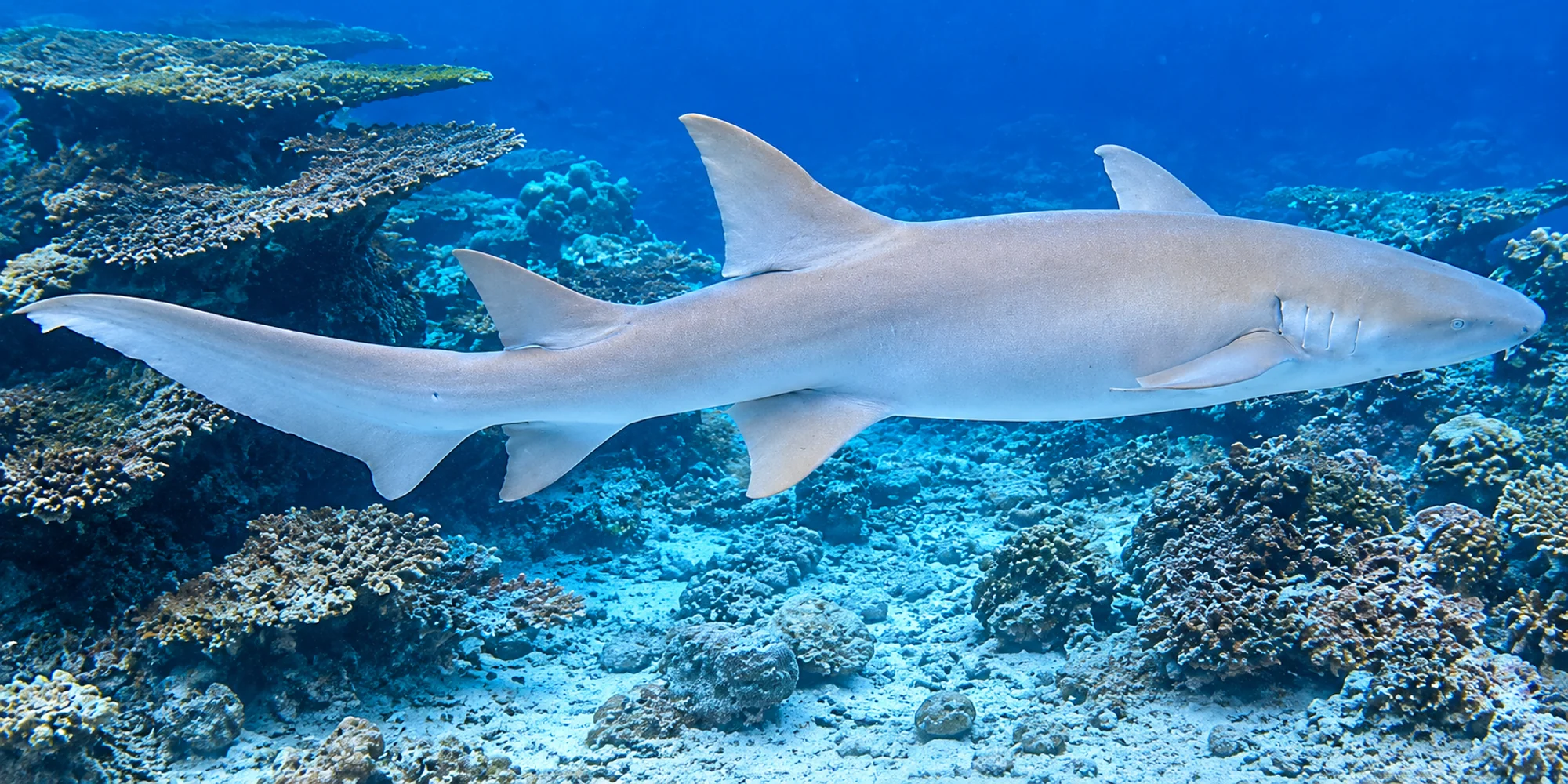
Body structure, features & anatomy
Identification
The tawny nurse shark Nebrius ferrugineus is a robust carpet shark in the family Ginglymostomatidae. It belongs to the Orectolobiformes, and Nebrius is represented today by this living species. The shark looks heavy and bottom-oriented, with a broad head, small spiracles and short barbels in front of the mouth.
FishBase describes a wedge-shaped rounded snout, two angular dorsal fins and a strongly asymmetrical tail. Large animals can exceed three metres. Underwater, the easiest separation from the Atlantic nurse shark is geography: Nebrius ferrugineus is the nurse shark of the tropical Indo-Pacific.
Distribution & habitat
Tropical Indo-Pacific
Its range runs from the Red Sea and East Africa across the Indian Ocean to the western and central Pacific. The Florida Museum lists records from South Africa, Madagascar, the Seychelles, the Maldives, India, Japan, the Philippines and Australia, among other regions.
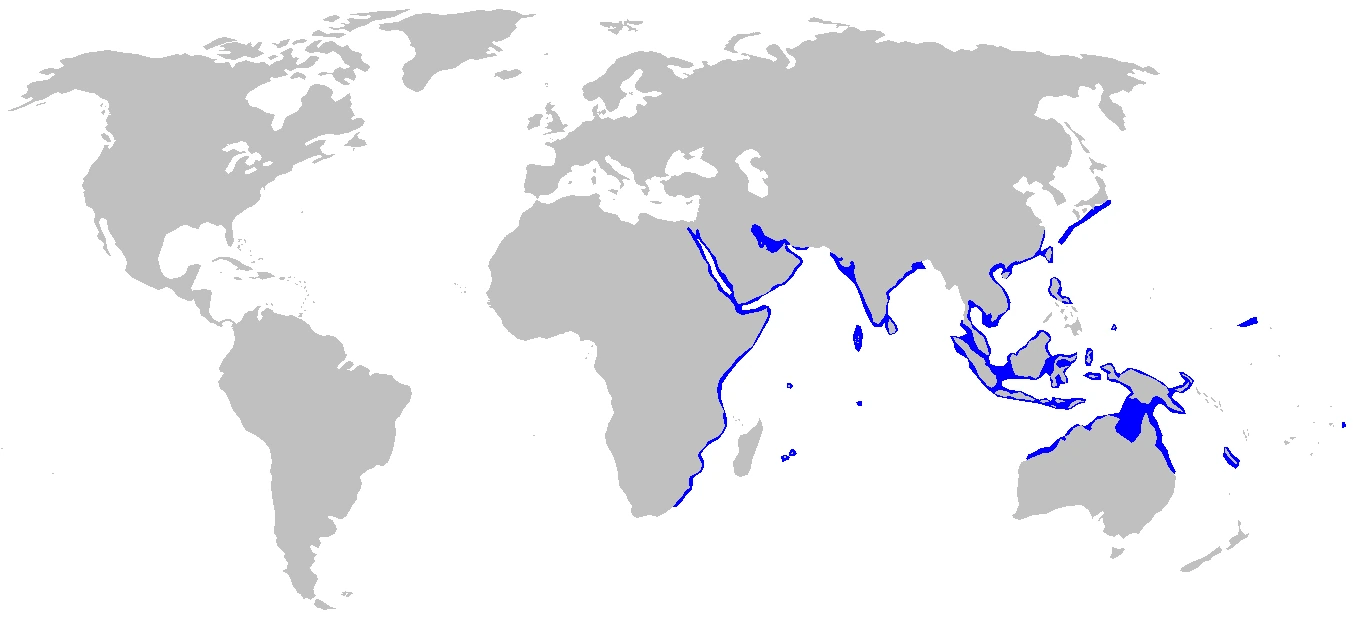
Typical habitats include coral and rocky reefs, lagoons, channels, sandy areas near reefs, seagrass beds and sheltered caves. Young sharks use very shallow protected coasts; adults often rest by day under ledges or in crevices and move at night over reef and sand to feed.
Life history, diet & reproduction
Nocturnal reef dweller
Tawny nurse sharks are mainly crepuscular and nocturnal. During the day they often lie calmly on the bottom, alone or in small groups, and may reuse familiar resting places. At night they search for fishes, crustaceans, cephalopods and other bottom prey using barbels, smell and suction feeding.
Shark-References summarizes reproduction as ovoviviparous or post-oviparous: egg cases remain inside the mother until the young hatch and are born live. Litters are often described as small, around eight pups, which helps explain why local populations recover slowly.
Threats & protection status
Fisheries and coastal habitats
The IUCN Red List lists Nebrius ferrugineus globally as Vulnerable. The fish.gov.au Shark Report describes it as a widespread shelf shark of the Indian, western and central Pacific that is exposed to heavy fishing pressure in many areas outside Australia.
Gillnets, longlines, trawls, targeted use and bycatch in shallow coastal habitats are the main problems. In regions such as Indonesia, Thailand and parts of South Asia, habitat loss, reef damage and intense coastal use add more pressure. Effective protection needs catch rules, bycatch reduction and intact lagoons, reefs and resting sites.
Tawny nurse sharks & humans
Respectful observation
For divers, the tawny nurse shark is usually a calm, impressive bottom shark. Encounters often happen at reef edges, caves or daytime resting places. That is exactly where distance matters: do not touch, block an exit, crowd a cave or force an interaction.
Records on iNaturalist show how useful well-documented sightings can be for range and habitat questions. In places such as Papua New Guinea, northern Australia or remote reef systems, encounters may be more plausible than on heavily fished coasts, but the species should never be marketed as a guaranteed show animal.
Profile
- First described:
- Max. size:
- Depth:
- Max. age:
- Max. weight:
- Water type:
- IUCN Status:
Taxonomy
- Kingdom:
- Phylum:
- Subphylum:
- Infraphylum:
- Parvphylum:
- Class:
- Subclass:
- Superorder:
- Order:
- Family:
- Genus:
Dive Centres




Newsletter
Shark Alert in Your Inbox