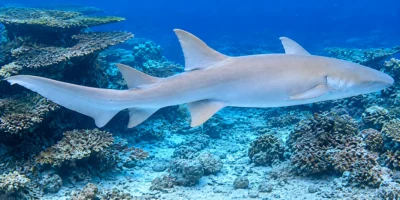
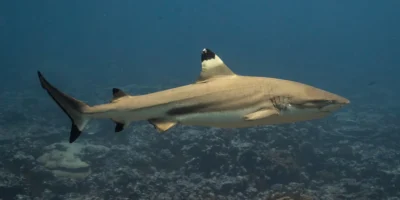
During an inspection in the waters of the Derawan Islands in East Kalimantan, emergency services recovered dozens of dead sharks and rays. Prokal reported 30 brown nurse sharks, eight blacktip reef sharks and two fiddler rays. The animals should therefore be used as bait for longline fishing.
According to additional information from Ekspos Kaltim The joint operation took place on July 1st and 2nd, 2026. The protected area administration UPTD KKP3K-KDPS and several security authorities were involved. The inspection took place in a zone of the marine protected area in which use is only permitted under certain conditions.
40 animals found on board
The emergency services found a total of 40 animals: 30 brown nurse sharks (Nebrius ferrugineus), eight blacktip reef sharks (Carcharhinus melanopterus) and two violin rays (Glaucostegus typus). Some of the animals had already been dismembered, others were still tied together.
According to the reports, the sharks were not the actual target catch. They were caught with nets and then used as bait on longlines. This use in particular makes it clear that sharks can come under strong fishing pressure even when neither their meat nor their fins are the end product.
Control in the marine protected area
Didik Riyanto from the protected area administration told Ekspos Kaltim that local fishing was not banned across the board in the affected zone. However, it requires a valid permit; Protected species are not allowed to be caught. The authorities are now investigating the origins of the fishermen and possible violations.
Prokal quotes the local diving community Berau Divers with clear criticism. Chairwoman Fitriani pointed out that sharks were now difficult to observe, even during dives. Hendra Pranata praised the operation, but at the same time called for more frequent patrols and better equipment for inspectors.
Sharks as part of the reef ecosystem
Those affected Shark species live closely associated with tropical coastal and reef habitats. Brown nurse sharks often rest in caves or under overhangs, while blacktip reef sharks utilize shallow lagoons and reef edges. If local stocks are regularly removed, this can not only make diving encounters less frequent, but can also change the ecological structure of the reefs.
The incident is therefore doubly relevant for Derawan. The archipelago is known for its high marine biodiversity and is economically strong Diving tourism dependent. However, protected area rules only work if controls record fishing methods, permits and the species actually on board.
Prevention instead of discovery after the catch
The operation may have prevented more animals from being captured. He was too late for the sharks and rays that had already been killed. The diving community’s demand for more presence on the water is therefore aimed at prevention: detecting suspicious fishing early, checking fishing gear and consistently prosecuting violations across a large island area.
The case also shows how important accurate documentation is. The species, number and condition of the animals as well as the location and method of capture determine which protection and fishing rules apply and whether control can become a reliable procedure.