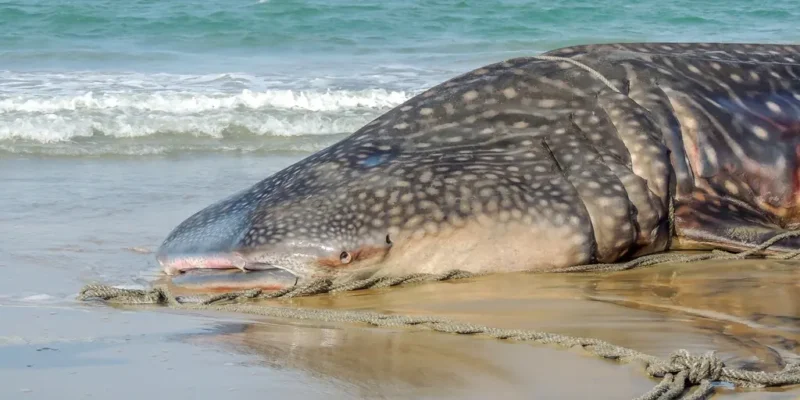
Another whale shark has stranded on the south coast of the Indonesian island of Java. The animal, already dead, was found on 14 July 2026 at Pantai Bleberan in Bunton village, Cilacap Regency. Local fisheries chief Indarto said it measured about 7.8 metres and weighed an estimated three tonnes. It was the fifth recorded case in Cilacap since 17 May—five strandings in only 58 days.
The short report by KompasTV Jawa Tengah shows the recovery operation on the beach. Size estimates differ, however: the official figure cited by Suara Merdeka and RRI is 7.8 metres and three tonnes, while an earlier detikJateng report, quoting conservationist Jumawan, reported roughly 4.5 to five metres and about one tonne. Without a published measurement record, both figures should be treated as estimates.
The reports agree on the location and outcome: the whale shark was at Pantai Bleberan in Bunton and died. Specialists planned to take samples and then bury the carcass using heavy machinery. Prompt disposal is intended to prevent decomposition and possible pathogens from endangering people or the beach environment.
Five cases since mid-May
The Indonesian source report’s headline refers to five cases ‘in three months’. This means the three calendar months involved—May, June and July. In fact, only 58 days separate the first and latest finds. The chronology provided by the fisheries authority is as follows:
- 17 May: A whale shark was found stranded early in the morning at Pantai Kenari near Pagubugan in Binangun district. It died, and helpers buried the carcass the same day.
- 23 May: At Pantai Banjarsari in Nusawungu district, the whale shark—about 4.5 metres long—was still alive when discovered. Residents and responders tried to return it to the sea, but it died. This carcass was later examined in greater detail.
- 22 June: A whale shark about five metres long stranded at Pantai Cemara Sewu in Bunton. It initially showed signs of life but reportedly died within about an hour.
- 30 June: The fisheries authority includes another case on this date in its list of five. The individual reports currently available do not provide similarly precise information about the beach, the animal’s size or its condition.
- 14 July: The most recent whale shark was found at Pantai Bleberan in Bunton. Estimates of its size vary considerably by source; the authority gives 7.8 metres and about three tonnes.
The Satelit TV video documents the earlier case of 22 June at Pantai Cemara Sewu. It also shows how difficult it is to move a shark weighing several tonnes back into sufficiently deep water as the tide falls.
Acute poisoning is a lead, not yet a conclusion
No confirmed common cause has yet been established for the five strandings. The case of 23 May does, however, offer an initial lead. A team involving fisheries authorities, veterinary specialists, Jenderal Soedirman University (Unsoed), Sealife Indonesia and other organisations performed a necropsy. Their preliminary assessment suggests acute intoxication may have contributed to the death. Organ and stomach samples were sent to a laboratory for further analysis, and water samples were examined as well.
Unsoed researchers are examining neurotoxic heavy metals and the movement of plastics through the food chain, among other factors. Plastic was found in the digestive tract of one stranded whale shark during an initial examination. That proves exposure, but not that plastic or heavy metals caused the stranding. The team cautions against such a premature conclusion: only laboratory results can show whether pollutants were involved and to what extent.
Why do whale sharks come so close to shore?
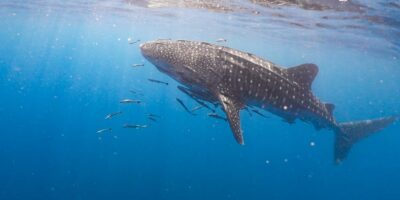
whale sharks are filter feeders. They follow plankton, fish eggs and small schooling fish, which can bring them into highly productive coastal waters. Off Cilacap, nutrient-rich runoff and large schools of anchovies may draw the animals into the shallows. Abundant food therefore offers a plausible explanation for their presence, but not for why several animals failed to return to deeper water.
Other factors under discussion include the very shallow beach profile, heavy surf, shifting currents and rapidly receding water. A weakened or disoriented animal can quickly become trapped in such conditions. Shipping, fishing and pollution are also recognised risks to whale sharks. None of these factors has yet been demonstrated as a common cause of the current series.
Fully protected in Indonesia
The whale shark is the world’s largest living fish and is internationally classified as endangered (Endangered). In Indonesia, the species has been fully protected since 2013. Body parts therefore may not be privately removed, used or sold, even when an animal strands dead.
Authorities in Cilacap ask residents to report strandings immediately to the village administration or the responsible emergency services. Live animals require a coordinated rescue that supports the gills and body while avoiding injury. Dead animals should not be touched or cut apart; sampling, documentation and safe disposal belong in the hands of specialists.
Indonesia’s fisheries ministry plans to strengthen its emergency capacity for whale shark strandings under the new national action plan, and the series in Cilacap adds urgency to that goal. Standardised measurements, complete necropsies, published laboratory findings and a central dataset could reveal whether the five cases share a trigger or are separate unfortunate events in an especially productive coastal zone.
Five dead animals are a warning sign, not yet an explanation
The cluster is unusual and warrants systematic investigation. On its own, however, it proves neither a wave of poisoning nor a collapse of the whale shark population off Java. Laboratory results, consistent measurements and information on the age, sex and health of all five animals are still lacking.
Those gaps are precisely what make the series scientifically important. Each case can yield data on diet, contaminant exposure, movements and hazards near the coast. The priority now is to analyse the Cilacap samples and bring the results together publicly, so that five tragic discoveries can produce practical lessons for protecting the world’s largest sharks.