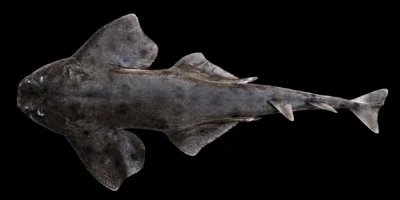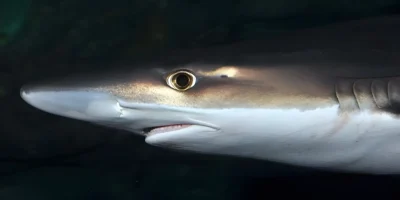
A new study in Frontiers in Environmental Archaeology shows how centuries-old cartilage remains can be used to reconstruct ancient shark communities. The team examined archaeological finds from Santa Rosa Island in the Californian Channel Islands using the method Zooarchaeology by Mass Spectrometry, or ZooMS for short. A sample provided evidence of one Angel shark, which does not match any previously compared species.
The researchers are expressly not talking about a new species that has already been described. The collagen fingerprint is similar to the Chilean angel shark (Squatina armata), but is different from him. The animal could therefore have belonged to a previously unknown species or represent a regional collagen signature that has not yet been recorded.
Species identification from collagen
Sharks and rays leave behind a difficult archive in archaeological sites. Their skeleton consists predominantly of cartilage, which is less well preserved than bone. Individual vertebrae or cartilage fragments can often only be assigned to a family or larger group based on their shape. This is exactly where ZooMS comes in.
The method measures characteristic peptides of the protein collagen. The resulting mass spectrum works like a molecular fingerprint. If certain peptide patterns match reference samples, externally similar or fragmented residues can be determined much more precisely.
27 previously unclear samples
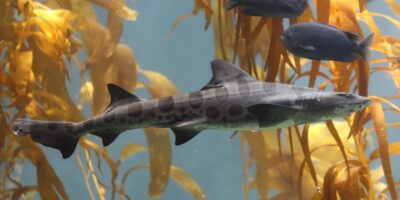
27 samples were examined that could not previously be reliably determined morphologically beyond the family level. Many were Smooth sharks or rays have been assigned. The ZooMS analysis grouped them into three clearly distinguishable taxa: Dogshark (Galeorhinus galeus), Leopard shark (Triakis semifasciata) and Pacific dogfish (Squalus suckleyi).
The method therefore not only provides longer species lists. It can reveal which habitats and levels of the food web were used by ancient coastal communities. For some of the samples, the team therefore combined ZooMS with stable isotope analyses, which provide information about trophic ecology and habitat use.
The striking angel shark specimen
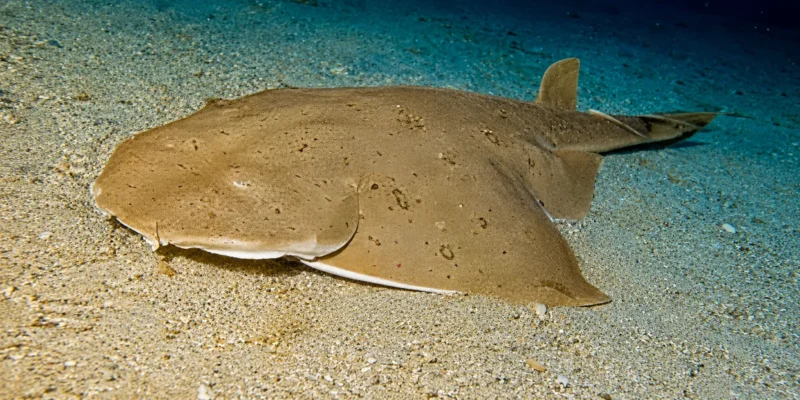
Three other finds were identified by their shape California angel shark (Squatina californica) has been addressed. Two confirmed ZooMS. However, the third sample showed its own collagen pattern. It was closer to the Chilean angel shark, but also different from its reference profile.
This finding opens up several possibilities. An angel shark lineage may have previously lived in the Channel Islands, but has now disappeared regionally or has not yet been scientifically described. It must also be checked to what extent collagen profiles vary within known species and whether there are enough modern comparison samples available. Only additional analyzes can turn the reference into a reliable species assignment.
Why historical species lists are important
Today’s stock assessments usually only begin decades after intensive fishing began. As a result, a severely impoverished state can appear to be a normal starting point. Archaeological finds extend this temporal horizon by centuries or millennia and show which species used to occur in a region.
The study therefore reveals more than one possible unknown angel shark. It shows how biomolecular archeology can provide historical reference values for the Shark protection can improve. When ZooMS distinguishes between similarly built species and isotope values simultaneously narrow down their ecological role, a more accurate picture of coastal ecosystems before modern fishing pressure emerges.
A clue, not a finished discovery
Further research requires additional archaeological samples, a denser comparative archive of modern angel sharks and, if possible, further biomolecular data. The extraordinary sample is therefore best understood as a starting point: it proves that ancient cartilage remains can contain information that neither bone shape nor today’s distribution maps reveal.