


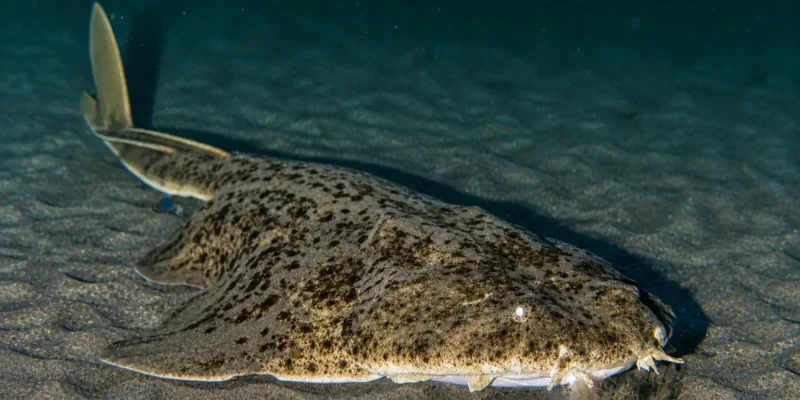
For many divers, the Canary Islands are considered an Atlantic area with a surprisingly diverse large fish and ray fauna. But it is precisely this diversity that has so far only been protected incompletely. Canarian Weekly reports on the appeal by researchers to provide significantly greater legal protection for sharks and rays in the Canary Islands.
The essence of the warning is simple: 78 species of sharks and rays occur in Canary Islands waters, but only six are currently included in the regional protection list. At the same time, around 45 percent of these species are considered threatened. From the perspective of the marine protection organization Latitud Azul, there is a big gap between biological risk and legal protection.
Why data matters over protection
A central problem is not a lack of interest, but a lack of scientific basis. According to Spanish and Canary Islands law, species can only be placed on official protection lists if there is enough reliable data. This is exactly what is lacking in many of the archipelago’s sharks, rays and chimeras.
That’s why Latitud Azul has the project Conservation Strategies for Sharks and Rays in the Canary Islands launched, supported by the European BestLife2030 program. The goal is to collect data, assess risks, make knowledge gaps visible and then develop a protection strategy that brings together authorities, science and ocean users.
78 species at a glance
The project considers all 78 known elasmobranch species of the Canary Islands: 53 shark species and 25 ray species. These include coastal species, deeper Atlantic inhabitants, large migratory animals and rays that rely on sand and rocky habitats. Many of these animals are barely noticed by the public, but are caught up in fishing, recreational use or habitat conflicts.
Latitud Azul also names 20 percent of the species as data-deficient. This is particularly sensitive for protection: If it is not clear how common a species is, which habitats it uses or what risks of capture there are, it is difficult to justify an application for protection. The lack of data itself becomes a risk.
From proof to protection list
Maite Asensio, marine scientist and co-founder of Latitud Azul, describes the starting point of the project as very concrete. The organization came across offers advertising shark and ray fishing in the Canary Islands. The audit revealed that many affected species had no or insufficient legal protection.
This resulted in a larger approach: First, existing data is compiled and gaps identified, then a vulnerability map and a technical strategy are created. In the final phase, proposals for additional entries in regional and national protection catalogs will be coordinated with environmental organizations, science, authorities and marine stakeholders.
Angel shark as an example
The angel shark is the best-known example of how research can enable conservation. The Canary Islands apply to Squatina squatina as one of the last strong retreat areas. Precisely because this species has been intensively studied, its need for protection is politically and technically much more visible than with many rays or lesser-known shark species.
Asensio also refers to ray species such as the bull ray. If a similar amount of scientific work had been done there, they believe that some of these species could already be similarly protected. This shows how closely research, public attention and legal consequences are linked.
Fishing remains the greatest pressure
The report cites human activity as the greatest threat. These include targeted or illegal fishing, bycatch, coastal development, habitat loss, pollution, wastewater discharges and increasing use of marine space. Areas that are particularly heavily used for tourism are under pressure.
Shipping traffic is also mentioned as a risk. The public debate often focuses on collisions with whales and dolphins, but other marine animals can also be affected by noise, traffic, habitat fragmentation and direct disturbance. In addition, sharks and rays often only compensate for losses very slowly due to slow reproduction.
Climate change reaches the nurseries
Climate change is making the situation even worse. Rising water temperatures have already been linked to changes in the reproduction of the critically endangered angel shark in Canary Islands waters. This is not just about individual animals, but about the habitats in which young animals emerge and grow.
This is a serious message, especially for coastal areas relevant to diving. A beautiful sandy bottom, the edge of a harbor or an urban coastal section can be an important habitat or breeding area for some species. Protection must therefore think beyond spectacular offshore scenes.
Protected areas alone are not enough
The researchers emphasize that species protection lists are only part of the solution. According to the report, only around one percent of the Canary Islands’ marine environment currently enjoys strict protection. Putting individual species on lists is of little help if important habitats continue to be polluted or rules on the water are barely effective.
Latitud Azul has therefore also contributed to two internationally recognized Important Shark and Ray Areas: El Pajar and Las Canteras, both on Gran Canaria. ISRAs are not legally protected areas, but do mark habitats that are particularly important for sharks and rays. They can help focus protection planning and agency decisions.
Why this is important for divers
For divers, snorkelers and sea observers, the debate is more than administrative language. Sightings, photos and encounters can provide clues, but they are no substitute for coordinated research. At the same time, the diving and tourism sectors have a special responsibility because they make animals visible and can either exacerbate or defuse usage conflicts.
Latitud Azul therefore also relies on education. The organization has visited all eight islands over the past few months to dismantle misconceptions about sharks and talk about the role of sharks and rays in the ecosystem. A documentary film is intended to make the scientific work and the voices of marine conservationists publicly accessible.
The next step is political
Scientific work can provide the basis, but the decisive step lies with the authorities. Adding more species to regional and national conservation lists requires political will, clear procedures and enforcement. Years of bureaucracy can be too slow, especially for species whose populations are already fragile.
For Haitauchen, the lesson is clear: the Canary Islands are not only an attractive travel destination, but also an important Atlantic area for sharks and rays. When almost half of the recorded species are threatened and many have little legal protection, admiration underwater is not enough. Protection starts with data, but only becomes effective with rules, controls and respectful use.