


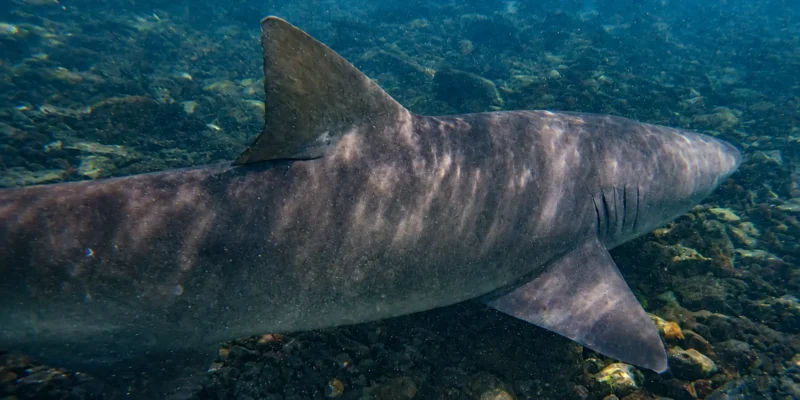
Marine biologist Jaquelino Varela has completed his doctorate on sharks and rays in Macaronesia with the highest distinction. The University of Lisbon particularly highlights the role of Cape Verde: The island state is rich in species, but at the same time an unusually large proportion of the species detected there are globally threatened.
A central data basis is a comparative study published in Frontiers in Marine Science in 2025. It recorded 78 species of sharks, rays and chimeras in Cape Verde, on the Canary Islands, Madeira and the Azores. For Cape Verde, the compilation shows 53 species.
What the figure of 66 per cent means
Of the 53 species recorded for Cape Verde, 66 per cent fall into one of the global IUCN threat categories Vulnerable, Endangered or Critically Endangered. This is the highest proportion among the four island groups compared. In the Canary Islands it is 61 per cent, in Madeira 52 per cent and in the Azores 49 per cent.
The number should not be read as a local decline in abundance of 66 per cent. It describes the proportion of species present whose global IUCN status is already considered threatened. The study is a synthesis of published evidence and threat assessments, not a complete count of all animals in Cape Verde waters.
Distinct species community in the eastern Atlantic
In the comparison of the four regions, ten species were listed only for Cape Verde. This does not mean that these species live exclusively there or are endemic. However, it shows that the island group has a distinct species composition within the studied Atlantic Ocean region.
The researchers found no evidence of an egg-laying shark species for Cape Verde in their database. They cite fishing as the most important pressure, complemented by the deterioration of coastal habitats. A medium to high climate risk was also determined for 16 species.
Local knowledge aims to close research gaps
Varela combined scientific population data with the ecological knowledge of artisanal fishers. These often know seasonal presence, fishing locations and changes over many years, even if formal long-term series are missing. Such observations do not replace a standardized survey, but can show where research and protection should begin.
The university cites Sal Rei Bay on Boa Vista as an example. It is described as a nursery area for sharks and, according to Varela’s conclusions, should be particularly protected. Whether and for which species the bay meets all the scientific criteria of a nursery must be confirmed through targeted monitoring.
From the species list to the protection plan
From the results, Varela derives several tasks: a national action plan for sharks, a revision of legal rules, effectively managed marine protected areas and a better recording of catches. Species-specific data is particularly important because catch-all categories in catch statistics obscure which stocks are under the greatest pressure.
The doctorate does not provide a definitive population estimate, but rather a list of priorities. Cape Verde combines high biodiversity, numerous globally threatened species and still large gaps in knowledge. It is precisely this combination that makes the island state a key area for shark research in the eastern Atlantic.