


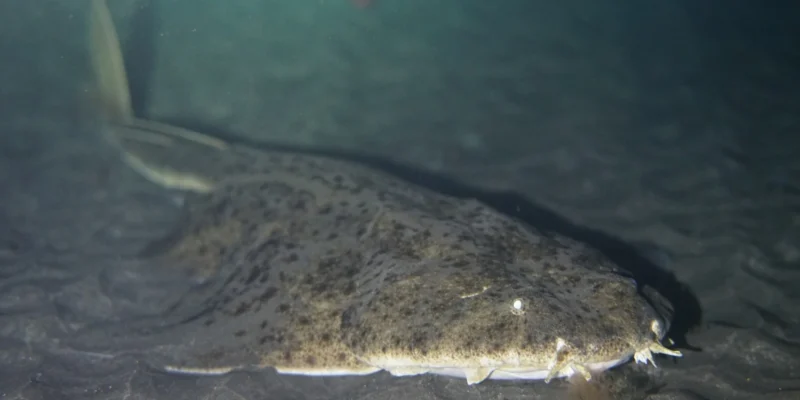
Off Melenara on the east coast of Gran Canaria, a 5.18-square-kilometre area of sea has been designated as an Important Shark and Ray Area, or ISRA for short. The official Melenara fact sheet names the critically endangered spiny butterfly ray (Gymnura altavela) as the decisive species.
The area extends from the coast to a depth of 50 metres. Basalt platforms, rocky reefs and sandy areas form a mosaic of different habitats. The recognition is based on the global endangerment of the species and on regularly observed aggregations.
422 rays in 19 sightings
30 monthly underwater counts took place between May 2017 and December 2019. A total of 422 spiny butterfly rays were documented in 19 sightings. Fourteen observations were groups of three to 82 animals; the average group size was twelve.
The aggregations occurred regularly from June to November and peaked in September at water temperatures of 22 to 24 degrees Celsius. The animals were 60 to 175 centimetres long and were therefore mostly fully grown. Around 77 per cent of the recorded rays were female.
According to the fact sheet, this is the largest known aggregation of this species on the east coast of Gran Canaria. It is not yet clear why the rays gather there. Out of season they may migrate to deeper areas. Reproduction, foraging or resting behaviour are possible, but not yet confirmed, explanations.
Angel sharks also use the area
In addition to the focal ray species, several other species occur in the area. These include the critically endangered angelshark (Squatina squatina), the likewise highly endangered common eagle ray and the common stingray, which is classified as endangered. Their presence underlines the ecological importance, but was not the sole criterion for recognition.
An ISRA is not yet a protected area
Important Shark and Ray Areas are defined according to scientific criteria. They show which places are important for endangered species, reproduction, feeding, migration or special assemblages. However, an ISRA does not automatically create legal protection, fishing bans or new usage rules in Spain.
The regional ISRA compendium for the European Atlantic includes 124 recognised areas. They were published after a specialist workshop in May 2025. In addition, five candidate areas and 30 Areas of Interest remained for which further data is required.
Scientific basis for local decisions
For Melenara, the designation provides a spatially precise basis for monitoring and coastal planning. Authorities can consider whether seasonal aggregations are affected by fishing, boating, construction or other uses. Previous initiatives to protect sharks and rays in the Canary Islands thus receive an additional scientific basis.
It is now crucial to continue the surveys. Only longer time series can show whether the large groups return regularly, what they use Melenara for and which measures actually help. The area’s importance in the Atlantic Ocean has been recognised; specific protection rules remain a political task.