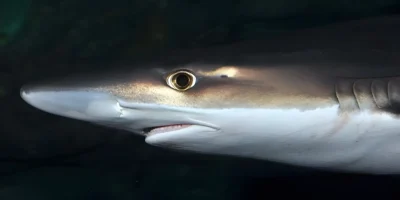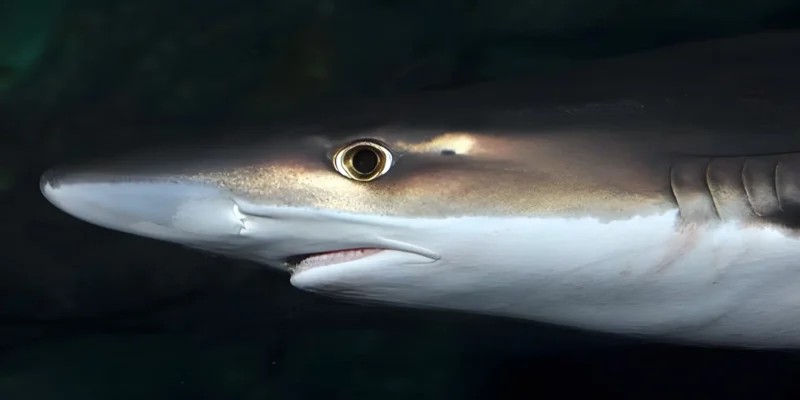
An unusually large gathering of tope sharks (Galeorhinus galeus) was observed off Les Portes-en-Ré on the French island of Île de Ré in August 2026. Actu La Rochelle, citing the local marine nature park, reports an estimated 500 animals. Underwater photographer Gaël Contal documented the encounter with photographs and footage.
Surfers had alerted Contal to the sharks. According to his account, he initially expected to see perhaps a single animal, but encountered dozens in the water. He kept his distance to avoid driving the shy animals away.
Photographs enabled species identification
Using Contal’s images, the French association for the study and conservation of cartilaginous fishes, APECS, confirmed the species identification. The tope shark is a slender coastal shark of temperate seas. It inhabits continental and island shelves, but can also occur far offshore in the Atlantic Ocean.
Nevertheless, the frequently cited figure of around 500 animals should be understood as an estimate. Publicly available reports explain neither the counting method nor the period over which the animals were recorded. Age classes and sex ratios have not yet been published either.
A large gathering is not evidence of population recovery
According to the UN Convention on the Conservation of Migratory Species of Wild Animals, the tope shark is classified globally as Critically Endangered. This migratory species has been listed in Appendix II of the Bonn Convention since 2020. Tope sharks can undertake extensive seasonal migrations; tagged animals from British waters have been found more than 2,000 kilometres away.
A large group in one place therefore says little about the trend in the overall population. Migratory sharks may temporarily concentrate in a small area and later disperse over long distances again. A local gathering must not be equated with population growth.
The species is sensitive to fishing pressure because it matures late and produces relatively few offspring. Alongside habitat protection, international trade controls for tope sharks therefore also play a role. These rules regulate cross-border trade but do not replace effective fisheries management.
Why the tope sharks gathered there remains unclear
Tope sharks eat fish, cephalopods and crustaceans, among other prey. Temporarily abundant prey could bring animals together in one place; reproduction, migration or environmental conditions are also possible factors. However, none of these explanations has yet been established for the gathering off Île de Ré.
In particular, the images alone do not establish that this is a nursery area. Researchers would need to determine the animals’ size, age and sex and investigate whether young sharks use the site repeatedly and over extended periods. At the already documented tope shark nursery off Borkum, precisely such repeated records supported the classification.
Sighting reports help close knowledge gaps
The marine nature park considers the observation noteworthy for biodiversity along France’s Atlantic coast. The case also illustrates the value of well-documented reports: photographs or videos can enable species identification and alert researchers to temporary gatherings.
Anyone observing sharks or rays along the coast of France can submit their sighting through the APECS reporting portal. The date, a location as precise as possible, estimated numbers and images are important—without following, surrounding or disturbing the animals for better pictures.