


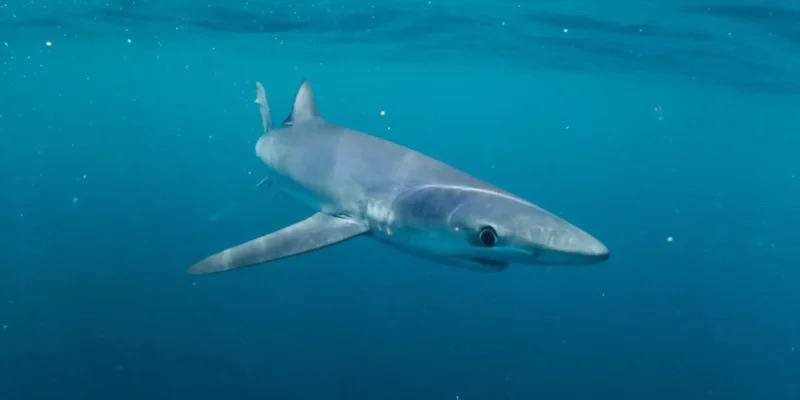
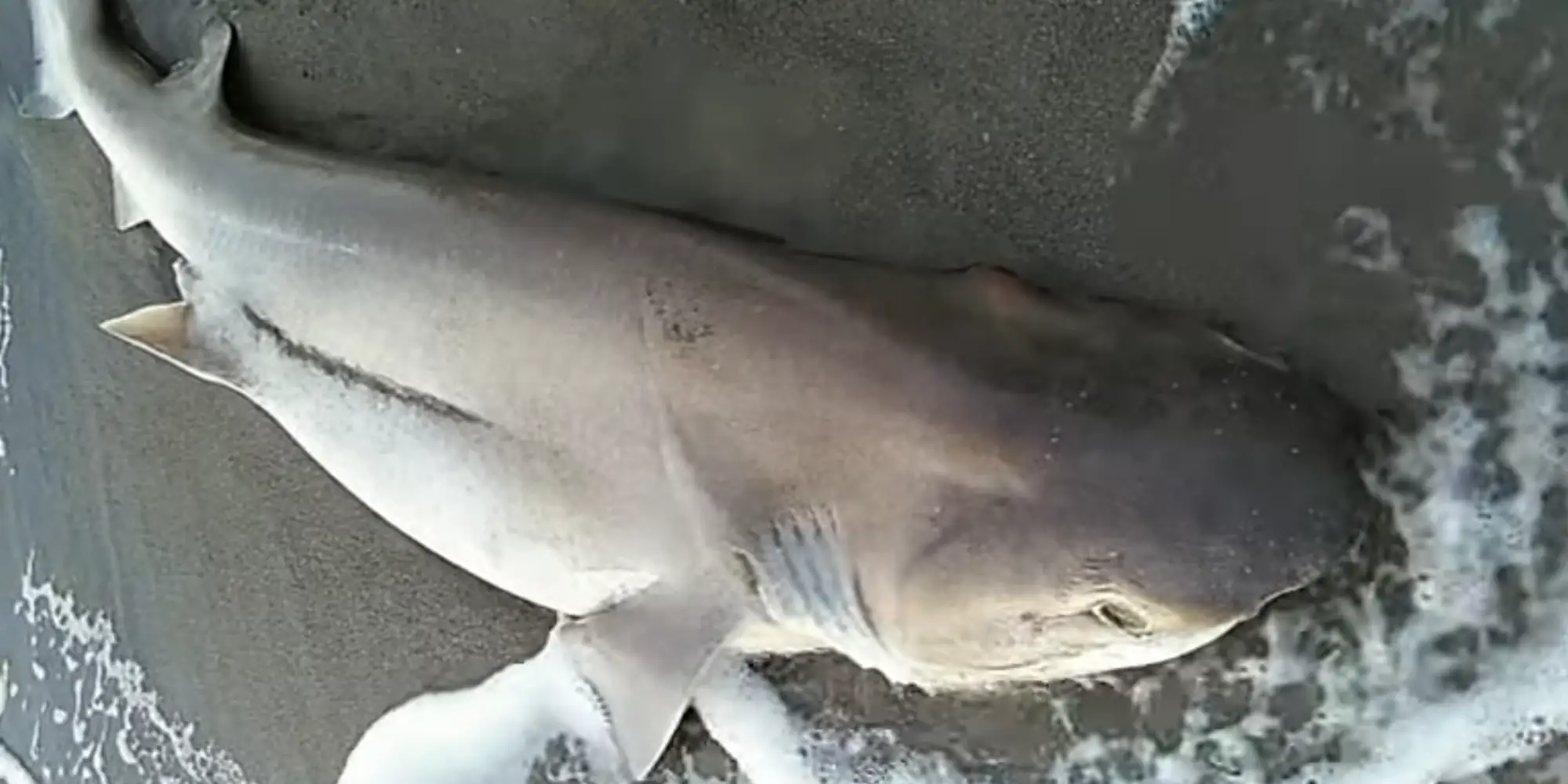
Videos and reports about sharks are currently increasing on the Italian coast: Sardinien, Ligurien, Toskana, Sizilien, Apulien. Then there was the dead man Blunnose sixgill shark in front of Follonica. Such individual reports quickly give the impression that there are suddenly more sharks in the Mediterranean. But it is precisely this impression that is deceptive.
The Swiss broadcaster RSI asked marine biologist Antonio Di Natale about this. His answer is clear: No, the sharks in the Mediterranean are not increasing. On the contrary, Di Natale classifies the development as a long-term decline, primarily due to fishing and the general burden on the marine environment.
Visibility is not an population trend
The most important difference is between what is happening in the ocean and what people see today. In the past, there were mainly fishermen on the open sea, along with a few private boats. Today millions of people go swimming, sailing, fishing, Dive, snorkeling or just going out for excursions. This increases the chances of encountering a shark or at least filming it briefly.
Add to that the speed of social media. A single video from the boat, a shadow in the water, or a dorsal fin near a shore can appear anywhere within hours. This creates closeness and repetition: what would previously have remained a local observation now seems like a series. However, this visibility alone says almost nothing for the inventory.
Which sharks occur in the Mediterranean
According to the RSI classification, around 40 shark species live in the Mediterranean. Many of them are small, ground-hugging species that practically never pose a threat to humans Dogfish or gobbler sharks. They are more likely to be seen occasionally in fishing rather than while swimming on the surface.
There are also larger pelagic species: blue shark, porbeagle shark, mako, thresher shark, hammerhead shark and also the great white shark are part of the Mediterranean fauna. This does not mean that such animals often appear off beaches. It just means that the Mediterranean is not a shark-free subspace, but an ancient habitat of several migratory shark species.
When assessing the risk, it is crucial that people are not normal prey for these animals. Di Natale emphasizes to RSI that sharks tend to avoid contact with humans. Many encounters do not occur because sharks actively seek proximity to bathers, but because people, boats and cameras are now much more often where sharks occasionally pass by anyway.
Why sharks are seen near shore
When a shark appears near the coast, there is often no dramatic change in behavior. The animal often follows a school of fish that has itself moved closer to land. Professional fishing can also attract sharks: vibrations, caught fish and traces of blood around a boat are strong signals in the water.
Many of the popular videos are therefore not created directly on the beach, but from fishing boats or leisure boats. From the camera’s perspective, the shark appears very close and surprising. Ecologically, this may still be normal searching or feeding behavior in a productive section of the Mediterranean.
The real problem is decline
While sightings make headlines, the bigger problem is the dwindling of many populations. Been over decades Sharks in the Mediterranean deliberately caught or taken as bycatch. In the RSI article, Di Natale recalls, among other things, earlier Sicilian driftnets that explicitly targeted pelagic sharks.
Today, several species are internationally protected and must be released if caught accidentally. This is progress, but it does not replace stable stocks. Precisely because many sharks grow slowly, reach sexual maturity late and only have a few young, losses have a long-lasting impact.
A regional one IUCN rating classified 39 of 73 assessed Mediterranean species of sharks, rays and chimeras as regionally threatened. This number refers to the larger group of cartilaginous fish, not just sharks, but shows how strong the pressure is in the Mediterranean.
Why the decline is difficult to quantify
One problem in the debate is the data gap. For much of the 20th century, catches were not recorded systematically enough to accurately compare current stocks with historical values. If old statistics are incomplete, a decline can be easily classified in terms of biology and fishing, but cannot always be translated exactly into percentages.
This is precisely why dramatic claims in both directions are problematic. A few videos don’t result in a boom. However, the lack of sightings in one place does not automatically mean that a species has disappeared everywhere. Serious classification requires catch data, sightings, research trips, telemetry, protection status and a look at individual species.
Climate change doesn’t make the situation any easier
The warming Mediterranean may shift distribution and prey availability. Sharks are mobile animals and can respond to temperature, food and oxygen conditions. At the same time, tropical and thermophilic species migrating to or becoming more common in the Mediterranean are changing food webs.
However, Di Natale warns against making predictions that are too simple. Some expect sharks to become more common with warming; others primarily see the continued decline. The more honest answer is: there is still a lack of data to make reliable predictions. This is precisely why it is important not to sell sightings as proof of a finished climate story.
What divers and coastal visitors can learn from it
For people near the water, the practical lesson is calm and unspectacular: a shark in the Mediterranean is not a sensational setting and is not an automatic warning signal. Keep your distance, don’t chase, don’t harass animals, don’t try baiting or feeding and report good observations to the responsible authorities – this helps more than alarmist clips.
For Haitauchen, history is above all an indication of perception. More cameras create more shark moments online. However, one should not conclude from this that the ecological situation is improving. Anyone who takes sharks in the Mediterranean seriously should not celebrate the rare sighting without also talking about bycatch, protection rules, habitats and reliable research.
Why sharks are needed
Sharks are important predators in marine ecosystems. They influence which prey survive, remove sick or weakened animals more easily and thus contribute to the stability of fish communities. If this function is lost, not only the shark world will change, but the entire food web.
The actual message from the RSI article is therefore not an all-clear for bathers, but rather a correction of perspective. Sharks are not suddenly everywhere in the Mediterranean. They have always been part of this sea, but today many populations are vulnerable. Above all, more videos show how visible our seas have become – not that their big predators are safe again.