


False catshark - Pseudotriakis microdon
Body structure, features & anatomy
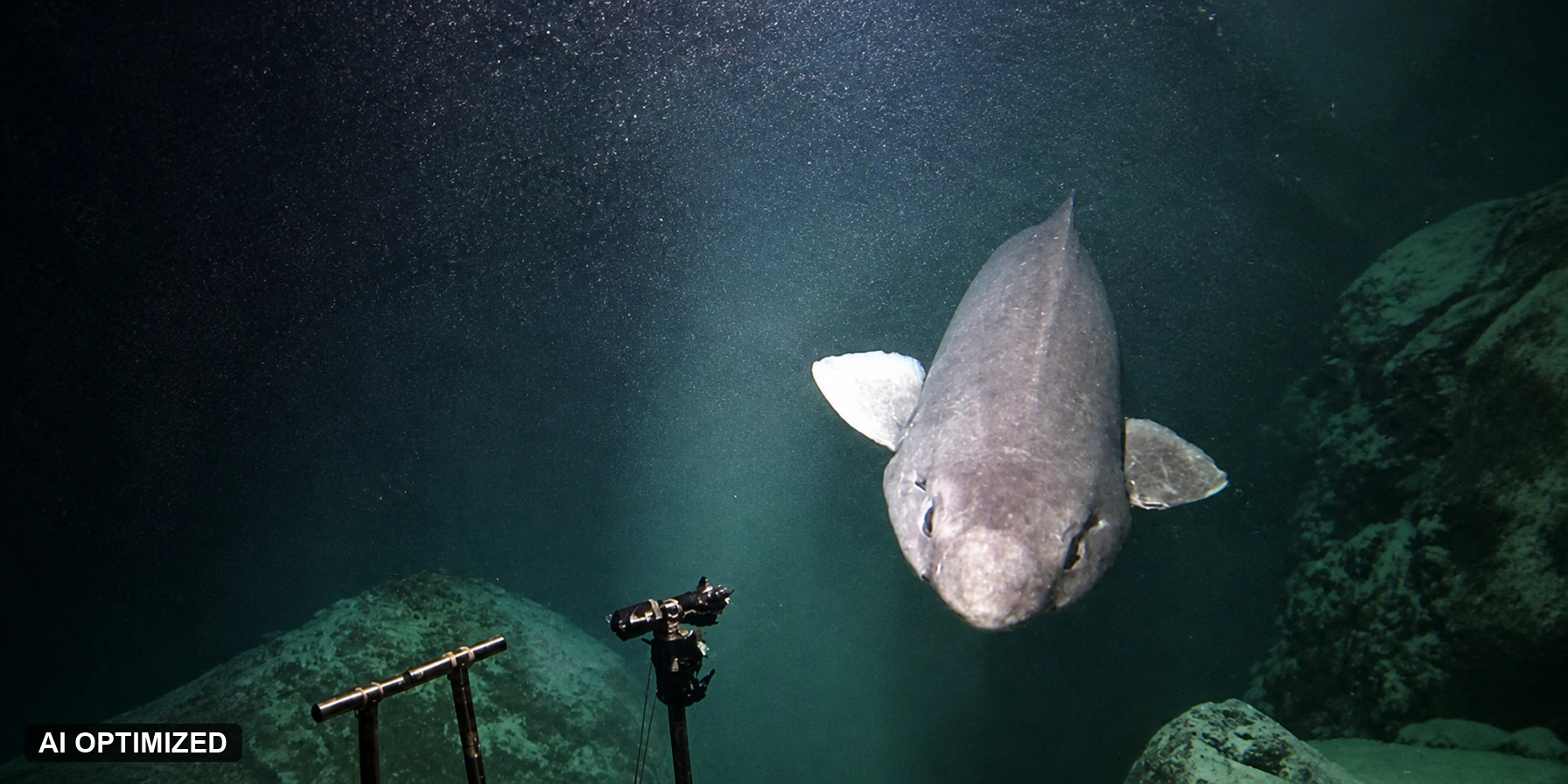
The false catshark is a large, heavily built deep-sea shark with conspicuously soft musculature. Its broad head ends in a short, rounded snout. The narrow eyes are more than twice as long as high and have only weakly developed nictitating membranes; very large spiracles lie directly behind them.
The FAO species catalog for the North Atlantic mentions the elongated, low first dorsal fin as a particularly striking feature. Its base is significantly longer than that of most demersal sharks and appears like a flat keel. The second dorsal fin and the anal fin are located far back; the lower caudal fin lobe is only weakly developed or almost absent.
Soft body and an unusually long dorsal fin
There are lots of small teeth in the large, curved mouth. 96 to 294 rows of teeth are described in the upper jaw and 108 to 335 rows of teeth in the lower jaw. Most teeth have a narrow main tip and small secondary tips; further back they become comb-like. Despite the name, it is not just a few, but rather numerous small teeth that are typical.
The coloration is predominantly uniform dark brown, gray-brown or almost black, without any noticeable markings. Large females reach around 2.95 to 2.96 meters, males, according to available measurements, up to around 2.69 meters. The combination of a massive, soft body, long first dorsal fin and very small teeth allows for the most reliable identification.
Distribution & habitat
The species has been recorded from deep ocean margins in the Atlantic, Indian and Pacific oceans. Its range is global in extent but consists of widely separated localities and should not be interpreted as one continuous, densely occupied area.
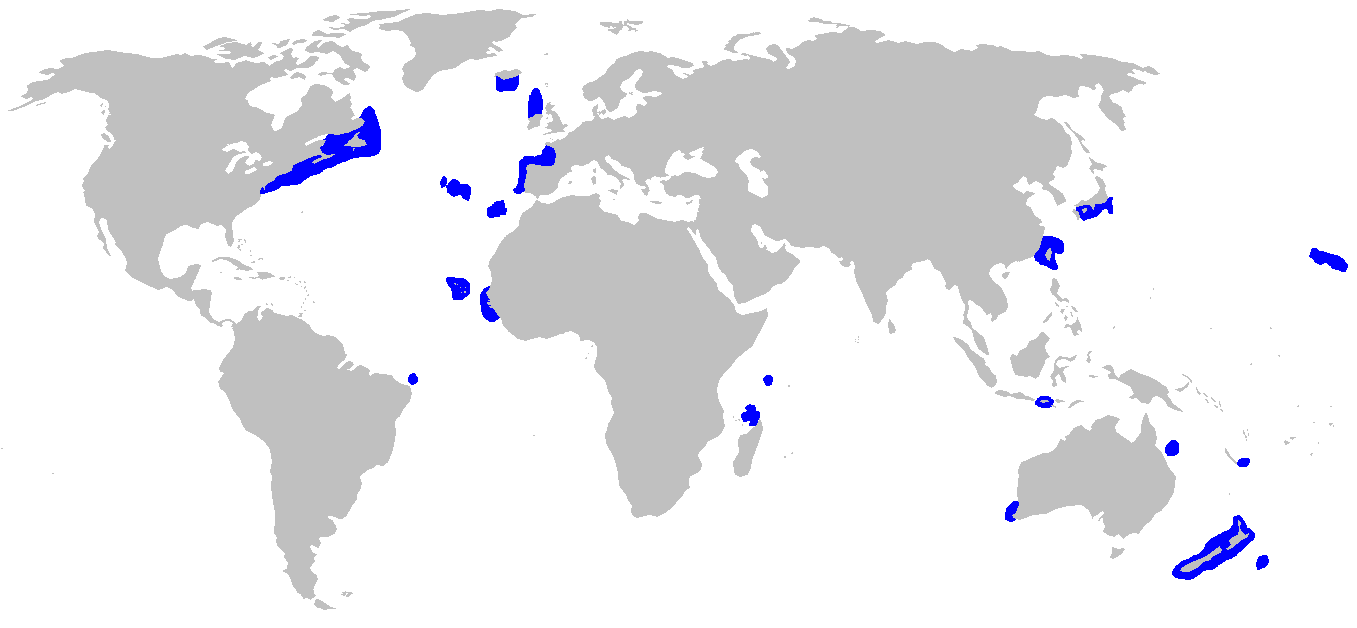
FishBase lists records from the western Atlantic off the United States and from the northeastern Atlantic off Portugal and Senegal, among other areas. In the Indo-Pacific, documented occurrences extend from Australia through Japan and Taiwan to New Zealand and Hawaii.
Widespread, but recorded only sporadically
The False catshark lives at or just above the bottom of the outer continental and island shelves as well as on slopes, deep-sea reefs, seamounts and submarine channels. Depending on the source, verified depth information ranges from around 129 or 173 meters to 1,890 meters. Most observations come from well below the usual limits of recreational diving.
The map summarizes known occurrence areas in a very simplified manner. It shows neither current frequencies nor consistently suitable habitat. In the case of a rarely caught deep-sea species, new camera sightings, museum specimens or genetically confirmed samples can expand the distribution picture without the actual area having to have changed.
Life history, diet & reproduction
Soft musculature and a very large, oil-rich liver suit an unhurried, energy-efficient life in the deep sea. The false catshark usually swims close to the bottom and is regarded as a relatively inactive predator and scavenger. Examined stomachs contained mainly bony fishes, together with smaller sharks, squid, octopuses and other invertebrates.
A FAO review of shark reproduction describes an unusual form of aplacental viviparity. Embryos consume additional eggs or egg material produced by the mother inside the uterus. Unlike mackerel sharks, they store much of this yolk in an external yolk sac.
Embryos store ingested yolk outside the body
In addition, the embryos can absorb nutrient-rich uterine fluid, often referred to as uterine milk. This combination of oophagy, yolk storage, and maternal supplementary nutrition is unusual among demersal sharks. It enables very very large young, but is associated with a low number of offspring.
Usually two young per litter are mentioned, individual sources state two to four. There are conflicting values for birth size: several reports are around 70 to 85 centimeters, older reports range up to around 140 centimeters. Gestation period, growth rate, age and time of sexual maturity are still poorly known.
Threats & conservation status
The false catshark is assessed globally as Least Concern. That category reflects its very wide range and infrequent occurrence in fisheries; it does not mean that population size or trend is well known. Reliable time series are lacking for most regions.
New genetic reference data from the North Atlantic are intended to improve species identification and future monitoring. Rare deep-sea sharks in particular are easily overlooked or confused with related species during landings, in environmental DNA or in processed products.
Low reproductive output meets major data gaps
The most important known pressure is bycatch in bottom longlines and bottom trawls. The meat, fins, cartilage and some liver oil can be used, but the species has little economic importance and is not regularly targeted. Local deep-sea fisheries can still put pressure on local populations.
Only a few very large young, presumably slow growth and a long gestation period limit recovery after losses. It therefore makes sense to accurately record deep-sea bycatch, genetically verified species identification, careful release of living animals and precautionary limits for new or expanding fisheries on continental slopes and seamounts.
False catshark & humans
The false catshark is considered harmless to people. It normally lives so deep that encounters with swimmers or recreational divers are virtually impossible. Despite reaching almost three metres, there is no evidence that this slow-moving species poses a typical danger to humans.
The Schmidt Ocean Institute filmed a specimen at a depth of 1,086 metres off Trinidad and Tobago in 2026. Such ROV observations show living animals in their habitat without bringing them to the surface for study.
You are currently viewing a placeholder content from Facebook. To access the actual content, click the button below. Please note that doing so will share data with third-party providers.
🔥 False catshark (Pseudotriakis microdon) in deep sea.
by
u/Better_Hair_9673 in
NatureIsFuckingLit
Encounters almost exclusively through cameras and fishing gear
Researchers also documented a leucistic false catshark near the Azores with a remotely operated camera platform. Such images are especially valuable to science and the public because captures often yield only isolated animals that are already dead, making normal behaviour impossible to observe.
If bycatch is brought on board alive, distance from the mouth, safe working procedures and as short a handling as possible are important. Even a shark that is considered harmless can move violently or bite when stressed. Location, depth, gender, length, photos and a tissue sample can significantly increase the scientific value of a rare discovery.
Profile
- First described:
- Max. size:
- Depth:
- Max. age:
- Max. weight:
- Water type:
- IUCN Status:
Taxonomy
- Kingdom:
- Phylum:
- Subphylum:
- Infraphylum:
- Parvphylum:
- Class:
- Subclass:
- Superorder:
- Order:
- Family:
- Genus:
News
Newsletter
Shark Alert in Your Inbox