


Common smooth-hound - Mustelus mustelus
Body structure, features & anatomy
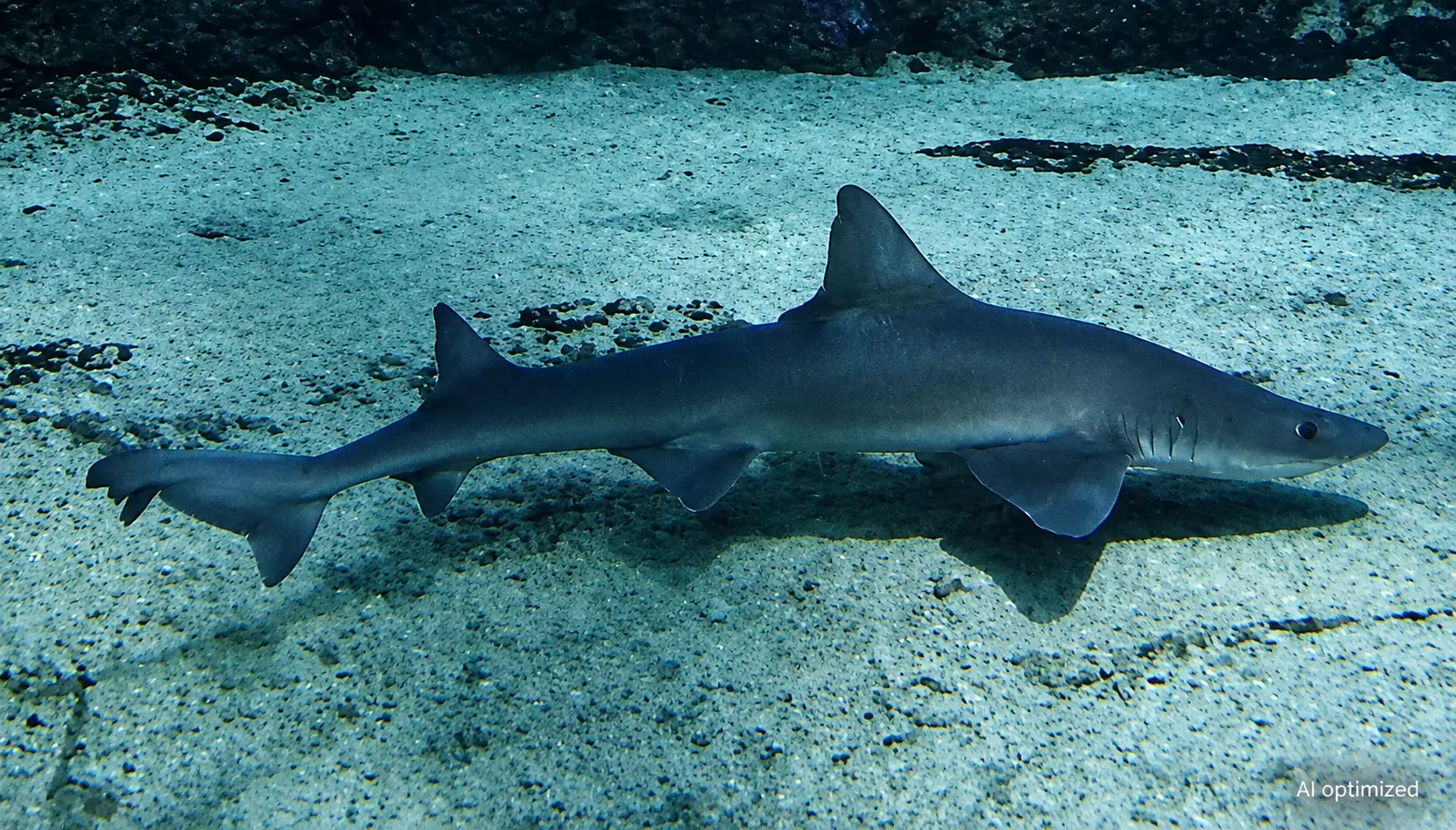
The gray smooth shark is a slender, gray to gray-brown colored demersal shark with a short, rather blunt snout and large, close-set eyes. Dark spots can occur, but are not always pronounced. The two dorsal fins have no spines; the first is far behind the pectoral fins.
Body structure, features & anatomy
The low, slightly bumpy teeth are typical of smooth sharks. They do not form conspicuous cutting rows like the great white shark, but rather a grinding surface for cracking crustaceans and other prey close to the bottom. This adaptation fits its predominantly benthic lifestyle.
The Shark Research Institute describes the species as relatively tall and slender; Females can be significantly larger than males. Reliable identification within the genus Mustelus is nevertheless challenging and should not be based solely on color or size.
Habitat & distribution
The gray smooth shark lives close to the ground on the continental shelf and upper continental slope. It is usually found in shallow coastal water between around five and 50 meters, but can occur considerably deeper. Sand, mud, mixed soils and reef areas are among its typical habitats.
Habitat & distribution
The distribution area extends in the eastern Atlantic from the British Isles across the Mediterranean, the Canary Islands and the coasts of northwest Africa to South Africa. The species therefore uses both temperate and warmer coastal areas. However, local populations can be severely thinned out by fishing pressure.
FishBase summarizes the species as a marine, bottom-hugging shark and names a large depth range for it. Flat, productive coastal areas are particularly relevant for encounters and protective measures because a lot of fishing takes place there.
Life history, diet & reproduction
Grey smooth sharks primarily look for their food on the seabed. Crustaceans form an important part of their range; They also eat cephalopods and bony fish. The flat teeth help crush hard shells, while the slender body allows short movements close to the bottom.
Life history, diet & reproduction
The species is viviparous: after the yolk has been consumed, the embryos are transferred supplied by a yolk sac placenta. Depending on the population, a litter usually includes several young animals. The young are born around 39 centimeters long; As with many slow-growing sharks, their development is therefore sensitive to high mortality.
According to the Shark Research Institute, the gestation period is around ten to eleven months. Males reach sexual maturity earlier and at a shorter length than females. This life history limits how quickly stocks can recover after intensive harvesting.
Threats & conservation status
The gray smooth shark is classified worldwide as Endangered. What is particularly important is the high and sustained harvest from coastal fisheries: the species is targeted and caught as bycatch in bottom trawls, gillnets and longlines If there are litters, a stock cannot quickly compensate for losses. The pressure is particularly problematic in shallow shelf areas, where juveniles and adults coexist with intensive fishing.
The IUCN Red List rates the species as Endangered. Effective protection requires species-specific catch data, reduced harvesting and measures to avoid bycatch in central coastal habitats.
Common smooth-hound & humans
The gray shark is considered harmless to humans. It is not a typical encounter shark for divers because it usually lives near the bottom and often in murky coastal waters. As with all sharks, animals should not be harassed, touched or lifted out of the water.
Common smooth-hound & humans
The species is marketed as food fish in many parts of its distribution area, fresh, frozen, salted or smoked. It is precisely this use that makes correct species identification and separate catch statistics important: collective names for smooth sharks can hide population declines of individual species.
The European Commission maintains Mustelus mustelus in its database of commercial fish names. Consumers, retailers and fisheries can only act responsibly if products are clearly assigned to a species.
Profile
- First described:
- Max. size:
- Depth:
- Max. age:
- Max. weight:
- Water type:
- IUCN Status:
Taxonomy
- Kingdom:
- Phylum:
- Subphylum:
- Infraphylum:
- Parvphylum:
- Class:
- Subclass:
- Superorder:
- Order:
- Family:
- Genus:
News

Newsletter
Shark Alert in Your Inbox