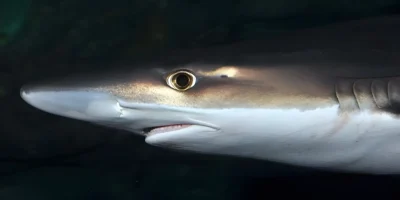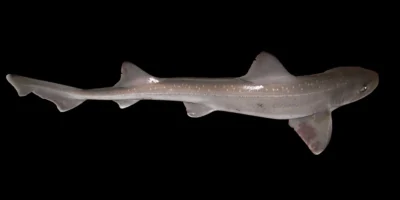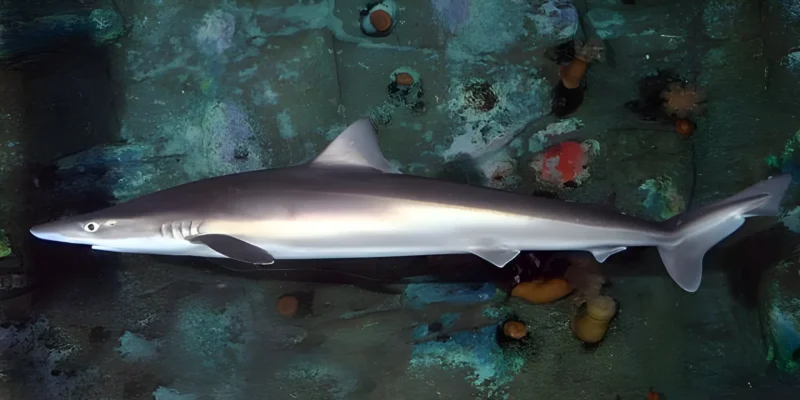
Sharks have returned to the Wadden Sea after decades. According to one, researchers at Wageningen University are going Report by Omroep Het Hogeland assumes that hundreds to several thousand white-spotted smooth sharks and dog sharks now use the shallow coastal waters.
For Niels Brevé of the Wageningen University and Sportvisserij Nederland, the function of the area is particularly crucial: the sharks have rediscovered the Wadden Sea as a place to give birth to their young. Regular reports about young animals had already fueled this suspicion.
From disappearance to cautious return
As late as the 1960s, sharks were often caught by recreational fishermen in the Dutch Wadden Sea. After that they largely disappeared from view. The fact that both species are being observed again today indicates a clear change in their use of the coastal area.
However, an estimate of several hundred to a few thousand animals is not an exact population count. It describes the magnitude that researchers derive from previous observations and investigations. What matters is less a single number than the repeated appearance of young sharks.
Shallow coastal waters provide protection for young sharks
Many Shark species seek out flat, productive coastal areas for the birth and early life of their young. The young animals find food there and are less exposed to large marine predators than in open, deeper waters.
The Wadden Sea offers a mosaic of such habitats with its tidal creeks, sandbanks and tidal zones. However, isolated catches are not enough to classify an area as a nursery. Only repeated detections of very young animals and further studies can show how regularly and by which species it is used.
Four newborn dog sharks provided important evidence in 2022
In the summer of 2022, researchers began research in the area of Terschelling and Ameland four newborn dog sharks. The animals, which were only 28 to 37 centimeters long, were too small for the planned transmitters, but for the first time they specifically supported the assumption that dog sharks give birth to their young in the Wadden Sea.
The investigation at the time was triggered by information from shrimp fishermen about large females and young animals in their nets. The researchers wanted to equip adult sharks with satellite transmitters, but did not find any suitable females during the trip. The small young animals became the most significant find of the expedition.
The nursery reaches across borders
The Dutch finds are not isolated. Also Young dog sharks were detected off Borkum, based on a nursery in the south North Sea indicate. Together, these observations paint a picture of a coastal habitat that does not end at national borders.
For migratory sharks, the Dutch and German sections of the Wadden Sea form a connected system. Protection and research must therefore look at fisheries, bycatch and important nursery areas across borders.
Two species with different lifestyles
White-spotted smooth sharks can be identified by their bright spots and often roost over sandy or muddy bottoms. Dog sharks can grow to almost two meters in length and travel long distances. Both species are harmless to humans.
Their return therefore does not pose any new risk for bathers. Rather, it is an indication that the shallow coastal waters are once again fulfilling an ecological function that was hardly visible for decades.
Additional markings are intended to make hiking routes visible
In order to determine the role of the Wadden Sea more precisely, researchers need to know when the animals arrive, how long they stay and where they then move. Markers and electronic transmitters can make individual hikes visible; repeated captures show whether the same animals or their offspring return to the area.
The new estimates are therefore an encouraging interim result, not a conclusion to the research. Only long-term data can show whether the return will result in a lasting recovery and which areas of the Wadden Sea are particularly important for the young sharks.