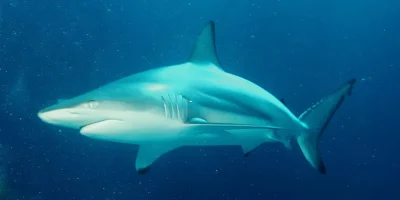
Off the coast of Jupiter in the US state of Florida, anglers in February 2026 caught an almost completely white small blacktip shark (Carcharhinus limbatus) and released it again after a short time. The unusual colouring is extremely rare in sharks and is described in reports as a possible case of albinism or leucism (Leucism).
What exactly happened
According to published reports, the strikingly pale shark was caught while fishing off Jupiter on Florida’s Atlantic coast. Photos and short clips show an animal that appears almost completely white compared with the species’ typical grey-brown colouring. The shark was returned to the sea after being caught.
Albinism or leucism: What’s the difference?
For conspicuously light-coloured animals, two causes are usually considered. Albinism denotes a widespread or complete lack of melanin, which typically also affects the eye pigments. Leucism, by contrast, leads to a marked reduction in pigmentation in the skin and tissues, while the eyes often remain normally coloured. In practice, a definitive classification is often not possible without a detailed examination (e.g. eye colour, genetic tests).
Why a white colouring can be a disadvantage for the shark
Severely reduced pigmentation can impair camouflage. For a coastal predator that often hunts in clearer, well-lit waters, conspicuous colouring can mean that prey spot it sooner. Furthermore, reduced pigment could theoretically be associated with increased light sensitivity. What consequences this has in the specific case cannot be assessed reliably without examination of the individual animal.
Rare natural phenomenon, but not a ‘new’ shark
It is important to distinguish between a rare colour variant and a new or ‘different’ shark species: this is a small blacktip shark that very likely has a rare pigmentation disorder. Such cases are occasionally documented in various bony and cartilaginous fish species, but remain exceptions.
Protection and handling: Why release is crucial
According to reports, the shark was released after capture. This is particularly important for unusual animals, because they can be of scientific interest and their loss would mean the loss of a rare dataset. Regardless, careful handling, a short fight time, minimal contact on board and a swift return to the water significantly reduce stress and the risk of injury to sharks.