



A new one Briefing Paper for the Scientific Committee of the Western and Central Pacific Fisheries Commission (WCPFC) investigates how well sharks survive after accidental capture in the tropical tuna purse-seine fishery. At first glance, the results seem encouraging: 20 of 22 marked with satellite transmitters Silky Shark survived at least ten days after release. However, this quota is not representative of the entire bycatch.
The reason lies in the condition of the animals: only sufficiently vital sharks could be equipped with transmitters. At the same time, the researchers classified 53 percent of the animals evaluated as “bad” or “very bad” when released. Good processes on deck can therefore save lives, but for a large part of the bycatch they only begin after the decisive damage has already occurred in the net.
780 sharks and rays on two fishing trips
The data comes from two commercial purse seiners Pacific Ocean. A Philippine ship sailed around between December 2025 and January 2026 Papua New Guinea 18 fishing operations for free-swimming schools of tuna. Between January and March 2026, a US ship carried out 30 fishing operations, mainly on drifting fish collectors, so-called dFADs.
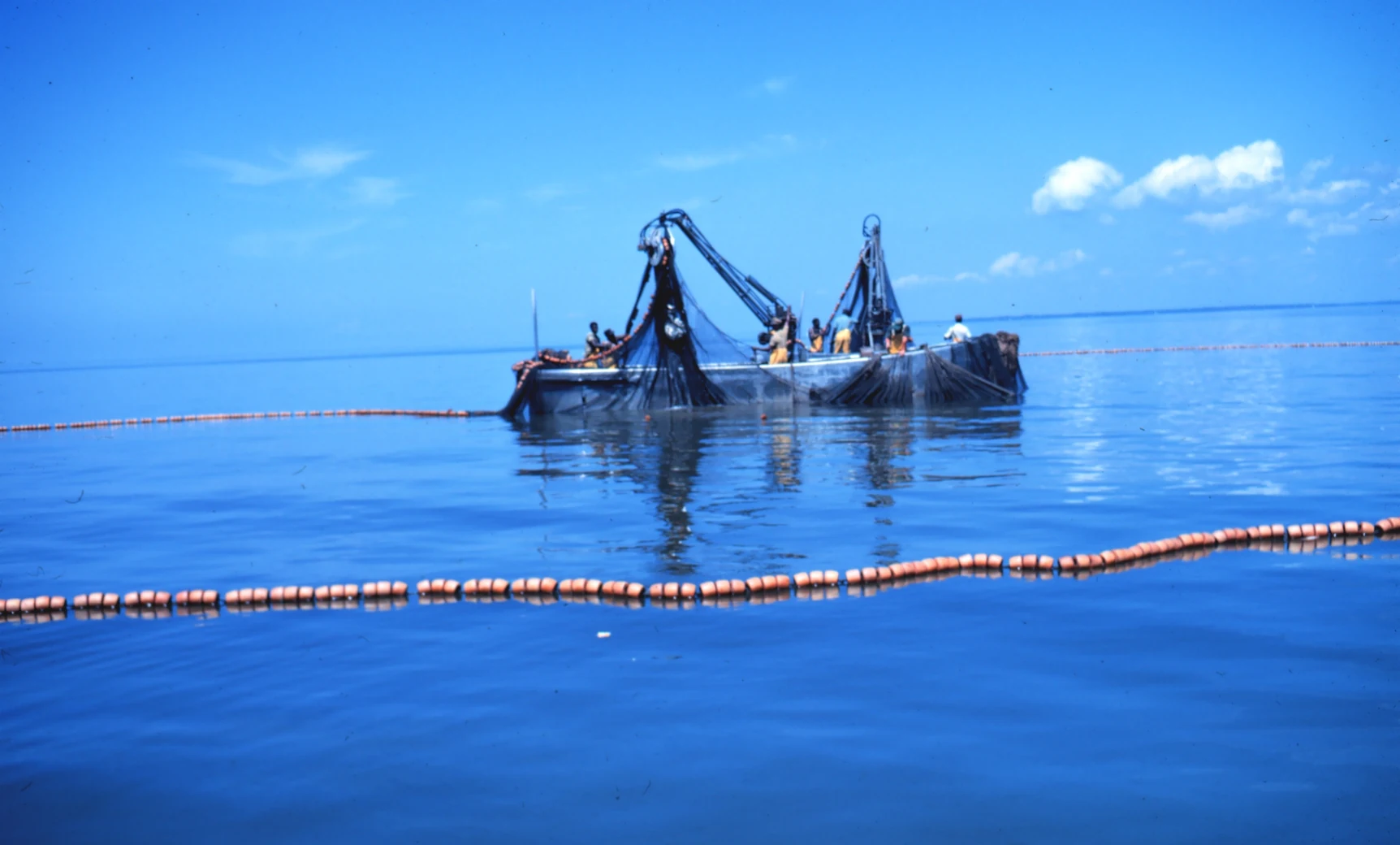
In total, the team documented 780 sharks and rays. By far the largest proportion were 702 silky sharks (Carcharhinus falciformis), followed by 49 Oceanic whitetip shark (Carcharhinus longimanus). Other shark and ray species only occurred in small numbers.
A scientific observer recorded when the animals came on board, how they were treated and released, and what state of vitality they displayed. The team also took blood samples for lactate measurements and equipped selected animals with satellite transmitters. The study linked visible condition, physiological stress and behavior after release.
90.9 percent survival – but only in a selected group
22 silky sharks received so-called sPAT satellite tags. Two transmitters provided depth data within the first ten days that suggested the animals had died. The remaining 20 sharks exhibited normal depth behavior for at least ten days. This results in a survival rate of 90.9 percent for the marked animals.
This number may not be applied to all sharks caught. For marking, the team only selected animals whose condition permitted the additional intervention. Sharks in poor or very poor condition were not tagged. The 90.9 percent therefore primarily describes what is possible with a quick, gentle release when silky sharks are still sufficiently vital.
More than half were already severely impaired
Observers assessed the condition of more than 550 sharks using a five-level vitality index. 298 animals, corresponding to 53 percent, fell into the “bad” or “very bad” categories. For silky sharks, this proportion was 55 percent. The authors use this classification as a conservative approximation of mortality on the ship, but point out that individual animals rated as “poor” may still survive, depending on injuries and stress.
The connection was particularly clear with the order in which the catch was brought on board. Of 338 animals that only came out of the compacted net bag with the fourth or a later Brail, 241 were classified as bad or very bad. Prolonged confinement times, confinement and limited movement can worsen the condition even before the crew reaches an animal on the deck.
Two projections, two different results
To estimate the survival of all bycatch, the researchers combined the transmitter data with the distribution of vitality levels. For non-collared animals in poor or very poor condition, they used survival probabilities from previous studies. This procedure yielded an estimated overall survival rate of 51.2 percent.
A second calculation included the lactate concentration in the blood. High values indicate strong physiological stress, which is not always visible externally. Usable lactate measurements were available in 58 animals; only 16 of them belonged to the radio-controlled group at the same time. From the relationship between lactate and transmitter data, the team derived a threshold value of 7.81 millimoles per liter. This method resulted in a lower estimate of 37.2 percent overall survival.
The two values are not precise lower and upper limits. They are based on different assumptions and on small, non-random subsamples. The information paper expressly warns against overinterpreting the projections. Rather, their range shows how much the result depends on whether only externally visible vitality or internal metabolic stress is also taken into account.
Quick and gentle release helps
Of the animals with a documented release time, around 80 percent got back into the water within two minutes. Crews used stretchers and cargo nets, supporting smaller sharks behind their pectoral fins and avoiding lifting them by their heads, gills or tails. Larger animals were moved using cranes and nets; On one ship, a Hopper with a sorting grid and ramp helped to separate bycatch from the actual catch stream.
The transmitter data confirms that such procedures can make a big difference for sharks in sufficient condition. At the same time, the vitality data show the limits of the approach: measures on deck only take effect after the boat has been retrieved. Factors such as the length of time in the net bag, the speed of the fishing, the size of the catch, the density of the net and possibly also the water temperature influence the stress beforehand.
Protection must begin before the deck
This results in a sequence of measures for management. Where possible, encounters with sharks should be avoided. Animals must be identified as early as possible in the capture process and released from the net. Only then do short routes on deck, suitable release devices and trained crews follow.
A mere ban on taking along purse seins is therefore not enough. Although it prevents landing, it does not automatically reduce the mortality of animals that survive the capture already severely damaged. Effective protection must reduce both pre-retrieval exposure and onboard treatment.
What the investigation still leaves open
The study only includes two fishing trips on two vessels with different fishing strategies. The number of satellite tags and blood samples is small, poorer vitality levels are not represented in the tagged animals, and the results of previous studies had to be used for parts of the projection. Differences between the trips cannot therefore be clearly attributed to a single technical or operational measure.
In addition, this is a WCPFC information paper for a scientific committee meeting, not a peer-reviewed journal publication identified in the report. The data nevertheless provides an important practical finding: gentle release can significantly improve the survival of vital sharks. However, the greatest additional protection benefit lies in preventing stress and injuries before the animals even reach the deck.