


This article appeared on August 28, 2026 and was updated on August 29, 2026.
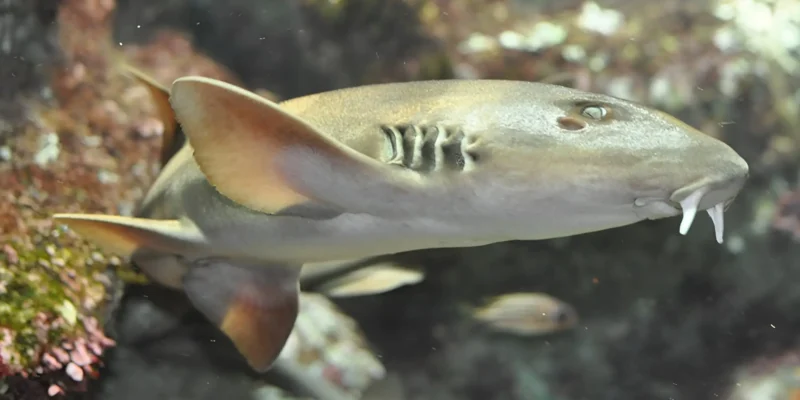
Two live bamboo sharks were part of an exceptionally large animal shipment seized on 19 June 2026 in the Southern District of California. This is documented in a notice from the U.S. Fish and Wildlife Service published on 6 August. The agency lists the sharks only as Chiloscyllium species; it does not identify them to species level.
The entry comes from the Office of Law Enforcement of the US Fish and Wildlife Service. It is not a police report about a concluded criminal case, but the beginning of an administrative forfeiture procedure. The document does not mention the names of those involved, arrests, or criminal charges.
Two sharks in an exceptionally large shipment
The two bamboo sharks were only a small part of the confiscated animals. The list includes, among other things, six live stingrays, 44 Banggai cardinalfish, 36 clownfish, numerous other tropical marine fish, shrimp, hermit crabs, and sea anemones. In addition, there were reptiles, amphibians, and spiders.
Several turtle lots were particularly large: the notice lists 498 snapping turtles, 100 yellow-bellied sliders, 70 Florida softshell turtles, 50 false map turtles and 32 river cooters. It also includes grouped entries such as 153 tropical marine fish and 378 invertebrates.
A reliable total number cannot be derived from the website. The entire catalog is displayed there twice. Furthermore, it is not explained whether general entries such as “112 living fish” are already included in the detailed species lines. An addition of all visible numbers would therefore likely count animals twice.
The bamboo shark species remains unknown
Chiloscyllium is a genus of bamboo sharks with several species. The official record contains neither photos nor information on size, sex, age, or origin of the two animals. Therefore, it is not possible to reliably determine whether they were, for example, brown-banded, white-spotted, or another bamboo shark species.
Bamboo sharks are offered in the aquarium trade because of their small to medium body size and their bottom-oriented way of life. An existing article already classifies bamboo sharks in display aquariums using the example of captive-bred animals. However, in the Californian case, it is not known whether the animals came from the wild or from breeding.
The document describes the transport route inconsistently
The introduction states that the animals were illegally brought into the USA. However, in the listed legal bases, the authority also refers to the attempt to export goods in violation of US law. Mentioned are violations related to the CITES, the Lacey Act, and the US smuggling statute 18 USC 554.
It is therefore not possible to determine from the announcement whether the shipment was to be imported into California or exported from there. Departure country, destination country, airport or seaport, sender, and recipient are also not specified. The Southern District of California includes San Diego and Imperial County; the publication does not specify a more precise location.
The authority likewise does not assign each individual animal item to a specific legal violation. The report therefore does not demonstrate that it was precisely the two bamboo sharks that triggered the CITES violation. It only shows that they were part of the same list of seized animals intended for forfeiture. For all items, the value column shows 0 US dollars; the document does not contain an explanation or market value estimate.
What the forfeiture procedure means
Persons with an ownership or financial interest may file a claim or an application for return by October 5, 2026. A properly filed claim would refer the case to the U.S. Attorney’s Office and initiate proceedings in a federal court. An application for remission or return, on the other hand, remains part of the administrative procedure.
According to the general procedural description of the FWS, ownership can pass to the United States after the deadline if no one objects effectively. The subsequent disposition may, depending on the case, include among other things a donation, a sale, or destruction. This does not mean that a decision has already been made regarding what will happen to the living sharks and the other animals.
Crucial information about the animals’ condition is missing
The public announcement does not say where the animals have been housed since June 19, how many survived the transport, or whether aquariums, rescue centers, or zoological institutions took over their care. Especially with a mixed shipment of marine, freshwater, and land animals, short-term accommodation would be logistically challenging.
For a complete assessment, at least the exact species of bamboo shark, the origin and destination of the shipment, proof of wild capture or breeding, the transport conditions, and the current whereabouts of the animals would be needed. Until such information is published, the seizure report remains the only reliable evidence: Two live bamboo sharks were seized along with a very large number of other animals, yet the story behind the transport remains unresolved.
Update from August 29, 2026
The Aquarium of the Pacific answers two of the open questions in a now published communication. The Long Beach aquarium took in nearly 500 animals from the same seizure on June 19. It specifically names brown-banded bamboo sharks, Banggai cardinalfish, clownfish and invertebrates. Staff worked overnight, stabilizing the animals and moving them to specialized quarantine areas. This means that the shark species, previously only given as Chiloscyllium, is now documented in much more detail.
The new information does not mean that all of the more than 2,000 animals from the confiscated truck were housed in the aquarium. The aquarium took in almost 500 particularly sensitive fish, sharks and invertebrates. It does not provide complete information about the whereabouts of the remaining animals or possible losses. The confiscation process also remains separate: the medical care of the animals does not determine later ownership or criminal law issues.