


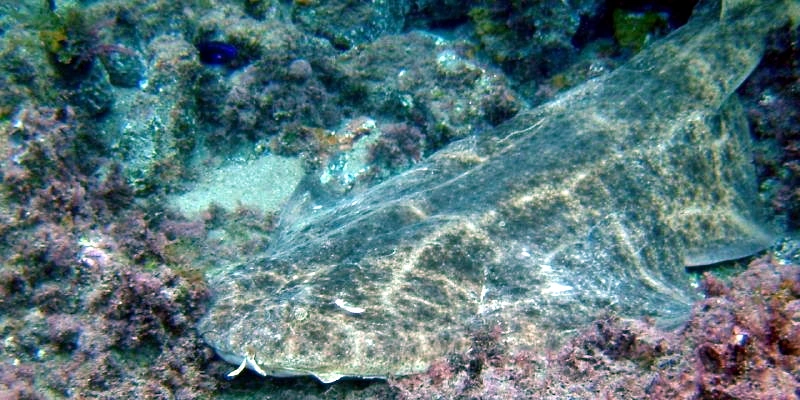
A diver has photographed a common angelshark (Squatina squatina) near the Formiche di Grosseto. Tuscany’s environmental agency ARPAT reports an animal about 1.30 metres long at a depth of roughly 30 metres near the islet of Formichino. The sighting was reported on 19 September 2026.
The LIFE European Sharks project picked up the report on Facebook, verified its authenticity and passed it to ARPAT. According to the information available to the agency, the species had not been reported from Tuscan waters for approximately 70 years.
A record after a long reporting gap
A lack of reports does not prove that the species was entirely absent. The photograph documents one animal; population size and any recovery remain unknown.
Three threatened species in the Mediterranean
The Angel Shark Conservation Network lists three angelshark species from the eastern Atlantic and Mediterranean: Squatina squatina, Squatina aculeata and Squatina oculata. All three are classified as Critically Endangered on the IUCN Red List. Similar body shapes and overlapping ranges make identification difficult.
The Tuscan sighting therefore concerns a different species from the sawback angelshark off Sicily previously covered by Haitauchen. That report concerned Squatina aculeata and the scientific examination of an animal caught as bycatch.
Documented sightings support conservation
The network collects observations in its Angel Shark Sightings Map to improve knowledge of distribution. Bycatch, damaged habitats and human disturbance are among the pressures facing these bottom-dwelling sharks. Reliable records therefore do more than document a rare encounter: they add to the still incomplete evidence available for conservation measures.
ARPAT recommends documenting photographs and videos with the location, date and observation conditions.