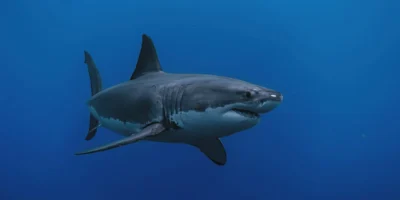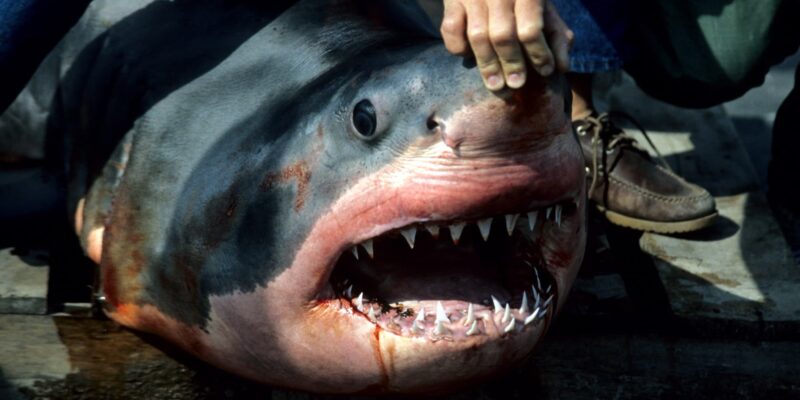
Massachusetts responds to several documented incidents surrounding Nantucket: Anyone fishing from the island’s coast is temporarily no longer allowed to use heavy rigs that are particularly suitable for catching large sharks. The emergency rule is intended to make targeted fishing for great white sharks more difficult and at the same time prevent dangerous situations for bathers and other beach visitors.
The Massachusetts Division of Marine Fisheries (DMF) published the rule on July 31, 2026. It extends a restriction already in effect for Cape Cod Bay and the east coast of Cape Cod to the coastline of the Town of Nantucket.
Which equipment on Nantucket is affected
The decisive factor is the combination of two features: Metal or wire leaders with a length of at least 18 inches are prohibited if they are connected to a hook whose opening measures more than 5/8 inch. The equivalent is at least around 45.7 centimeters of leader length and a hook opening of more than around 1.6 centimeters.
The requirement is not a general fishing ban or a blanket ban on all shark fishing. Shore anglers are still allowed to use compliant equipment and fish for other permitted shark species. The authority specifically targets heavy equipment that is particularly suitable for hooking large white sharks and pulling them from open water towards the beach.
The emergency rule initially applies for 90 days. The DMF also announces that it will examine a permanent expansion of the geographical scope for 2027. This means that the measure remains temporary for the time being, but can become the starting point for a longer-term regulation.
Why Nantucket 2025 was initially exempt
Massachusetts had already restricted the combination of large hook and long metal or wire leader to Cape Cod Bay and along the eastern Cape Cod coast in 2025. Nantucket was excluded at that time. The island’s beaches have a long history of shore fishing for various other shark species, and the agency had little evidence of anglers specifically targeting great white sharks there.
This assessment changed in the spring and summer of 2026. According to the DMF, there were several documented incidents in which bank anglers targeted Nantucket for white sharks and caught them. This created dangerous situations for swimmers and beach visitors. The authority expressly justifies its short-term intervention with this acute risk to public safety.
Great white sharks were not allowed to be specifically caught before
The targeted luring and catching of great white sharks is already prohibited in Massachusetts – regardless of whether fishing is done from the shore or from a boat. In practice, however, it is difficult to determine whether a heavy rig is for a permitted catch or actually for a great white shark. The new device limit therefore provides inspectors with a clearer criterion.
Additional rules complement this approach. When it comes to bank fishing, feeding is restricted between sunrise and sunset. In addition, bait from the bank may not be deployed using mechanized, air-powered or remote-controlled devices. These include bait cannons, drones and remote-controlled boats that can be used to place bait far behind the surf.
Parallel to the emergency rules in California
A very similar conflict led to new regulations on the US West Coast a few weeks earlier. As described in the Haitauchen post California restricts shore fishing to large sharks, as of June 2026, California has limited large hooks and metallic lines or leaders in heavily used coastal areas. There, too, it is about the protection of great white sharks and the risk that a hooked, stressed shark creates in the vicinity of swimmers and surfers.
The details differ: California uses a different hook size, a coastal strip up to 1,000 yards wide and a long stretch from Pigeon Point to the Mexican border. Massachusetts, on the other hand, specifically expands an existing regional rule by Nantucket. What both measures have in common is that they limit risky fishing methods without banning any form of bank fishing.
Protective measure without alarmism
The incidents on Nantucket do not indicate that white sharks specifically seek out beachgoers. The additional risk arises when people lure the animals, hook them and bring them into busy bank areas under high stress. A large shark on a taut line can turn uncontrollably, get into the surf or injure people and animals when landing.
This is precisely why the narrow scope of the rule makes sense: it responds to a documented practice rather than declaring the mere presence of great white sharks to be a problem. Whether Massachusetts permanently expands the spatial scope in 2027 will likely depend on how well the emergency rule can be enforced and whether conflicts on Nantucket beaches actually decrease.