


This article was published on 24 July 2026 and updated on 28 August 2026.
Update from 28 August 2026
Footage of the incident is now public. In a video analysis published on 28 August 2026, shark expert and wildlife filmmaker Robert Marc Lehmann identifies the animal as a Grey reef shark (Carcharhinus amblyrhynchos). He estimates that it was about two metres long. The identification is based on his assessment of the images; no independent official confirmation is known to have been issued.
According to the account discussed in the analysis, Gibbs and his companions had hunted along the reef for about an hour before moving into open blue water. Several grey reef sharks were nearby. Tighter circling and rapid approaches towards the boat had been warning signs; Gibbs later acknowledged that they should have ended the dive at that point.
Lehmann describes a rapid, vertical approach from below before the shark bit Gibbs on the right calf. Injured or dead fish, blood, speargun sounds and activity in the water may have increased the sharks’ interest. The footage does not establish which factor triggered the bite.
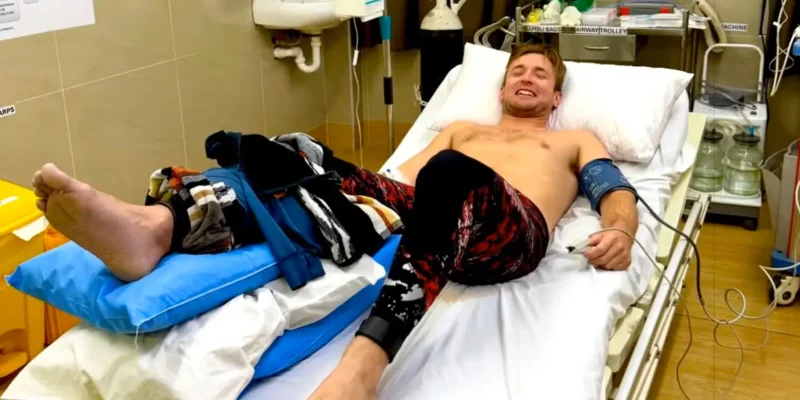
New Zealand fisherman and social-media creator Henry Gibbs is recovering in hospital after a severe shark bite in Fiji. According to Gibbs, the incident occurred during his first dive in the island nation while he was spearfishing.
SURFER reported on the injuries on 24 July 2026. Hospital photographs show a severe wound to his right calf. Gibbs said that four operations and a skin graft were required. He still had full use of his foot and expected to make a complete recovery.
Expert assessment: Grey reef shark
The precise location in Fiji and the date of the bite remain unpublished. Unlike the initial report, the footage now allows an informed assessment of the species: Lehmann identifies the animal as a Grey reef shark. This visual identification is presented here transparently as an expert opinion.
Even with the video, the bite cannot be classified confidently as provoked or unprovoked. Spearfishing and fish remains provide relevant context but do not prove a single trigger. The attack classification therefore remains provisionally questionable.
Gibbs bears the shark no ill will
Despite the severe injury, Gibbs expressed no resentment towards the animal. He said he had been in its habitat hunting its food and was in the wrong place at the wrong time. He was grateful to have kept his leg and said the experience had given him a greater appreciation of life.
The footage Gibbs had announced is now available. Lehmann describes the event as an unusual, highly charged situation while also stressing that divers commonly encounter grey reef sharks without incident.
Spearfishing changes the situation in the water
During spearfishing, injured fish, blood, speargun sounds and frantic movement can heighten sharks’ interest. If their circles tighten or they repeatedly make rapid approaches, the dive should be ended early.
Caught fish should be kept away from the body on a float or in a separate container wherever possible. A capable dive partner and the equipment and skills to control severe bleeding are important. No catch is worth compromising a safe exit.
What is confirmed about the case
What is confirmed is that Henry Gibbs suffered a non-fatal bite to his right calf while spearfishing in Fiji, underwent four operations and received a skin graft. Robert Marc Lehmann identifies the shark in the published footage as a grey reef shark. The exact date and location remain unknown, and no independent official species confirmation is known.
