


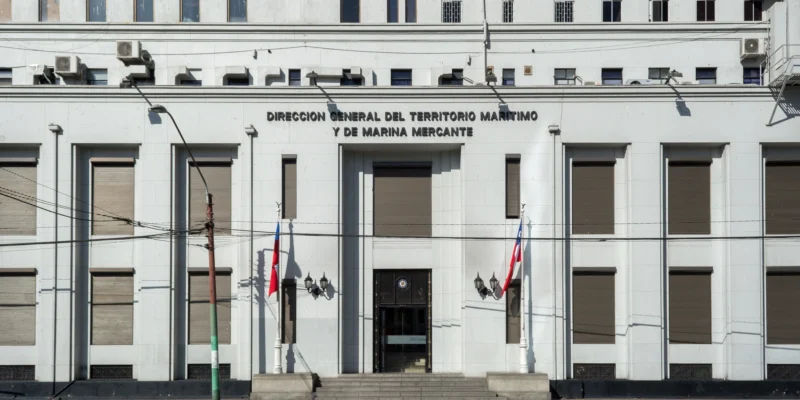
A 23-year-old Peruvian fisherman was bitten on the right forearm by a shark on 26 August 2026, far off the northern Chilean coast. The incident occurred during fishing operations aboard the Peruvian Naelita. Following a cross-border rescue operation, he was brought to Tocopilla in stable condition the next day.
The most detailed official account comes from Chile’s maritime authority DIRECTEMAR. It identifies the fisherman as Fabio José Santos Ascona and the Naelita as the vessel involved. According to this account, Peru’s port authority in Ilo informed the port authority in Tocopilla of the medical emergency on 26 August.
Bleeding initially controlled on board
According to La Prensa Regional, the Naelita carried four crew members and the registration PT-33468-BM. Ilo’s port authority received a report of a heavily bleeding wound at around 8 a.m. It maintained contact with the crew and provided medical instructions. The arm was dressed and a tourniquet applied, initially bringing the bleeding under control.
The Chilean and Peruvian accounts give different distances for different stages of the rescue. DIRECTEMAR reports an initial position around 200 nautical miles west of Tocopilla. The Chilean Navy describes the response location as 160 nautical miles offshore. La Prensa Regional places the original position between 160 and 200 nautical miles off the coast and stresses that it was initially in international waters. The Naelita then set course for Tocopilla.
Chipana dispatched with medical personnel
Chile’s Maritime Rescue Coordination Centre activated rescue protocols. The Antofagasta maritime rescue sub-centre sent the Lancha de Acción Marítima Chipana with medical personnel to the fishing boat. During the journey, the authorities remained in contact with the Naelita and monitored the conscious patient, whose bleeding occasionally resumed.
According to DIRECTEMAR, the Chipana rendezvoused with the Naelita at 7:40 a.m. on 27 August. The fisherman was transferred, examined, given initial treatment and stabilised. The naval vessel reached Tocopilla at 5:42 p.m. An ambulance then took Santos Ascona to Hospital Marcos Macuada de Tocopilla.
The Armada de Chile said the man was handed over to emergency services in stable condition. The Chipana had originally been on a humanitarian mission, carrying emergency supplies to remote coastal settlements affected by landslides in the Antofagasta region. It changed its mission at short notice to carry out the medical evacuation.
Video shows the transfer at sea
Footage released by the navy and distributed through Storyful shows the injured man being transferred from a smaller boat to the Chipana and receiving medical care there. The images document the rescue, but show neither the bite itself nor the shark involved. The sources therefore provide no basis for identifying the species.
The shark species and exact circumstances of the bite remain unclear
A bite to the right forearm, fishing operations on board and a non-fatal injury have been officially confirmed. It has not been disclosed whether the fisherman was handling a caught shark, a net, a line or other catch, or whether a different kind of contact occurred. The incident therefore cannot currently be reliably classified as either provoked or unprovoked.
The distance from shore does not establish the shark species either. Several pelagic species occur in the open southeast Pacific, but without photographs, samples or expert confirmation, ‘unknown shark species’ remains the correct description. The exact position is also known only as a broad area; the map therefore marks an approximate location between 160 and 200 nautical miles west of Tocopilla, not a precise bite location.
A rescue coordinated across two countries
The case is noteworthy for more than the shark bite. It illustrates how medical advice, continuous radio contact and maritime rescue services can work together across national borders. Ilo’s port authority helped the crew control the bleeding until help arrived; Chile coordinated the evacuation, treatment at sea and transfer to hospital.