


Spotted wobbegong - Orectolobus maculatus

Body structure, features & anatomy
The spotted wobbegong Orectolobus maculatus is a large, flattened carpet shark. Its broad head, forward mouth and upward-facing eyes fit an animal that spends much of the day resting close to the seabed.
Fishes of Australia highlights the yellowish to greenish-brown colour, large dark saddles, pale ring marks and six to ten fleshy head lobes on each side. Together they break up the outline on rock, sand, reef and seagrass.
A large wobbegong with a broken outline
The species is often confused with other large wobbegongs, especially where ranges overlap. Useful field clues are the pale rings inside the darker pattern, the number of head lobes and the dark triangular mark between the eyes.
Habitat & distribution
The spotted wobbegong is treated as an Australian endemic. Its main range follows western, southern and eastern Australian coasts; older reports from Japan or the South China Sea are usually considered misidentifications.
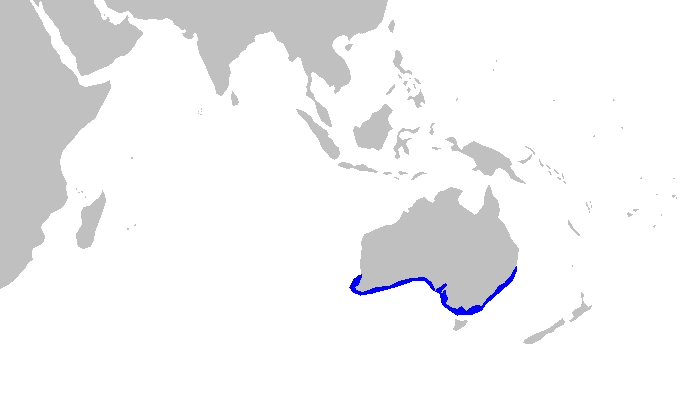
FishBase lists the species from the intertidal zone to at least 110 m, with records from deeper shelf water. It is most typical on rocky and coral reefs, sand bottom, seagrass, estuaries, piers and sheltered coastal bays.
Southern Australian coasts
By day, animals rest in caves, under ledges or camouflaged on the bottom. The map gives the broad range, but local encounters depend on suitable cover, structured seabed and calm shallow coastal habitat.
Life history, diet & reproduction
Spotted wobbegongs are mainly nocturnal. During the day they rely on camouflage and stillness; at night they search the bottom or wait in ambush for fish, crustaceans or cephalopods.
Animal Diversity Web describes a diet that includes bottom fishes, rays, small sharks, crabs, lobsters and octopuses. The broad mouth and pharynx help the shark draw prey in with suction.
Ambush hunting and live birth
The species gives birth to live young after embryos develop inside the mother on yolk reserves. Litters of about 20 pups are known, and juveniles use shallow structured habitats where narrow crevices reduce predation risk.
Threats & conservation status
The IUCN Red List assesses the spotted wobbegong globally as Least Concern. This status does not mean that every local population is equally secure.
Because the species is coastal, site-attached and common in shallow habitats, regional fishing pressure can matter. Targeted catch, bycatch, pots, nets, hooks and the loss of nursery habitats are the main issues.
Least Concern, with regional pressure
The Australian Shark Report Card notes low catches in many states but also historic declines in New South Wales and management measures such as catch limits. Good identification and protection of shallow habitats remain important.
Spotted wobbegong & humans
For divers, the spotted wobbegong is an impressive but generally calm bottom shark. Its camouflage is also the reason encounters should be slow and respectful: a resting animal is not an invitation to touch.
The Florida Museum notes that wobbegongs can bite strongly, especially when stepped on, handled, pulled by the tail, crowded or contacted during fishing and spearfishing.
Observe calmly, never touch
Underwater, approach from the side, keep distance, avoid putting hands into crevices, never block an exit and give the shark a clear escape route. Most bites are avoidable when the animal is not provoked.
Profile
- First described:
- Max. size:
- Depth:
- Max. age:
- Max. weight:
- Water type:
- IUCN Status:
Taxonomy
- Kingdom:
- Phylum:
- Subphylum:
- Infraphylum:
- Parvphylum:
- Class:
- Subclass:
- Superorder:
- Order:
- Family:
- Genus:
Dive Centres

Newsletter
Shark Alert in Your Inbox