


Sand tiger shark - Carcharias taurus
Characteristics and identification
Body shape and build
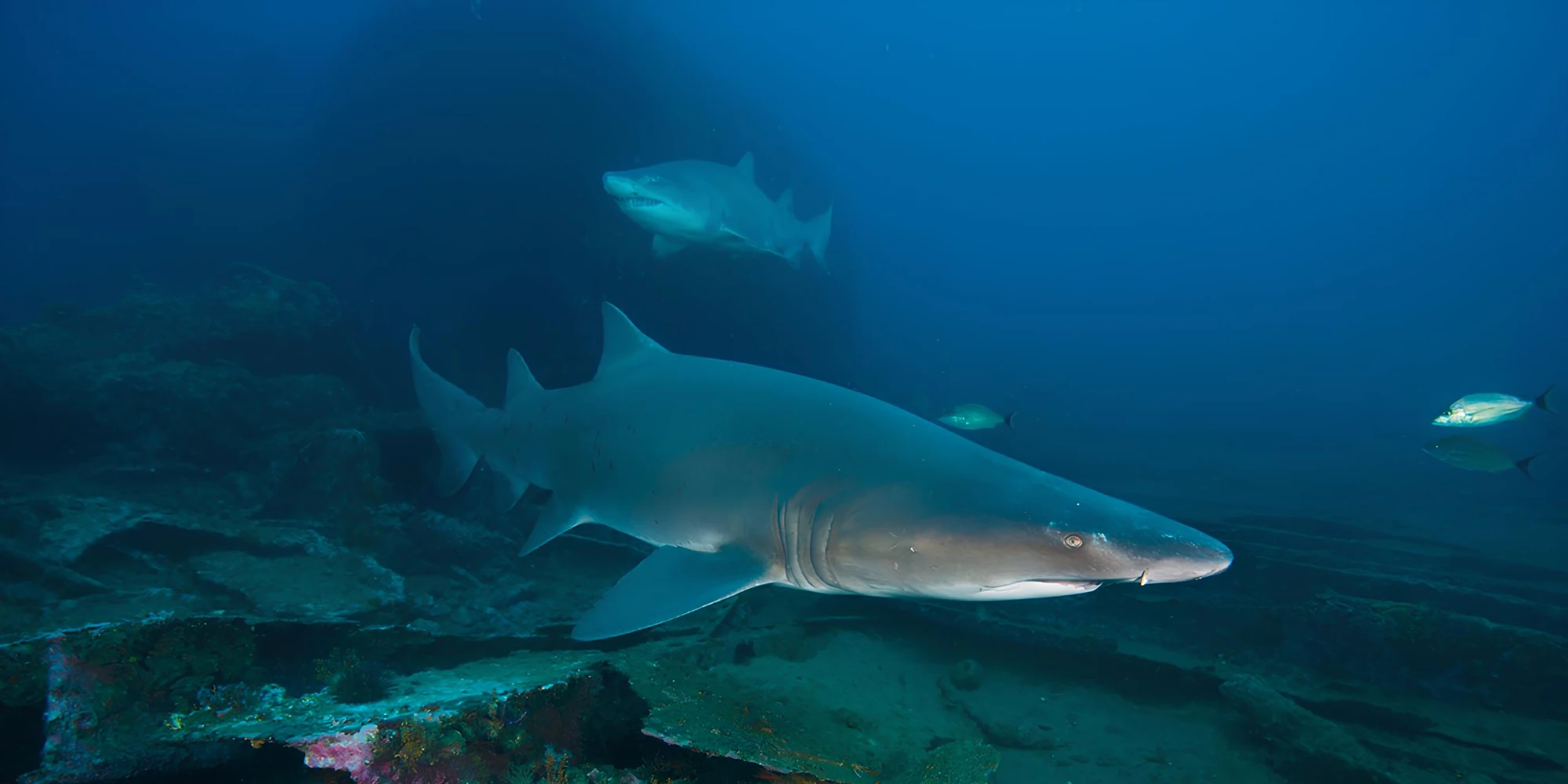
The sand tiger shark has a robust, cylindrical body and typically reaches lengths of 2.0 to 3.2 metres. Its bulky head and relatively large fins give it a powerful appearance.
Colouration and variations
The base colour is grey to grey-brown on the upper side, with a lighter, almost white underside. Juveniles often show darker spots that fade with age.
Distinctive features
Particularly characteristic are the long, needle-like teeth, which are visible even when the mouth is closed. This feature makes the sand tiger shark easy to recognise.
Distinguishing it from similar shark species
The sand tiger shark differs from similar species such as the grey reef shark by its visible teeth, more robust build and rather sluggish swimming movements.
Habitat and distribution
The sand tiger shark is found worldwide in temperate and subtropical coastal waters. It prefers continental shelves, bays, reefs and wreck structures, and is usually found from the surface down to about 190 metres. Juveniles use shallower coastal areas as nursery grounds.

Diet
The sand tiger shark’s diet consists mainly of bony fish, rays and smaller sharks. It usually hunts at night and uses its ability to store air in its stomach to hover almost weightlessly in the water and to ambush prey in a targeted way.
Reproduction & Life Cycle
The sand tiger shark is ovoviviparous and exhibits intrauterine cannibalism, in which the strongest embryos prevail. After a long gestation period, typically only one or two fully developed pups are born. The species has a low reproductive rate and a comparatively high life expectancy.
Importance to humans
The sand tiger shark is considered threatened due to overfishing, bycatch and its low reproductive rate. Conservation measures include catch restrictions, protected areas and international agreements. The species is listed on the IUCN Red List (IUCN Red List).
Profile
- First described:
- Max. size:
- Depth:
- Max. age:
- Max. weight:
- Water type:
- IUCN Status:
Taxonomy
- Kingdom:
- Phylum:
- Subphylum:
- Infraphylum:
- Parvphylum:
- Class:
- Subclass:
- Superorder:
- Order:
- Family:
- Genus:
Dive Centres


Newsletter
Shark Alert in Your Inbox