


Nursehound - Scyliorhinus stellaris
Body structure, features & anatomy
Identification
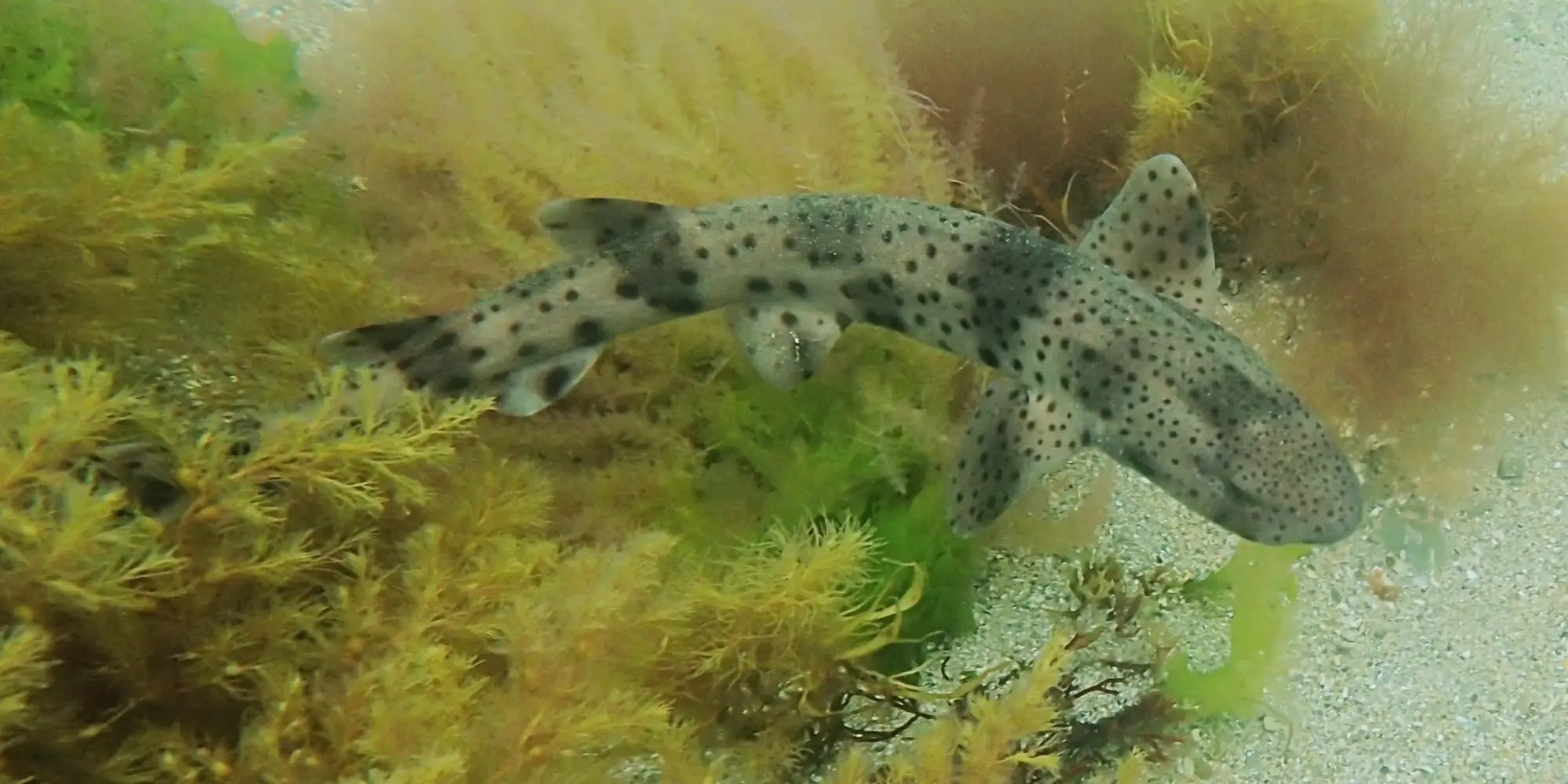
The nursehound Scyliorhinus stellaris is a slender but robust catshark with two dorsal fins set far back, a pale brown ground colour and large dark spots. Shark-References summarises the diagnostic traits: small anterior nasal flaps, no nasoral grooves, clear lower-lip furrows and a second dorsal fin smaller than the first.
The species grows much larger than the small-spotted catshark. Adults may reach about 1.6 to 1.7 metres, while young and mid-sized animals are especially recognisable by their coarse, irregular spotting.
Distribution & habitat
Coasts, shelves and range
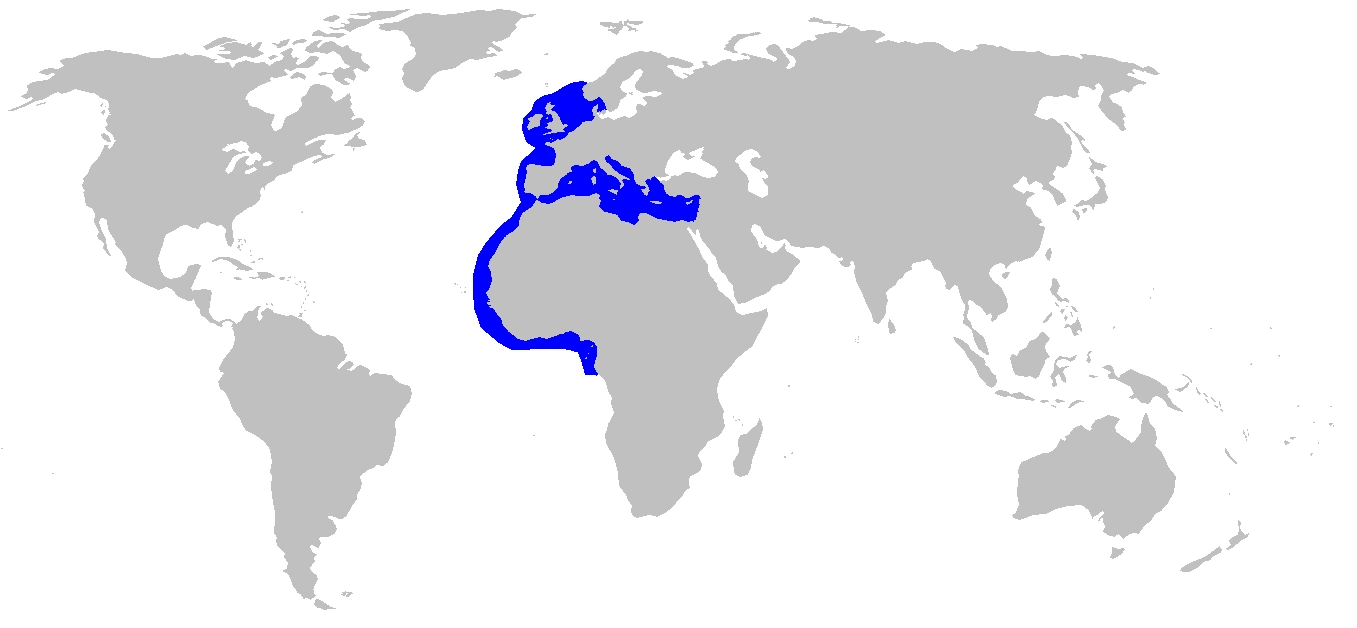
The nursehound occurs in the north-eastern Atlantic and the Mediterranean. FishBase lists records from the British Isles and southern Scandinavia through the Bay of Biscay and Iberian coast to north-west Africa, with Mediterranean populations that vary regionally.
It is linked to rocky, algal and structurally rich seabeds, seagrass and kelp areas and shelf habitats from very shallow water to several hundred metres. The shark usually stays close to the bottom and uses cracks, ledges and vegetation as cover.
Life history, diet & reproduction
Hunting and reproduction
Nursehounds are mainly crepuscular and nocturnal bottom predators. They feed on crustaceans, molluscs, worms, small demersal fishes and occasionally smaller sharks. NatureScot describes the species as a shelf and coastal shark closely tied to the seabed.
The species is oviparous. According to FishBase-Reproduktionsdaten, embryos develop in egg cases; these are attached by tendrils to algae, seagrass, gorgonians or other firm structures. Intact seabed habitat therefore matters for reproduction as well as shelter.
Threats & protection status
Why populations come under pressure
The IUCN Red List lists Scyliorhinus stellaris globally as Vulnerable. Key pressures include bycatch and landings in coastal and shelf fisheries, poor species separation in catch data and degradation of structurally rich seabeds.
Protection means better species identification, more cautious bottom fishing, protection of egg-laying habitats and reliable monitoring. The shark can seem familiar locally, but across its range its populations are not endlessly resilient.
Areas where egg cases are fixed to algae, seagrass or gorgonians matter especially. If that substrate is repeatedly damaged, pressure falls not only on adults in fisheries but also on the next generation.
Nursehound & humans
Encounters and conduct
For people, the nursehound is normally harmless. The Shark Trust describes it as a coastal shark that divers and snorkellers can observe regularly in suitable habitat.
MarLIN emphasises its connection to rocky, coralline and algal seabeds. Good encounters need space: do not touch the shark, pull it from cover, remove egg cases or keep approaching if the animal shows clear defensive signals.
For shark diving, the species is a useful reminder that smaller, quiet bottom sharks deserve attention too. They are not spectacular large predators, but they have clear habitat needs, breeding sites and behaviours that call for respectful observation.
Profile
- First described:
- Max. size:
- Depth:
- Max. age:
- Max. weight:
- Water type:
- IUCN Status:
Taxonomy
- Kingdom:
- Phylum:
- Subphylum:
- Infraphylum:
- Parvphylum:
- Class:
- Subclass:
- Superorder:
- Order:
- Family:
- Genus:
Newsletter
Shark Alert in Your Inbox