


Bonnethead shark - Sphyrna tiburo
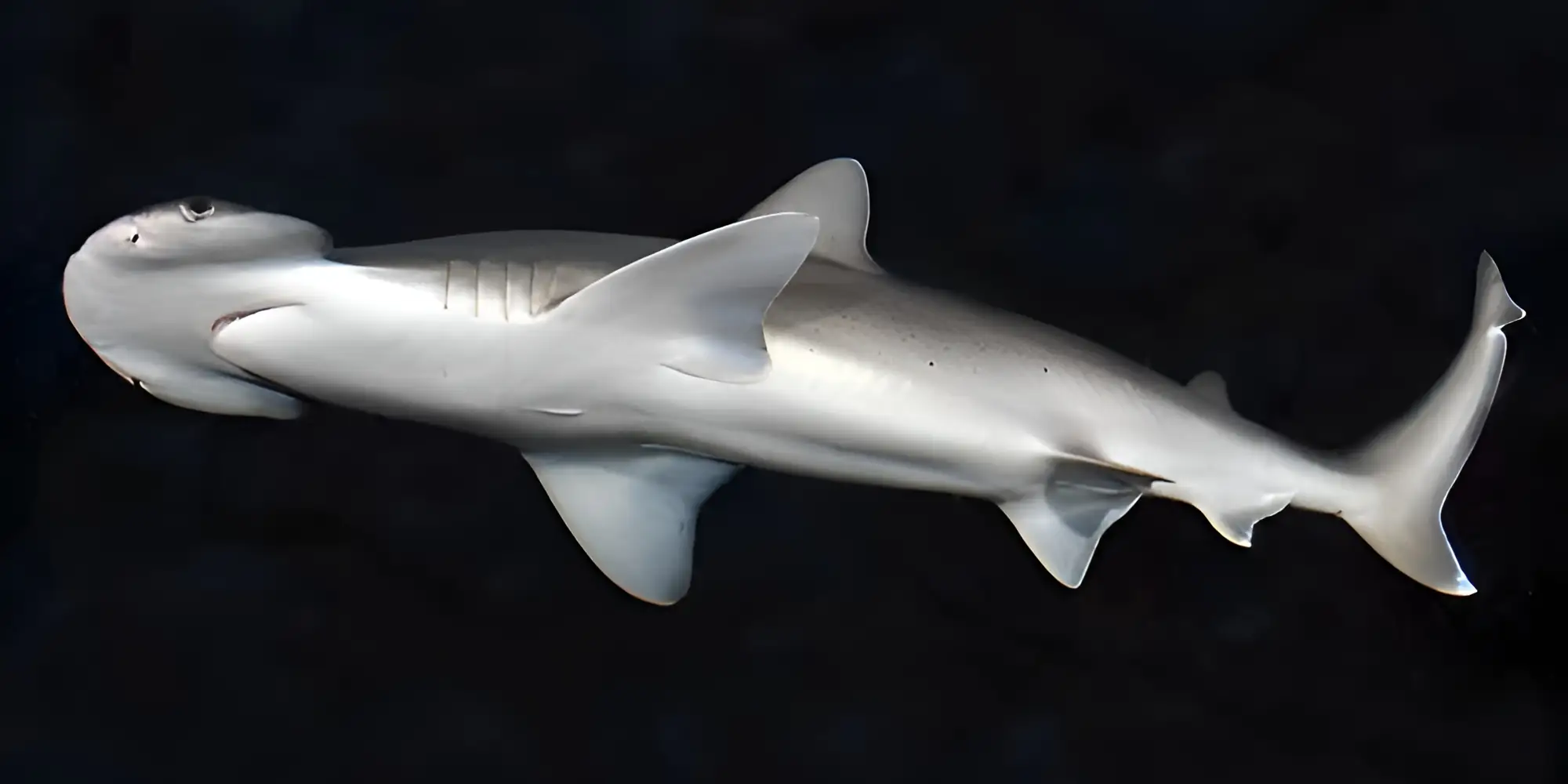
Body structure, features & anatomy
The bonnethead shark Sphyrna tiburo is a small hammerhead shark. WoRMS lists the name as accepted; on Haitauchen it is placed within Selachii, Galeomorphi, Carcharhiniformes, Sphyrnidae and the genus Sphyrna.
NOAA Fisheries describes it as the smallest member of the hammerhead family. Females are usually larger than males; the species reaches about 1.5 m in total length and roughly 11 kg in weight. The upper body is gray, tan or greenish, with a paler underside.
Key identification traits
The rounded, shovel-like head is the best field mark. The eyes sit on the lateral lobes; adult females have a more evenly rounded head, while adult males can show a central bulge. Size, head outline and shallow coastal habitat should be read together for identification.
Distribution & habitat
The data set links Sphyrna tiburo with Atlantic Ocean, Gulf of Mexico, Caribbean Sea and Pacific Ocean and with Aruba, Bahamas, Belize, Bermuda, Bonaire, Brazil, Costa Rica, Curaçao, Ecuador, El Salvador, French Guiana, Guatemala, Guyana, Honduras, Colombia, Cuba, Mexico, Nicaragua, Panama, Peru, Sint Eustatius and Saba, Suriname, Trinidad and Tobago, Uruguay, USA and Venezuela. Historically it was treated broadly from the U.S. east coast through the Gulf of Mexico and Caribbean to South America, and also in the eastern Pacific.
A 2024 paper archived by the NOAA Repository reworks the western Atlantic bonnethead complex. In that view, Sphyrna tiburo in the strict sense is especially confirmed for the United States, Mexico and the Bahamas, while records from Belize to Brazil are discussed as Sphyrna alleni.
Shallow American coasts
FishBase summarizes the species as a warm, shallow coastal and shelf shark, also using brackish water, bays, estuaries and seagrass flats. Divers are more likely to meet it over quiet sand, mud and seagrass than on exposed offshore sites.
Life history, diet & reproduction
The bonnethead shark Sphyrna tiburo searches close to the bottom. It often moves in small groups over seagrass, sand or mud, using the broad head for vision, smell and electroreception while scanning the substrate.
NOAA InPort documents diet work from the eastern Gulf region: crabs, shrimp, mollusks and small fishes are important prey. The species is also known to ingest seagrass, making it one of the few sharks in which plant material is part of the recognized feeding ecology.
Diet and reproduction
The species is live-bearing. Females give birth after a gestation of about five months, usually to 4 to 14 pups measuring roughly 30 cm at birth. Warm shallow areas function as important nursery habitat.
Threats & conservation status
The IUCN Red List assesses Sphyrna tiburo globally as Endangered. Regional declines, bycatch, directed use and uncertainty over older records after recent taxonomic splitting all matter for the status.
CITES Sharks and Rays places the species in the context of international trade monitoring. Nearshore nets, trawls, longlines and recreational fisheries are most relevant when small hammerheads are caught repeatedly or identified poorly.
Bycatch, trade and habitat
Conservation means reducing bycatch in shallow coastal habitats, improving identification at landings and markets, and protecting seagrass beds, estuaries and bays. A common-looking small coastal shark can decline before the problem becomes obvious.
Bonnethead shark & humans
For people, the bonnethead shark is considered harmless and rather shy. Its size, diet and behavior do not fit the image of a dangerous large shark; encounters are mostly in shallow coastal water, on seagrass flats or in aquarium settings.
Florida Museum describes it as a common inshore shark caught in shrimp trawls, longlines and by recreational anglers. The meat may be marketed, but the species is more important as local catch and bycatch than as a major target fish.
Encounters and good practice
Divers should approach slowly from the side, leave an escape route and never hold animals for photos. In angling, wet hands, short air exposure and quick release matter. Good photos with place, date and habitat also help document this taxonomically tricky group.
Profile
- First described:
- Max. size:
- Depth:
- Max. age:
- Max. weight:
- Water type:
- IUCN Status:
Taxonomy
- Kingdom:
- Phylum:
- Subphylum:
- Infraphylum:
- Parvphylum:
- Class:
- Subclass:
- Superorder:
- Order:
- Family:
- Genus:
News
Newsletter
Shark Alert in Your Inbox