


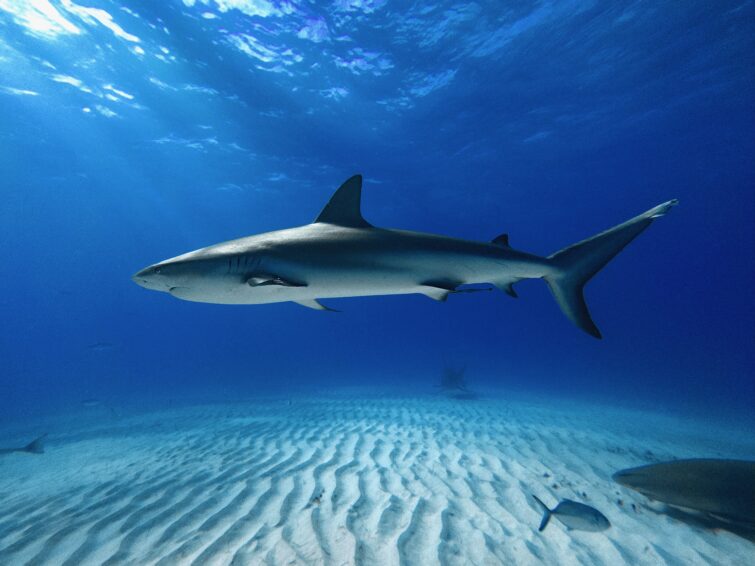
A 12-year-old American was bitten by a shark near Staniel Cay in Exuma Cays on Tuesday, June 23, 2026. The boy was on a tour with his family and was swimming with his brother when the incident occurred, according to police.
ABC News / Good Morning America reported, citing Royal Bahamas Police Force, that the police were informed shortly before 3:30 p.m. that the injured boy would be taken to New Providence by boat. He received medical treatment there and was last described as stable.
101.1 Magic / iHeart also summarized the police information: The boy’s mother told investigators that the bite occurred during a tour of the Exuma Cays. Authorities did not release the child’s name or a confirmed shark species.
You are currently viewing a placeholder content from Facebook. To access the actual content, click the button below. Please note that doing so will share data with third-party providers.
More InformationWhy the case is relevant for vacationers
Staniel Cay and the surrounding Exuma Cays are among the most famous island areas of the Bahamas. Tours there often combine swimming, snorkeling, sandbanks, boat trips and encounters with marine animals. It is precisely in such popular, seemingly relaxed areas that clear rules are needed because many people are in the water at the same time and boats, fish, leftover food or cloudy visibility can change the situation.
What is important is a sober classification: a single bite does not automatically make an area dangerous. Sharks are part of the Bahamas ecosystem and serious incidents remain rare. For travelers, the case is still a reminder that even shallow waters used for tourism are wildlife habitats.
Four points that count before entering the water
- Check visibility: When the water is cloudy, at dusk or when the surface is choppy, it is more difficult to spot animals and schools of fish early.
- Avoid fish waste: Do not swim where fish are being cleaned, bait is being used or leftover food is being added to the water.
- Take tour rules seriously: On guided boat tours, the briefing, group size, exit routes and clear signals count more than a quick photo.
- Treat shark sightings calmly: Do not swim behind, do not circle, keep your distance and return to the boat or shallower water in a controlled manner.
Which is particularly important when touring in the Exumas
Many Exuma tours are deliberately low-threshold: families, children and inexperienced snorkelers should be able to experience the island world. This makes good preparation even more important. Organizers should explain before entry whether there will be feeding, whether there might be fish remains nearby, how many people will go into the water at the same time and who will collect the group in an emergency.
For parents and accompanying persons, this means: Children should stay close to the group in the water, not swim alone after animals and be called back immediately if there are schools of fish or unusual activity. Especially on boat tours, it makes sense to clarify in advance how quickly help can be reached and where the nearest medical point of contact is.
No confirmed shark species
The shark species has not been named in the police reports and media summaries available to date. This is important for reporting: Without confirmation, neither nurse shark, Caribbean reef shark, bull shark or any other species should be assumed to be the cause. Several species can occur in tourist areas, and sightings immediately after a bite are not automatically sufficient for a reliable identification.
The injuries were also not published in detail. According to current information, the only thing that is certain is that the boy was brought to New Providence, received medical treatment and was recently in a stable condition.
Calm consequence instead of a bathroom alarm
For Haitauchen, this case is above all a risk lesson. Anyone who swims, snorkels or dives in the Bahamas is in healthy shark territory. This is not a reason for alarm, but a reason for clean processes: no leftover food or fish in the water, no unnecessary proximity to prey, clear group leadership and immediate termination if conditions change.
Good shark safety doesn’t just start when a shark is visible. It starts with the question of why a tour goes into the water at this exact point, what the visibility is like, whether animals are fed and whether every participant knows what to do when the guide signals.