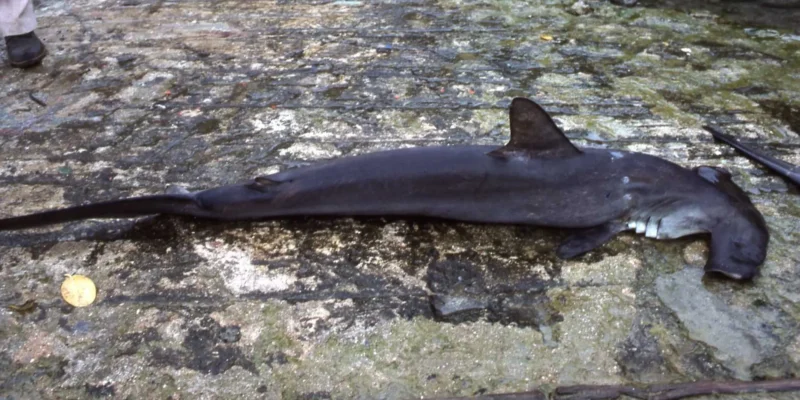
Concerning findings are accumulating on Guatemala’s Pacific coast: monitoring in Buena Vista (Champerico, Retalhuleu) shows that 95 % of caught scalloped hammerheads (Sphyrna lewini) are juveniles. The species is classified as endangered and is listed in the country’s Pacific directory of threatened species. The high removal of immature individuals threatens the population’s recovery.
Numbers and Biology: Why the Young Matter
According to Fundación Mundo Azul, the scalloped hammerhead can grow up to 4.30 metres in length and weigh an average of 230 kilograms, with a lifespan of 20 to 30 years. The species is placental viviparous: females give birth to fully developed young. Gestation lasts 10 to 12 months, with litters of about 25 to 45 pups, depending on the study. If predominantly juvenile animals are fished, future breeding individuals are lost—a vicious cycle for the population.
Rules Exist, Enforcement Is Weak
Fishing is regulated by the Fisheries and Aquaculture Law (Decree 80-2002) and its implementing regulations (Regulation 223-2005): closed seasons, minimum sizes, and permitted fishing gear are intended to protect stocks. In practice, however, oversight is limited; the responsible authority (MAGA, Fisheries & Aquaculture Unit) has very few inspectors nationwide. This makes it nearly impossible to enforce regulations comprehensively along the coast.
Key Role in the Ecosystem
As an apex predator, the scalloped hammerhead regulates prey populations such as fish, squid, crustaceans, and rays. If predation pressure collapses, prey species can proliferate, leading to cascading effects, including changes in seagrass and algae populations. Protecting the shark thus benefits coastal fisheries and tourism.
What Helps Now
Experts recommend consistently preventing the catch of juvenile animals: effective closed seasons in nursery areas, minimum sizes, selective fishing gear, and local monitoring programmes involving fishermen and women. Educational work in communities and reliable enforcement are crucial for ensuring rules are followed in daily practice.
“Without offspring, a population collapses quietly. Protecting young hammerheads determines the future of the species.”