A central hub for divers in Jamaica is the Dressel Divers dive centre in Montego Bay. Dressel Divers is an internationally renowned company with over 30 years of experience in diving and operates a base directly on the beach in Montego Bay. Thanks to this location, most reefs are just a few boat minutes away—long transfers are unnecessary. The local team consists of experienced, professionally trained dive instructors who are passionate about their work. Their competence and friendliness have earned the dive centre an excellent reputation; on review platforms, Dressel Divers regularly receives top marks and is praised for its safety standards and outstanding service.
The equipment and organisation at Dressel Divers leave nothing to be desired. Modern rental gear (from regulators to wetsuits) is regularly maintained and in perfect condition. Spacious, dedicated dive boats are ready at the hotel’s own jetty, allowing trips to start relaxed. Most top dive sites are within a maximum of 15 minutes—ideal for quickly immersing yourself in the underwater adventure. For certified divers, nitrox (oxygen-enriched air) is available at no extra charge, enabling longer and even safer dives. On land, everything is well thought out: from drying facilities for equipment to cosy spots for logging dives after the dive.
Dressel Divers in Jamaica caters to all wishes. They offer PADI dive courses for all levels—from beginner courses (Open Water Diver) to advanced and specialty courses, up to Divemaster and Instructor training. Certified divers can participate in daily guided dive trips, where diving is done in small groups. Particularly convenient: after two dives in the morning, you usually return to the base to relax or enjoy lunch at the resort before heading out to more dive spots in the afternoon. In addition to regular reef dives, there are also night dives, where you rediscover Jamaica’s underwater world in the glow of dive torches. For holidaymakers who want to try diving for the first time, Dressel Divers offers Discover Scuba sessions in the pool and sea. And non-divers can enjoy snorkelling trips to the coral reefs or other water sports. Throughout, the Dressel team places great emphasis on safety, nature conservation, and personal service: before each dive, there are detailed briefings, the guides are always by the guests’ side, and they ensure that no corals are touched or marine life disturbed. As a certified Eco Dive Centre, Dressel Divers is committed to environmentally friendly diving and the protection of Jamaica’s marine habitats. All these factors make diving with Dressel Divers in Montego Bay a thoroughly enjoyable experience.
Discover sharks with Dressel Divers
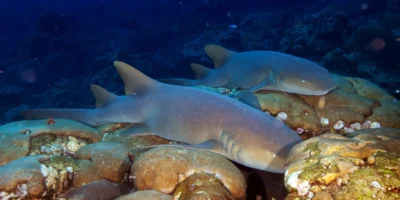
For many divers, sharks are the most fascinating encounters underwater—and in Jamaica’s waters, you can meet these elegant predators. Nurse sharks, which are native to the Caribbean, are particularly common. Nurse sharks (Nurse Sharks) are considered relatively calm, bottom-dwelling sharks. During the day, you can often see them resting on sandy areas or under rock ledges. In Jamaica, nurse sharks have even been observed in groups, lying close together—sometimes on top of each other—under coral overhangs, dozing. This unusual behaviour shows how peaceful these sharks are. Divers can usually approach them safely at close range and observe the animals in peace. At night, nurse sharks become more active and swim around, but during the day, they often lie lazily on the bottom—hence the expression that they “lounge” on the seabed.
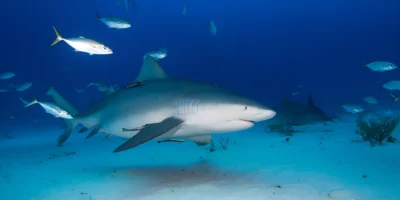
In addition to nurse sharks, around Jamaica, you might also encounter Caribbean reef sharks (Caribbean Reef Sharks) with a bit of luck. These grey sharks roam the reefs and outer reefs of the island. While drifting along a reef wall, it occasionally happens that a reef shark passes by at a respectful distance—a breathtaking moment that usually passes as quickly as it comes. Reef sharks generally behave shyly or indifferently towards divers, as long as they are not harassed. Occasionally, even larger shark species are sighted in Jamaica—reports of hammerheads or bull sharks come mainly from more remote areas or from earlier times. However, these are extremely rare and not a regular part of dives. Guided “shark dives” with feeding or cages, as known from other countries, do not exist in Jamaica. All shark encounters here are natural and spontaneous—which makes them all the more special.
A special dive site for shark encounters is Shark’s Reef. This spot is remote and known for nurse sharks often waiting for divers there. At Shark’s Reef, several nurse sharks often “lounge” on the sandy bottom, while large stingrays glide leisurely nearby. For experienced divers, this place is an absolute highlight, as you can hardly get closer to sharks in such a peaceful setting. Such dives remain unforgettable—the encounter with a shark in its natural habitat evokes awe and excitement at the same time.
Of course, safety always comes first when diving with sharks. At Dressel Divers, every shark dive is accompanied by local instructors who know the behaviour of the animals well. The briefings explain how to behave calmly, maintain sufficient distance, and not provoke the sharks. Under these conditions, shark diving in Jamaica is considered safe. Neither nurse sharks nor the reef sharks found here regard humans as prey. Instead, they usually appear curious or indifferent towards divers. Those who follow the rules of conduct can enjoy the presence of these impressive animals without fear. Every shark encounter also provides a better understanding of these often misunderstood marine creatures—and many divers develop an even greater desire to protect these animals after experiencing sharks in the wild. Shark diving in Jamaica is thus not only adrenaline-inducing but also educational and contributes to raising awareness for shark conservation.
Underwater conditions and highlights in Jamaica
Jamaica’s diving conditions are consistently pleasant and inviting. The water temperature remains around 27–29°C year-round—even in our winter months, the Caribbean Sea is as warm as bathwater. Many divers get by with a 3mm wetsuit or even just a shorty. Visibility underwater is also impressive: often 20–30 metres or more, especially in the drier months with calm seas. Currents are generally mild at most sites; in protected bays like Montego Bay, there is usually only slight water movement, allowing even beginners to dive relaxed. Overall, Jamaica is a dive destination that can be enjoyed year-round—with very consistently warm climate and water temperatures. Only during the peak of hurricane season (autumn) can weather and waves temporarily affect visibility, but outside these short periods, conditions are predominantly ideal.
Jamaica’s underwater landscape is as diverse as it is captivating. Reefs with lush coral formations surround the island. In the shallower zones, you’ll find colourful coral gardens that gently slope into the depths. Here, hard corals like brain and star corals thrive alongside large barrel sponges and purple fan corals. In between, countless reef fish dart about, from tiny gobies to impressive groupers. In some places, the reefs transition into steep walls—such as at the edge of the Cayman Trench—where you can gaze into the depths at drop-offs. Exciting topographies with arches and grottos include The Arches and The Caves in Montego Bay, two diveable cave systems with tunnels and vaults underwater. For adventurers, there are also proper cave dives like the famous Widowmaker’s Cave: a vertical tunnel cave off Montego Bay that leads experienced divers through a chimney-like rock crevice from 24 metres depth back to the surface. Such sites impressively showcase the geological wonders that Jamaica’s coast holds underwater.
In addition to the natural reefs, there are also some wrecks overgrown with corals that serve as artificial reefs. A highlight is The Wreck in Montego Bay—a sunken frame of a small aircraft at about 18 metres depth. This wreck is easy to dive and attracts many schools of fish, including snappers and glassfish that seek shelter in the fuselage. Advanced divers can explore the SS Kathryn in Ocho Rios, a 50-metre-long shipwreck from the 1940s. The Kathryn lies at about 15–18 metres depth and is almost completely covered with sponges and hard corals. In its cargo holds, you’ll often find lobsters, moray eels, and even the occasional nurse shark seeking shelter. Wreck dives like these convey a sense of history and adventure and are a staple of Jamaica’s diving offerings.
Of course, the animal encounters shouldn’t be overlooked. Sea turtles are frequently seen around Jamaica—especially hawksbill and green turtles gliding past the reefs. It’s not uncommon to watch a turtle grazing on a sponge meadow or searching for food among the corals during a dive. Beginners can have these experiences, for example, at Surprise Reef, a shallow reef popular for its many parrotfish and turtles. Equally impressive are the elegant rays: in Montego Bay, there’s the dive site Stingray City, where large southern stingrays glide almost within touching distance of divers. They move silently over the sandy bottom, often in groups, offering a fantastic spectacle.
Even beyond the “big” animals, there’s plenty to discover. Colourful schools of fish like snappers, grunts, and surgeonfish swim through the corals in dense schools. Curious barracudas keep a respectful distance but are sometimes visible from afar. Moray eels lurk in crevices with open mouths, and on the sandy bottom, stingrays bury themselves, only to elegantly swim away when approached. With luck, you might spot a well-camouflaged scorpionfish or see a tiny seahorse in the seagrass. The diversity is vast: over 260 fish species have been counted in Jamaica’s reefs, from colourful angelfish to bizarre frogfish. Even dolphins occasionally accompany the boats to the dive sites, putting on a show for divers at the surface. Every dive around Jamaica holds new wonders—this is precisely what makes this Caribbean diving paradise so appealing.
Whether colourful coral reefs, impressive wrecks, or encounters with sharks and turtles—Jamaica offers divers a wealth of highlights. The Dressel Divers dive centre in Montego Bay combines these natural treasures with first-class service, experience, and safety. This makes every dive both a relaxed and exciting experience. Shark diving in Jamaica with Dressel Divers perfectly balances adventure and closeness to nature—an unforgettable underwater adventure in the Caribbean that you must experience.