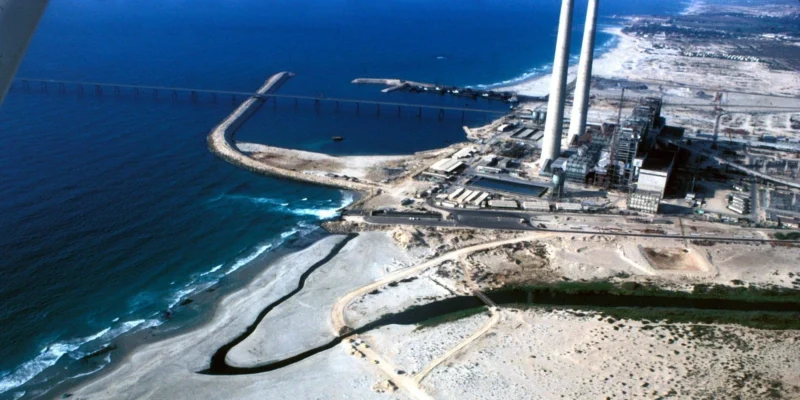
Every winter, dusky sharks and sandbar sharks gather at the warm-water outflow of the Orot Rabin power plant near Hadera, Israel. A new telemetry study now provides a more detailed picture of how the animals use this human-altered stretch of coastline. The findings point to a seasonal attachment to the site and a role for water temperature—but not to every shark returning reliably each year.
58 sharks were tracked acoustically over the years
The research team provided 35 dusky sharks (Carcharhinus obscurus) and 23 sandbar sharks (Carcharhinus plumbeus) with acoustic transmitters. Receivers recorded their presence on coastal infrastructure and natural habitats. Body temperatures were also recorded for some of the animals. This made it possible to compare length of stay, daily patterns and temperature trends.
Over several years, only relatively few tagged animals returned to the larger study region. However, within one season, individual sharks were clearly and repeatedly present at the power plant. This suggests a strong short-term locational connection, not automatically a permanent annual tradition for the entire population.
Body temperature rose during visits
During their stay at the power plant, the body temperature of the sharks examined gradually increased and was at times higher than the temperature of the surrounding water. The authors see this as an indication of behavioral thermoregulation. Warmer water could support metabolism and muscle performance; Reproduction or information exchange within the assemblage are also discussed as possible functions. However, the study does not directly demonstrate these individual benefits.
Visiting times and activity throughout the day were structured. This shows that the sharks don’t just pass the place by chance. At the same time, it is not possible to derive an exact number of all animals at the location from the data: only marked sharks that are within range of the receivers are recorded.
An energetic advantage can create new dangers
Coastal infrastructure can create favorable environmental conditions on a small scale. But the same attraction increases the proximity to fishing, boats, bathers and other human activities. The researchers therefore describe a possible conflict of objectives between short-term energetic benefits and long-term risks for the population.
The fatal incident off Hadera in April 2025 demonstrated how serious this conflict can become. The new movement study does not investigate the cause of that attack and cannot identify the individual animal involved. It does, however, provide a stronger ecological basis for rules intended to separate people from the threatened sharks at this exceptional aggregation site.
What the study leaves open
The study describes a particular location in the eastern Mediterranean and a limited number of tagged animals. The results are therefore neither a population count nor can they be easily transferred to other power plants or shark species. More data needs to show how changes in power plant operations, rising ocean temperatures and protective measures are affecting the aggregation.