


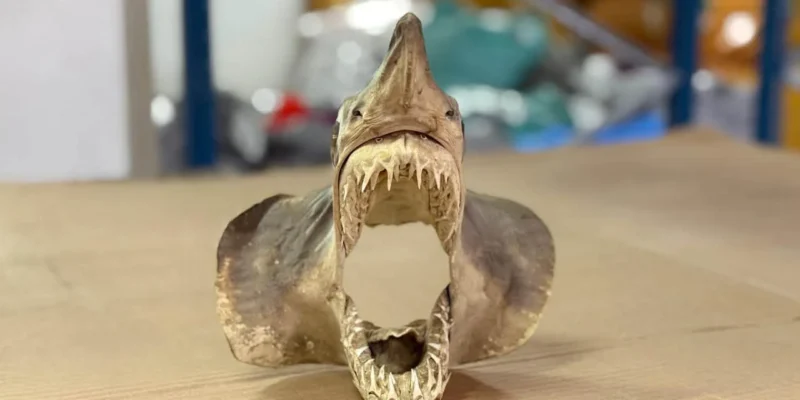
Kyiv customs intercepted a preserved mako shark head that was to be sent from Odesa to Canada. According to the Ukrainian customs authority on 29 October 2026, the required export documents were not presented during clearance. The discovery was made during checks on international postal shipments.
Experts identify the genus, but not the precise mako species
Specialists at the Schmalhausen Institute of Zoology of the National Academy of Sciences of Ukraine examined the seized animal specimens. They assigned the shark head to the genus Isurus. The published statement does not identify a particular species. Nor does it say where or when the shark was caught: Odesa is the stated dispatch location, not a confirmed capture location.
Wildlife trade rules also apply to preserved specimens
The case concerns the cross-border trade in a body part. CITES, the Convention on International Trade in Endangered Species of Wild Fauna and Flora, covers protected animal products as well as live animals. The Canadian environment authority explains that import or export permits may be required depending on the species and its protection status. A preserved display specimen is therefore not exempt from wildlife trade controls simply because the animal is already dead.
According to Ukrainian customs, the seized specimen is subject to CITES rules. The authority confiscated the head over a breach of customs regulations. It reports neither a final criminal conviction nor an imposed penalty.
Questions remain about its origin
The statement provides no evidence of the circumstances in which the animal was killed or the specimen acquired. Missing export documents therefore do not, by themselves, establish a particular catch, fishing region or poaching method. What is documented is a shipment stopped because the required paperwork was missing.
Photo: State Customs Service of Ukraine · CC BY 4.0. Cropped to 2:1.