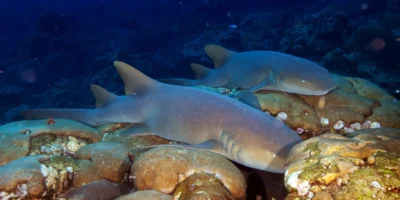
Researchers have documented a repeatedly used mating site for the Atlantic nurse shark in shallow water off Anegada. A new study describes the aggregation in Windlass Bight in the British Virgin Islands. Such observations help identify coastal areas that are particularly important for the animals’ reproduction.
22 mating events in just under two weeks
From 4 to 16 June 2025, the team observed the sharks from shore and supplemented its records with drone flights. The researchers documented 22 mating events in total; at times, up to 27 animals were present at the site simultaneously. Eight mature males and 15 mature females received acoustic transmitters for longer-term monitoring and external tags for identification.
Older video footage shows aggregations at the same location as early as 2018 and mating attempts in 2023. Together with the 2025 observations, this suggests repeated use over several years. It does not, however, establish that mating was recorded in every intervening year.
A sensitive habitat close to shore
According to University of Massachusetts Amherst, the animals concentrated along a stretch of coast about 150 metres long. Mating took place in very shallow water, approximately knee-deep. A video released by the university shows nurse sharks mating.
The site’s proximity to land makes it vulnerable to disturbance. According to the university’s release, even the research team’s presence appeared to disrupt the sharks’ behaviour. The researchers believe development along this shoreline could destroy the mating site.
The findings provide a basis for reducing disturbance during reproduction more effectively. They establish a mating site, which does not automatically make it a birthing ground or nursery. Acoustic monitoring is intended to help track use of the area over the longer term.