


Sawback angelshark - Squatina aculeata
Body structure, features & anatomy
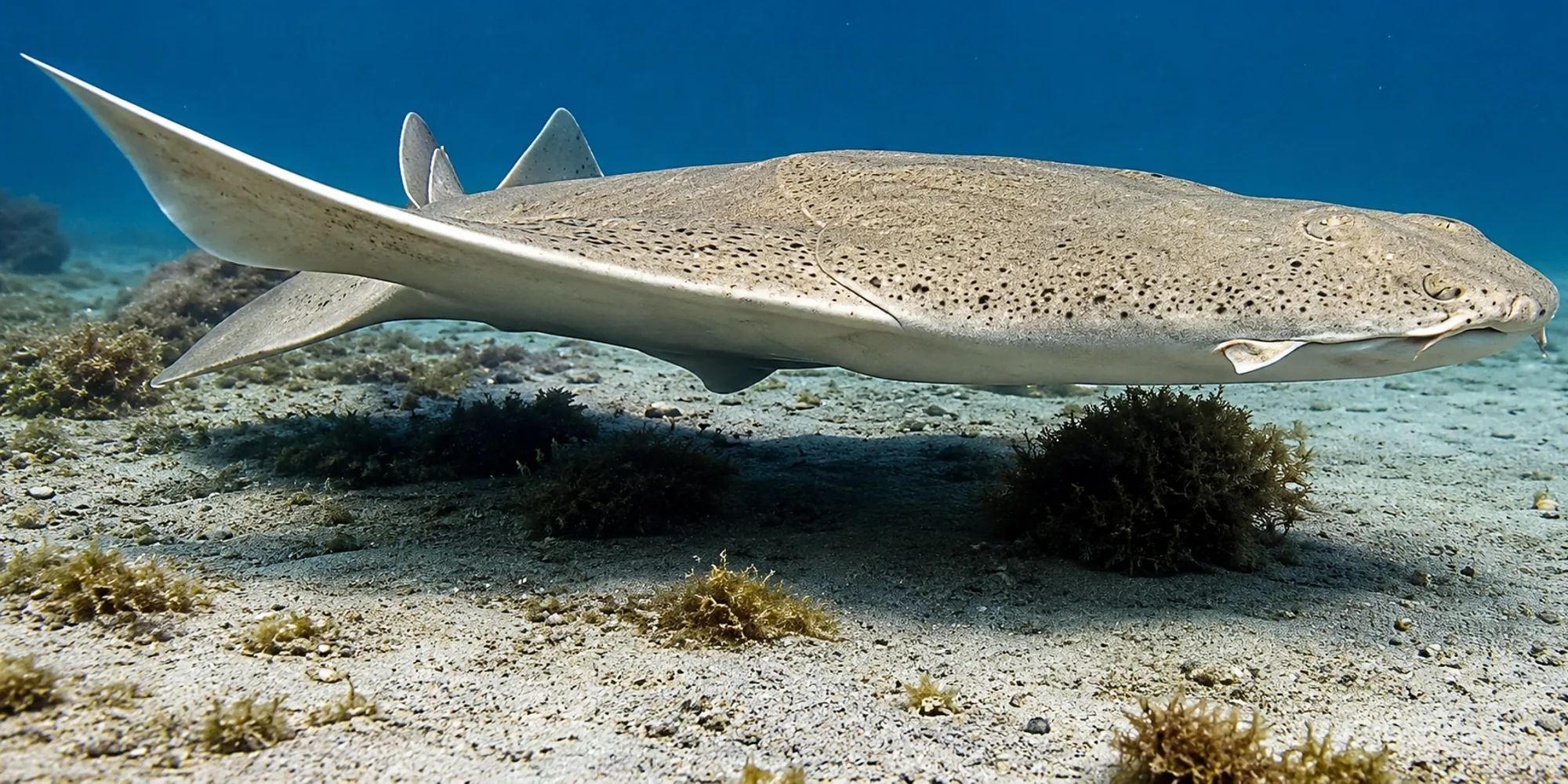
The sawback angelshark Squatina aculeata is a large angel shark with a strongly flattened front body and widely extending pectoral fins. WoRMS lists the species as an accepted name within the Squatiniformes, the family Squatinidae and the genus Squatina. The ray-like silhouette is therefore not a ray feature, but rather the specialized body shape of a shark lurking close to the ground.
The thorns on the head and along the back, which the German name also refers to, are typical. The eyes and spray holes are located at the top of the head, while the mouth and gills are arranged so that the shark can breathe and snap forward in a surprising manner while half-buried on the bottom.
- FishBase states a maximum length of around 188 cm and a published maximum weight of around 40 kg.
- The body is broad, flat and designed for camouflage on the sediment bottom.
- Two small dorsal fins are located far back on the body; An anal fin is missing like in other angel sharks.
- The large pectoral and pelvic fins form a broad outline but remain separate from the head.
Distribution & habitat
The sawback angelshark is an Atlantic-Mediterranean ground shark. Shark References summarizes the known distribution in the east Atlantic and in the West Mediterranean together: historical and present-day evidence extends from the Mediterranean region across northwest Africa to parts of West Africa.
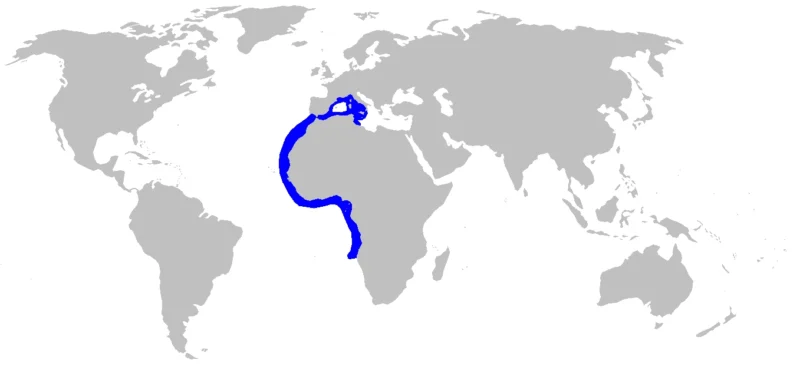
For the shark diving country links, Mediterranean and Eastern Atlantic countries are particularly important Italy, Malta, Tunisia, the Türkiye and Senegal relevant. Die Art wird heute nur noch selten gemeldet; Individual modern evidence is particularly important because it makes residual deposits and possible priority areas visible.
The habitat is mostly on sandy or muddy soils on the shelf and upper continental slope. The depth range of around 30 to 500 m stored in the species profile fits this ground-level profile, even if individual Mediterranean finds were significantly shallower.
Life history, diet & reproduction
Like other angel sharks Squatina aculeata not a persistent open water hunter, but a quiet hide robber. The study in Marine Biodiversity 2026 describes a modern find from eastern Sicily and confirms the species via morphology and COI DNA; the stomach contents there consisted of bony fish.
The hunting strategy is closely linked to the body structure: the shark lies camouflaged in the sediment, waits for prey swimming close to the bottom and uses short, quick advances. In older catalog data, small sharks and trevally are mentioned as food; modern individual findings show mainly bottom-hugging fish.
Reproductive data remains patchy. The NOAA Five-Year Review 2025 classifies the species as viviparous with yolk sac care of the embryos and discusses the waters between Sicily and Malta as well as parts of the northeastern Mediterranean as possible reproductive or rearing areas because young animals or pregnant females have been reported there.
Threats & protection status
The IUCN Red List classifies the sawback angelshark worldwide as threatened with extinction a. The key factors are strong historical declines, the rarity of current evidence, and the ongoing pressure from bottom-level fishing in the very habitats where angel sharks hunt and rest.
Main hazards
- Bycatch in bottom trawls, gillnets, longlines and trammel nets.
- Landing or further use of captured animals as food, bait or commercial goods.
- Confusion with other angel sharks, making evidence, controls and protections unclear.
- Loss of habitat and disruption of shelf and slope habitats due to intensive use.
- Slow reproduction, which means that remaining populations recover very slowly.
Every reliable report is therefore valuable for protection and monitoring. Particularly important are exact locations, fishing gear, water depth, release or landing and clear photographic documentation.
Sawback angelshark & humans
For divers, the sawback angelshark is more of a rare conservation species than a predictable encounter animal. The species is listed as endangered in the United States under the Endangered Species Act; the profile of the U.S. Fish & Wildlife Service lists it accordingly as endangered wherever found. Encounters should therefore be calm, short and without touching.
A resting angel shark may not be touched, uncovered, or forced out of the sediment for photographs. Good observation practice means keeping your distance, not forcing an escape reaction and, in the event of accidental sightings, passing on the date, location, depth and photos to local protection or research agencies.
The species is not considered aggressive towards humans. The risk almost always arises the other way around: from fishing gear, disturbance to the seabed and the small size of the population. Anyone who encounters a sawback angelshark is likely to see an animal from one of the most endangered shark complexes in Europe and West Africa.
Profile
- First described:
- Max. size:
- Depth:
- Max. age:
- Max. weight:
- Water type:
- IUCN Status:
Taxonomy
- Kingdom:
- Phylum:
- Subphylum:
- Infraphylum:
- Parvphylum:
- Class:
- Subclass:
- Superorder:
- Order:
- Family:
- Genus:
Newsletter
Shark Alert in Your Inbox