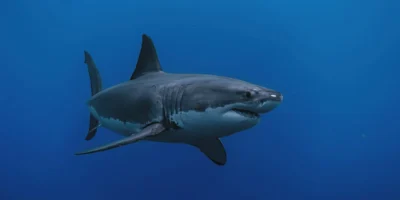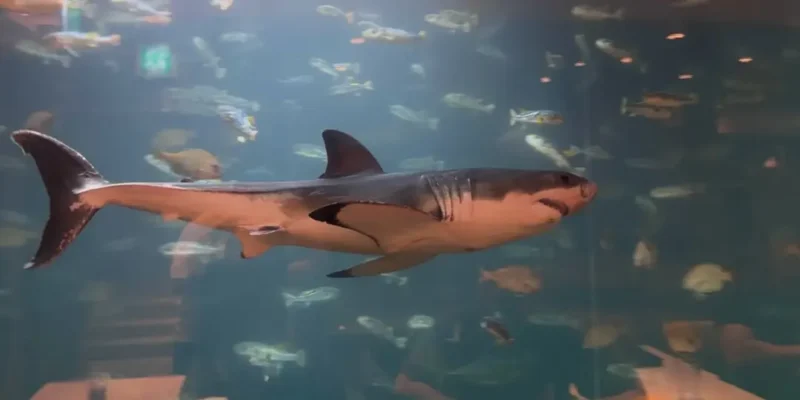
A young great white shark in a cafe aquarium: the images from Gyeongju in South Korea looked so unlikely at first that people online even debated whether they were real or AI-generated. By now the key point is clear: the case was real, and Korean media say the shark is back in the sea.
The Korea Herald reported that the great white shark was kept in an aquarium at a franchised cafe in Gyeongju, North Gyeongsang Province, and released earlier than planned after public attention grew. The report was also shared through the newspaper’s X account.
The English edition of Asiae placed the location more precisely: the case involved a Twosome Place branch at Gampo Port in Gyeongju, known for a large aquarium in the basement. Photos and videos showed the young shark there among many other fish.
From Fish Market to Cafe Tank
According to the cafe’s explanation, the shark was not meant to become a permanent exhibit. The animal had reportedly been found at a live fish market near Gampo Port; the operator said it was taken in out of pity and kept temporarily. The original plan, according to that account, was to release the shark before it grew up.
That sequence makes the case more complicated than a simple outrage story. If the shark really was taken alive from a fish market, the first impulse to save it from slaughter is understandable. At the same time, a cafe aquarium is not a suitable place for a great white shark, not even for a young animal and not even as a stopgap.
According to the Korea Herald, the animal was about 1.5 metres long and was said to have been taken from the fish market on May 30. Asiae reports that the release was brought forward because of the sudden surge of attention and took place on June 2.
Why Great White Sharks Almost Never Work in Aquariums
Great white sharks (Carcharodon carcharias) are large, highly mobile predators that would need enormous space, stable water quality and extremely sensitive care. The history of public aquariums has shown for decades how difficult, and often impossible, long-term care is. Even major facilities have repeatedly failed to keep great white sharks healthy for long periods.
Asiae points in this context to the Churaumi Aquarium in Okinawa, where a great white shark died after only a few days in 2016. Cases like that explain why the photos from Gyeongju triggered concern so quickly: a young animal may survive briefly in a tank, but that says little about whether the setting is biologically acceptable.
The discussion in Reddit threads and the ZooChat forum was therefore not only outrage. Many comments focused on practical questions: how did a great white shark end up in a cafe at all, did the shark show signs of stress, and who in South Korea could have intervened legally?
The Protection Gap in South Korea
The core of the story is less the individual cafe than the regulation around the animal. The great white shark is under international pressure, is listed globally as Vulnerable on the IUCN Red List and is regulated in international trade under CITES Appendix II. Yet according to the Korean reports cited, the species is not listed as a protected marine species by South Korea’s Ministry of Oceans and Fisheries.
In other words: the international conservation status is clearly visible, but in this specific case national rules for capture, sale or keeping apparently lacked clarity. ZooChat also summarized Korean-language background suggesting that only a small number of shark species are explicitly protected as marine species in South Korea. Such gaps matter more as warmer seas may bring rare large sharks and rays into coastal waters more often.
For animal welfare, that is the decisive point. When a protected or threatened animal first appears at a market and is then improvised into a private tank, the damage does not begin with the cafe visit. It begins where nobody is clearly responsible for quickly assessing, stabilizing or releasing a live-caught animal of this kind.
Rescue or the Wrong Stopover?
The cafe’s explanation therefore remains ambivalent. It is good that the shark did not remain in the tank permanently. It is also possible that taking it from the fish market ultimately made release possible. But the stopover shows exactly why such cases should not depend on the goodwill of individual operators.
A great white shark is not an exhibit, not a viral cafe attraction and not an animal that can simply be stored for a short time without specialized support. If a juvenile appears alive at an auction or fish market, there should be clear reporting routes, responsible authorities, qualified veterinarians and a protocol that quickly decides between release and humane emergency care.
The MBC News report on YouTube also picked up the case as a viral story. The broad attention may end up being the most important part: not only one release, but more pressure to review protection lists and responsibilities for large sharks and rays in Korean waters.
What Remains From the Case
For the young great white shark, the best news is simply that it is no longer swimming in the cafe aquarium. Whether it survived the short captivity well cannot be judged from the outside with certainty. For the public debate, however, the message is clear: rare and threatened marine animals should not have to become visible through social media before authorities, operators and the public know what to do.
The Gyeongju case is therefore not a curiosity at the edge of shark history. It is a lesson in how quickly a wild animal can be caught between fishing, trade, display value and rescue intent. Real protection begins where that chain no longer has to be improvised.